
What makes a neighborhood feel like home can be found in the details: a winding street, an old house with character or neighbors who show up for one another. For these two Pittsburgh-area residents, living in South Hills means finding that sense of belonging in very different ways, from Mt. Lebanon’s architecture to Dormont’s close-knit community.
Why Pittsburghers Love Living in South Hills
Both Ali Harvey and Asmodeus Greer returned to the Pittsburgh area and found ideal places to live in the South Hills.
For Ali Harvey, life as an interior designer in the South Hills can be a big, messy process.
“It’s not always easy,” she says, “but the end result is very joyful.”
Harvey lives in Mt. Lebanon with her husband and three children. “I feel bad for our kids sometimes, because we’re both in creative fields, and I’m like, ‘Sorry we’re not more organized,’” she jokes.
She and her husband both grew up in Mt. Lebanon. Harvey left in 2000, first to study architecture at Virginia Tech, followed by working in Utah, New York and Los Angeles (with a year-long break in between to earn a master’s degree in product development from Carnegie Mellon University).
While raising small children in Queens, Harvey knew something wasn’t quite right. She missed walkability and vibrancy, big shade trees and beautiful architecture. In other words: the South Hills.
Finding Inspiration in Mt. Lebanon
In January 2020, she and her husband decided to return to Mt. Lebanon. Harvey also made the leap to become an interior designer.
“Because it was COVID, we were like, ‘You know, YOLO, right?’”
In her work and in her neighborhood, Harvey revels in the unpredictable variety of house styles. Her family lives in a stucco Tudor with a cobblestone English house on one side and a firebrick American foursquare on the other. “I love the unexpected,” says Harvey. In it, she finds surprise and delight, a theme in all her work.
She’s also taken by how the streets are dictated by the area’s topography. “It’s not about efficiency and a grid out here. It’s about the meandering and the nooks,” she says, which is true about the houses as well. “You’ll find these surprise nooks and small doors.”
Like life itself, “it’s about what you’ll find in the next room or around the next corner.”
Asmodeus Greer’s Life in Dormont
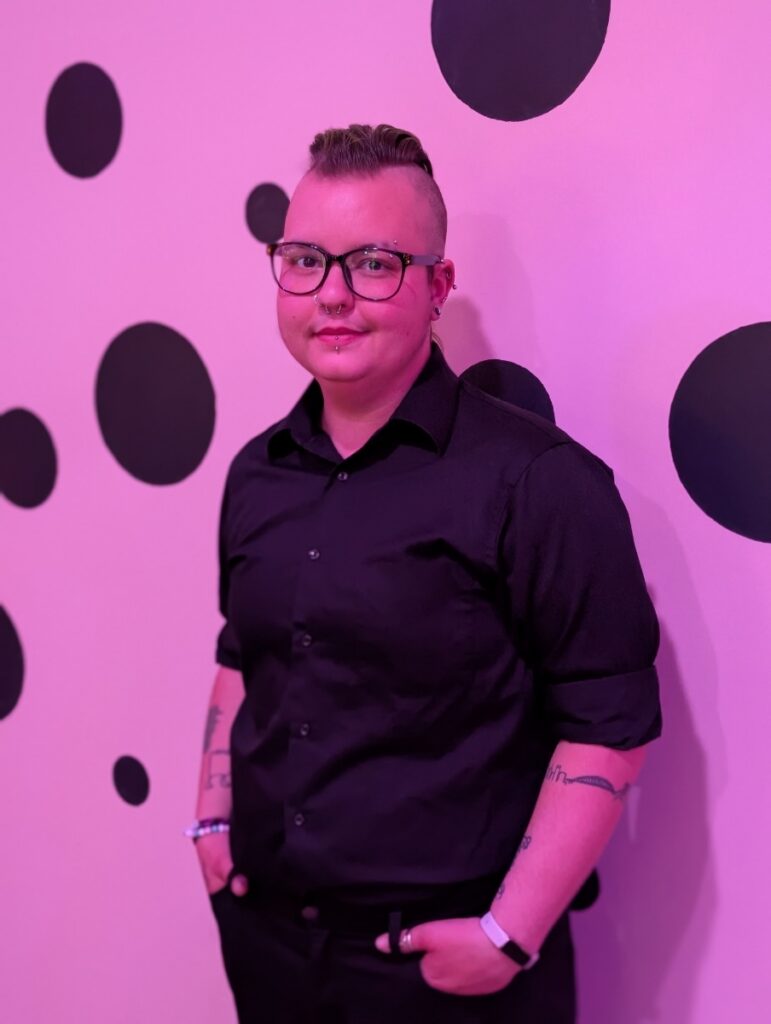
Last fall, Asmodeus Greer was “super stoked” to be a host for Dormont’s inaugural Porchmont event. The boroughwide party billed itself as a “summertime porch hang — but bigger and better and filled with friends you haven’t met yet!”
Greer got their rowhouse neighbors to sign up as hosts, too. They made decorations and set up a cornhole game in the front yard.
“It was really building that neighborly feel — you can call on your neighbors, or if you need something from them, they’re there for you,” says Greer.
They first learned of Dormont while passing through around 2019. They thought, “This is a cute little place. I’d kind of like to live somewhere like here one day.”
Two years later, they moved to Dormont from State College for a new job — though it took a while before they pieced together that it was the same place where they once dreamed of living.
Life in Dormont
Not long after Porchmont, Greer started working at the newly reopened Row House Hollywood, a renovated movie house built in 1926. They had loved attending showings of Rocky Horror Picture Show prior to the theater’s temporary closure in early 2023. During renovations, Greer says, “I walked past it every single day. I’d try to look through the window and see what was going on.”
The theater scene is not the only thing they love about life in Dormont. “You’re very close to the city,” Greer says, “but it’s so much cheaper to live out here than to try to live Downtown.”
Dormont also has a growing queer community with its own Pride celebration and a soon-to-be social space.
“I make sure that we have our flags out on our front porch,” says Greer. “We’re very open about it to make sure that everybody else feels safe and comfortable. That’s also why we wanted to be a Porchmont host — because we could hold that queer space for people.”
Story by Amy Whipple
Harvey Photo by Erin Kelly, Greer Photo by Sean Collier