
Local farms in Pittsburgh is where it’s at. Check out five places in our neck of the woods—and city blocks—making good stuff from the land.
5 Friendly Neighborhood Farms
Garfield Community Farm
Growing food and growing community, on a resurrected plot of land where faith is put to action.
The farmers behind Garfield Community Farm (GCF) are not cowed by challenge.
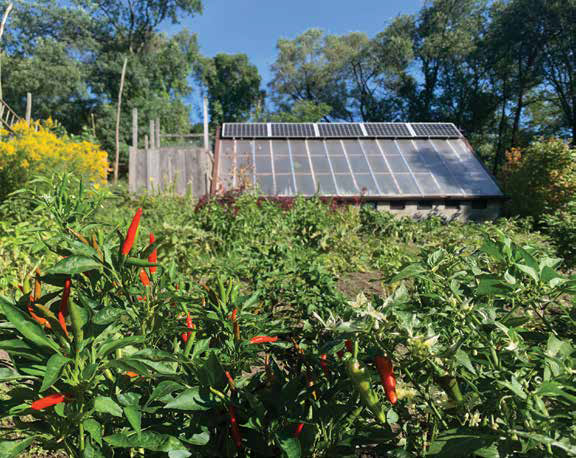
Their 3-acre hilltop farm was born as a mission of sorts by The Open Door, a Presbyterian church in Garfield, which wanted a good percentage of its tithe to go toward an environmental justice initiative.
It was 2008, and Garfield was a food desert. After doing some door knocking to gauge interest, the church’s pastor, John Creasy, got permission to lease the plot from the city. GCF was formed and he became executive director.
A Mission Rooted in Environmental Justice
The farm is on a lot once occupied by mid-rise apartments, which were torn down by the city in the early 2000s, says AJ Monsma, director of community engagement for GCF.
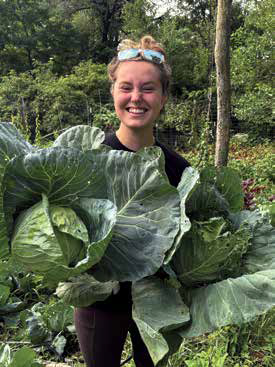
“In Pittsburgh, tearing down a house means they just collapse it all into the basement, and then cover it up with soil,” she says. “No farmer in their right mind would’ve ever chosen this land to farm on, because there was no usable soil. It was all housing debris and clay. And it’s on a hill, so there is no easy water source.”
The church picked this very unusable land for those exact reasons — to show that new land can be reformed and transformed.
They were inspired by themes in the Old Testament book of Ezekiel. Monsma distills the message as, “We’re going to take this degraded, desolate land and turn it into this vibrant place where people find life and food.”
And GCF has achieved just that.
Reclaiming Unusable Land
Supported by a strong volunteer effort, this once-fallow land has grown to be a dynamic producer of organic vegetables and fruit.
“We grow all your basics — potatoes, onions, tomatoes, eggplants, peppers,” says Monsma. “We have greens, lettuce, your root vegetables like beets, carrots, and turnips.” As GCF has an emphasis on permaculture, apple trees, pear trees, a peach tree, lots of pawpaws, hazelnuts, and cherry trees have been planted. “We probably have at least 15 different types of food trees.”
Their mission is to get all those fresh foods into the hands of their neighbors, which they do through a weekly farm stand that “accepts every form of payment possible,” including WIC vouchers. GCF also has a small CSA (community-supported agriculture) program, with workshare and discounted subscrip – tions. During the growing season, fresh produce is brought to the nearby Valley View Presbyterian Church food pantry, which serves more than 200 households a month.
The oldest section of the farm — also the flat – test — has some 14 inches of rich organic topsoil. It’s a community allotment garden where neighbors can farm their raised bed to “plant what they want, harvest what they want. And we water for them every day.”
GCF created its farm to be a shared space. A large seating area hosts gardening workshops, vol – unteer meetings, and social gatherings. There’s a labyrinth, a sensory garden, a meditation walk, and unexpected seating nooks under trees where you might encounter chickens settling in for a dust bath or goats wandering by, bleating. “People are always welcome to use our sites, to play on our sites, to get books from the Little Free Library,” Monsma says.
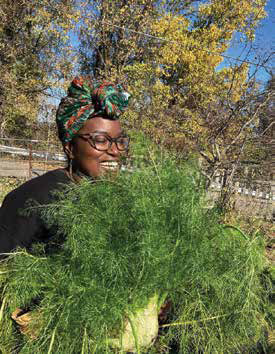
Nature, Wildlife & Ecosystem Return
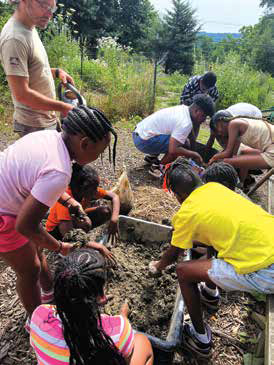
GCF partners with the Environmental Charter School, where students farm their own raised beds, and BASE (Brothers and Sisters Emerging), a Garfield-based youth mentoring program. During the school year, GCF visits the BASE center and teaches nutrition and food literacy, environmental justice, and gardening agriculture. In the summer, the BASE kids come up to the farm three mornings a week for programming that includes gardening, art, and movement.
“There’s been so much research that has drawn positive correlations between equitable, accessible green spaces and overall neighborhood health and resiliency,” says Monsma.
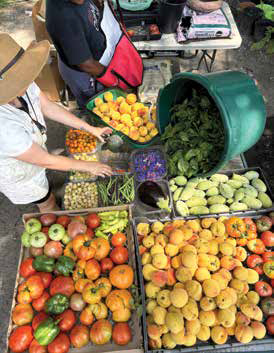
And as GCF staff and volunteers have worked to develop this biologically healthy and diverse ecosystem, they have witnessed the return of many migratory and native birds, including the scarlet tan – ager, orioles, indigo buntings, red-tailed hawks, and cardinals as well as pollinators.
“When certain plants open up, like echinacea or bee balm or blazing star, I like to sit and watch because over 20 different native pollinators will visit within the span of a few minutes,” says Monsma. “It’s really quite incredible to see.”
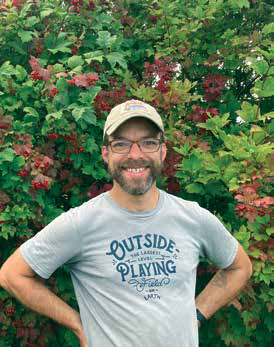
“One of the best things about our organization,” she sums up, “is that we’re a community green space.”
Garfield Community Farm: 509 Wicklow Street, Garfield, 412-979-7764, garfield farm.com
Goat Rodeo Farm & Dairy
Yes, chèvre! A goat-fueled operation in Indiana Township is turning out blue-ribbon cheeses.
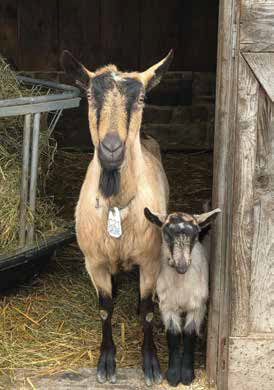
At 1 o’clock every afternoon, on a 130-acre farm in Indiana Township, Will Loevner opens a small barn door and 12 goats dash into the milking parlor.
“This is the one time of the day they get grain — and they go crazy,” he says of the farm’s 40 milking goats, who usually leisurely eat hay in the barn or wander out to the fields for fresh forage.
And from that milking parlor, the making of Goat Rodeo’s award-winning cheese begins, with milk traveling through pipes, filters, and large tanks. Techniques such as gravity flow deliver pasteurized milk to the creamery.
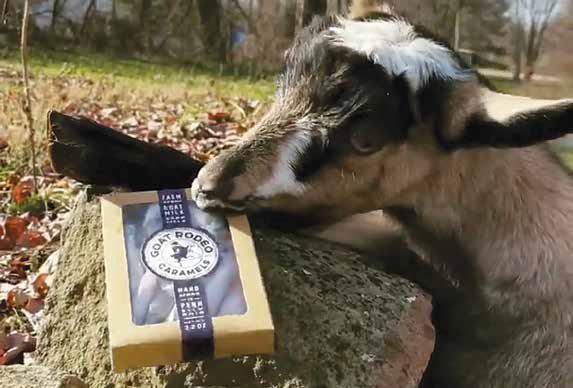
“We go all the way from the goats and milking to making our cheese right next door,” he says.
How It All Began
The enterprise began almost on a whim. About 15 years ago, his mother, India, accompa – nied a friend to a dairy goat show. She came home with the show’s first- and second-place finishers, much to the surprise of her husband, Steve.
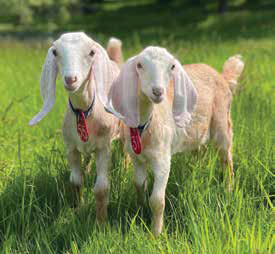
Loevner recalls his father’s reaction: “What are we going to do with goats?”
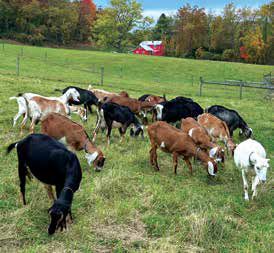
Well, as it goes, two goats became more goats, “and before we knew it, we had a lot of goats,” and his parents had to figure out what to do with them all. “My mom grew up on a farm in Butler, so she always wanted to have a farm. My dad grew up in the city, but he’s always been really into food.”
Synergy stepped in. “They combined their interests and started a creamery that makes artisanal cheese — and really try to make a product that could rival European cheeses, right here in Pennsylvania.”
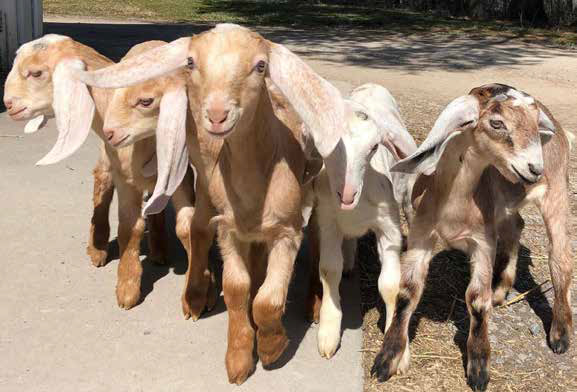
His parents attended a lot of cheesemaking classes. “When I was growing up, they were experimenting with cheesemaking on our kitchen stove,” he says. “We were using a little fridge in our basement to age out the cheeses.”
In 2015, they built a barn and a creamery and “really upped our production.” And what a run they’ve had: In just 10 years, Goat Rodeo has garnered almost 40 awards for its cheese.
One such award was second place Best in Show at the American Cheese Society Conference in 2022. “It was out of 3,400 cheeses in all of North America and our Bamboozle took second,” he says. “We competed against big places in Wisconsin — all these people who have been doing it a really long time.”
Signature Cheeses & Flavors
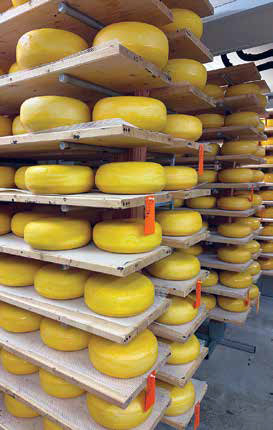
In its immaculate facilities, Goat Rodeo produces seven cheeses, which are served at the city’s best restaurants — from Fish Nor Fowl to Altius and many more — and sold at dozens of local purveyors, including the East End Food Co-op and Bryant Street Market.
Bamboozle is a semi-soft cheese aged for about six weeks and rubbed with a beer salt solution three times a week, using a beer from Cinderlands, a craft brewery in the Strip District.
The variety called More Cowbell is made using cow’s milk. Cowboy Coffee is hand-rubbed with Commonplace Coffeehouse’s Perpetual Blend Espresso. There’s Hootenanny, a goat’s milk Gouda made from spring and summer milk. Wild Rosemary is a mixed-milk cheese hand-pressed with freshly dried rosemary and olive oil. These cheeses are aged in the Goat Rodeo cheese cave, some up to eight months.
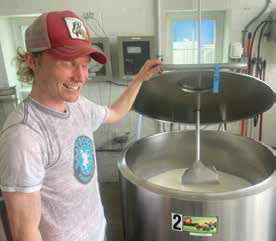
By contrast, the creamy Fresh Chèvre is ready for sale just days after the goat is milked.
Up next for Goat Rodeo’s line of cheeses is Pure Luck, a cheddar cheese.
The 100-goat herd (not all are milking goats) is treated with care and able to roam the hilly countryside freely. As India Loevner says, “A happy goat makes happy cheese.”
Goat Rodeo: 412-406-7336, goatrodeocheese.com
Our Neighborhood Farmstead
From homestead to farm stand — The Corner Market makes the local goods ever-so handy.
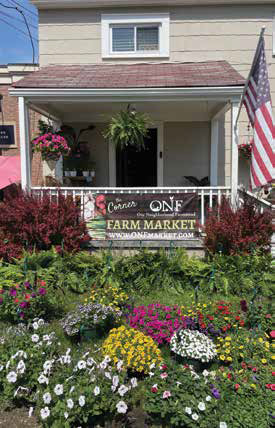
In May 2024, Christa Meeder rented the small house on the corner of Dorseyville and Harts Run roads, and a fresh foods market for the Fox Chapel area was born.
“Everybody’s so happy to have something close by,” says Meeder, who co-owns Our Neighborhood Farmstead with her partner, Dan Parrish.
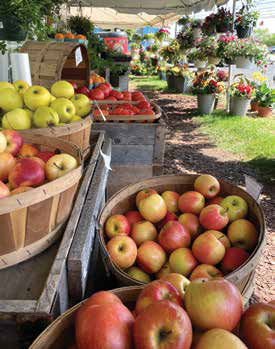
Flowers and ferns hang from the covered porch. Under a sprawling oak tree, a tent is loaded with bush – els of heirloom tomatoes, peppers, apples, and seasonal produce such as corn and watermelon. A grassy lawn is lined with hanging floral baskets and flower and veggie plants in the spring and summer; wooden spools stacked with pumpkins, gourds, and mums in the fall; and wreaths, swags, and garlands in the winter.
“Everything is very vintagely decorated,” she says. Think apple-picking ladders and foliage drapes.
Inside The Market
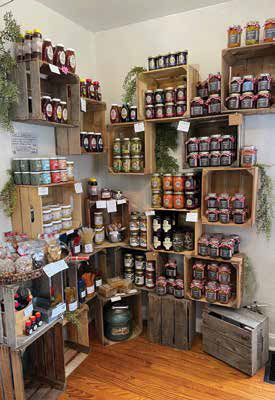
Each day, the parking lot is full as customers stop to see what’s new. Inside the market, there is refrigerated produce — lettuce, broccoli, beans, berries — and there’s a bounty more, all locally sourced. Cheeses, meats, bread, milk, syrup, choc – olates, yogurt — you name it, the market has likely got it. Chicken, duck, and quail eggs. Pierogies and pastries, vinegar and venison, honey and hummus.
This spot is called The Corner Market, which is Our Neighborhood Farmstead’s fourth location and the second brick-and-mortar (the other is in Franklin Park).
Meeder and Parrish’s farming journey began on their own 12-acre parcel in Imperial.
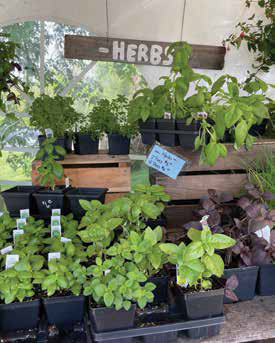
“We’ve always been a homestead, so we always grew, hunted, and fished our food sources,” she says. “In 2020, when we were both furloughed in the pandemic, we started growing more. We would put things down on the picnic table at the bottom of the road. Everybody really loved it because they were having such issues with food supply.”
They built a small farm stand. “Then the next year we built an overhang. We kept building, build – ing, building and growing more,” she says. “And then, I decided to move forward with this dream that I had.”
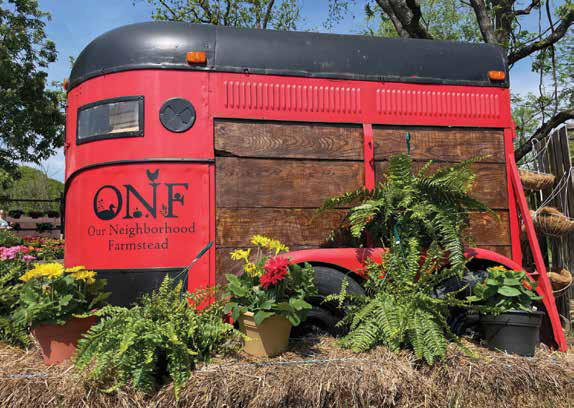
Meeder bought a vintage horse trailer to house her mobile farm stand and “started bopping around events.” Soon after, she landed a seasonal pop-up gig in the Duncan Manor shopping plaza in Hampton.
For quite some time, Meeder had been eyeing the Dorseyville Road location, having noted that the grassy area would be ideal for her mobile farm stand.
Building a Community Space
When it became available last spring, she jumped. Fast forward a year, and not only is Meeder sharing the bounty of her harvest and sourcing other locally made products, but The Corner Market is also such a welcoming space that neighbors are join – ing her effort, too.
“I have a lot of community members of all age ranges working and helping. The parents love that the 15- and the 16-year-olds get to learn about the plants and work outside,” she says.
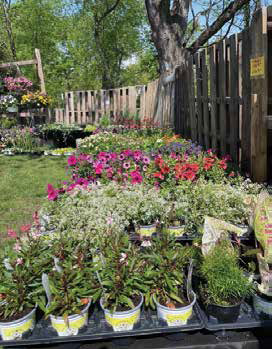
The Corner Market is the kind of place where “everybody knows each other’s names,” says Meeder, “and that’s really important to me.”
Our Neighborhood Farmstead: 723 Dorseyville Road, Indiana Township, onfmarket.com. Hours are Monday to Friday, 10 to 6; Saturday and Sunday, 10 to 4.
Eleven Mile Farm
The power of flowers is in full bloom at this 50-acre farm just 11 miles from Downtown.
Becca Ringham Myerburg has always been drawn to farms.
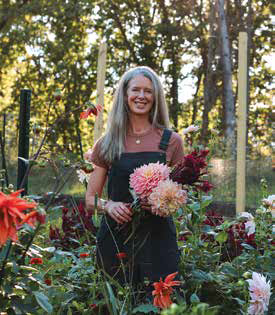
“My mom’s side of the family had horse farms in Kentucky, so there’s farming in the bloodline,” she says. “I love the bucolic experience and the sway of the hills, and the green, and the adventure that awaits.”
Learning Flower Farming
Several years ago she and her husband, Mike, knew they wanted to become “stewards of land,” but didn’t want to leave the area, rich with family, friends, community, and careers. (She’s a psychotherapist; he’s a physician.)
One day, they stumbled upon a farm in Indiana Township, a few miles from their house. “We were invited to take a look and walk around. Within 10 minutes, we said, ‘This is it.’ ”
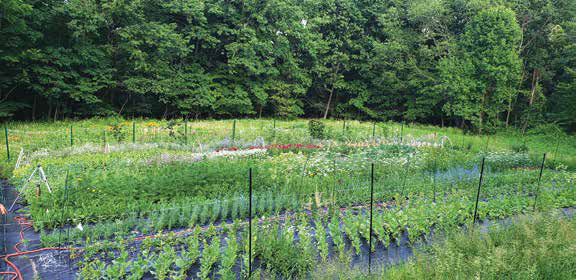
The 50-acre parcel has a log house from 1874 called Eleven Mile House “because it’s that far from Downtown Pittsburgh,” she says. They adopted that moniker for their farm.
About that time, Becca decided to knock something off her bucket list: a workshop with Floret Flower Farm’s Erin Benzakein, “who’s just this guru of flower farming, and she’s such a great educator.” Through the winter of 2018, Becca took her first online workshop. “I studied and learned and jumped into it.”
Soon after, with the help of Mike, she established a plot and “grew 50 varieties of flowers that summer.” Zinnias, sunflowers, cosmos, anemone.
The CSA Flower Model
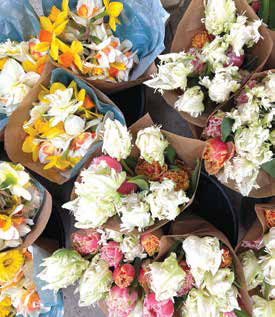
In spring 2020, Eleven Mile offered a small CSA model of four or six weeks of floral bouquets. “I think it was a time that people really needed flowers, they really needed connection,” Becca says. “It resonated with people, and that has been the springboard for the whole journey.”
Flower farming and psychology, she says, are similar in some ways. “It’s mindfulness, it’s creativity. … There’s evidence that even just looking at flowers helps us feel better and affects all of these hormones and neurotransmitters within us.”
Eleven Mile follows the slow-flower movement of seasonal and sustainable growing. It provides a ELEVEN MILE FARM The power of flowers is in full bloom at this 50-acre farm just 11 miles from Downtown. Neighborhood Farmers host of ways to boost one’s well-being through flowers, including floral offerings 12 months of the year (through the use of hydroponics, indoor growing, and dried varietals).
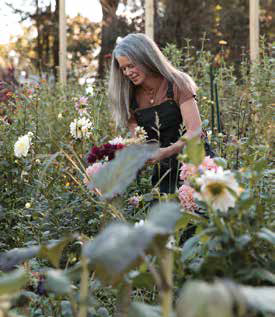
The CSA program has grown to 10 options, such as early tulip, specialty narcissus, early or later summer, and heirloom chrysanthemum, which Becca says is a “huge thing in flower farming” with “unique varieties of chrysanthemums, unlike anything that you would see at the grocery store.”
There are also exquisite seasonal floral wreaths and floral arrangements, fresh bouquets, dried bouquets, and unique offerings such as Spring Nest arrangements, which resemble an oversized bird’s nest abloom with dried flowers and adorned with farm finds like quail eggs and feathers, centered with a potted plant and nestled on an antique plate.
Becca also offers workshops that are “geared toward allowing people and encouraging people to come together and to practice and play with flowers,” she says. “We’ve got to keep playing as adults, trying new things.”
Eleven Mile Farm: elevenmilefarm.com
Shiloh Farm
A project of Grow Pittsburgh for nearly two decades, this urban plot shows what goodwill and dedicated work can produce.
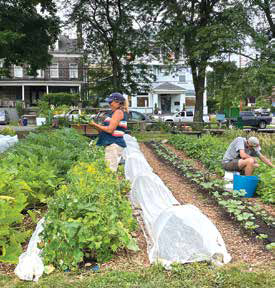
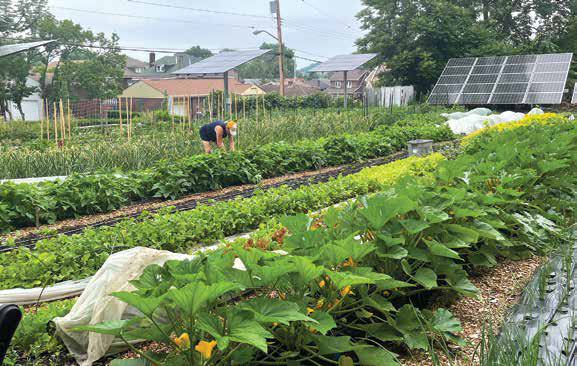
Grow Pittsburgh’s Shiloh Farm gives meaning to the term “small but mighty.” Located in North Point Breeze on Thomas Boulevard at North Homewood Avenue, the lot is about a third of an acre. The bounty that emerges shows what the earth can yield, smack in the city.
A working urban farm since 2008, the lot is owned by neighbors who enthusiastically support Grow Pittsburgh, asking only for compensation in bags of produce.
Grow Pittsburgh’s mission is to teach people how to grow food and promote the benefits that gardens bring to neighborhoods.
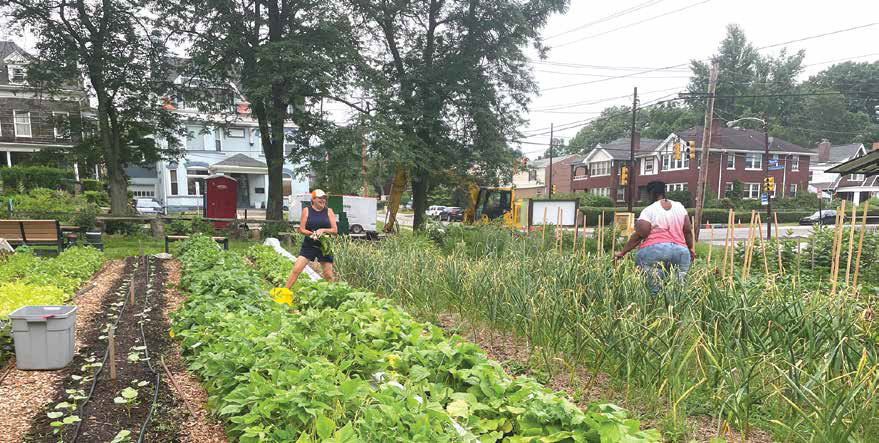
“We love that farm,” says Hanna Mosca, Grow Pittsburgh’s director of urban agriculture and programming. “It’s a great example of what you can do with a city lot.”
Volunteer Workshare System
There are chickens and beehives, perennials like raspberries and elderberries and blueberries, and “lots of annual things that we plant every year and do very intense production,” says Mosca. “We do succession planting so that we can have produce for our weekly farm stand.”
To achieve that end, Shiloh started a workshare program. Volunteers come on a weekly basis to water, weed, harvest — whatever needs to be done — in exchange for a “bag of produce from the farm, some eggs, some honey, those kinds of things.”
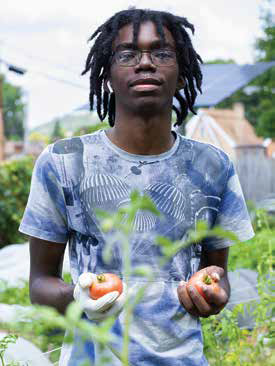
And like an oasis, Shiloh — a Hebrew word that can translate as tranquility — draws people. Whether it be walking from their homes, stopping by after work, or picking up their kids from day care, “people come, people wait for the bus there, they come and eat lunch on our picnic tables,” says Mosca. “We have kids who get off the bus stop right there. It really does feel like a community hub.”
Grow Pittsburgh has two other growing locations not far from Shiloh.
One block down Homewood Avenue, on the 6-acre garden campus of The Frick Pittsburgh, is a Victorian greenhouse (think a mini-Phipps Conservatory).
In the late 19th century, it was common for a wealthy family’s estate to have a greenhouse to provide year-round fresh flowers and seedlings for gardens. In 2006, the Frick approached Grow Pittsburgh about helping to manage that greenhouse space. It was Grow Pittsburgh’s first partnership — and the partnership that allowed “us to start doing a seedling sale,” Mosca says.
Within a few years, Grow Pittsburgh was selling 10,000 seedlings at the Frick, with more than 150 varietals of perennial and annual herbs, fruits, vegetables, and flowers — all organic.
Garden Dreams & Urban Farming Education
The third growing space gifted to Grow Pittsburgh came from one of its founders, Mindy Schwartz. She ran a nursery, Garden Dreams Urban Farm & Nursery, in Wilkinsburg for some 20 years. In 2019, she donated her land to the Allegheny Land Trust and transferred the operations to Grow Pittsburgh.
“The gardens here have such beautiful soil because they were literally working, building this beautiful soil for decades before we came here,” says Mosca.
And with this new partnership, “it is urban agriculture in perpetuity.”
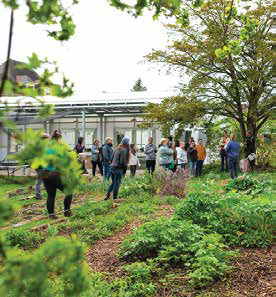
Grow Pittsburgh added a 2,800-square-foot greenhouse to the property, which allows for yearround programming, such as winter wellness workshops. And while they are “learning the quirks” when it comes to running a greenhouse, the yield is impressive — they sold 27,000 seedlings last year.
Training the Next Generation
Both Shiloh and Garden Dreams offer educational programming, including a teen program called Urban Farmers in Training, a paid six-week summer intensive program based on learning to grow food, cooking, understanding the food system, building leadership, and public speaking. For adults, through a partnership with Past Sustainable Agriculture, there is an apprenticeship program for those “wanting to take their education to the next level,” says Mosca. The cohort will get a more indepth education about farming and more training on “succession planting, irrigation systems, and pest and disease control.”
And this year, the programs had more applicants than they could accept.
“We can feel the desire for learning and getting outside and connecting with nature and other people,” she says. “It’s so palpable right now.”
For more information, check growpittsburgh.com.
Shiloh Farm: 7209 Thomas Boulevard, North Point Breeze, 412-362-4769. Farm stand opens in early June and runs through Halloween on Thursdays from 2:30 to 6:30 pm.
The Frick Pittsburgh: 7227 Reynolds Street, Point Breeze, 412- 371-0600, Tuesday to Sunday, 10 am to 4:45 pm.
Garden Dreams: 806 Holland Avenue, Wilkinsburg, 412-362- 4769. If driving, park at 215 Center Street Park ’N Ride. Hours are Friday, noon to 6 pm; Saturday, 10 am to 4 pm.
Story by Lauri Gravina