
Amanda Dunyak Gillen, the new executive director at The Frick Pittsburgh, leads the Point Breeze institution into a new era.
Meet New Frick Pittsburgh Executive Director Amanda Dunyak Gillen
Amanda Dunyak Gillen still remembers the moment. She was a graduate student at Duquesne University, walking through the historic Clayton house as an intern at The Frick Pittsburgh, when she realized she had found something rare: a place where history, art, and community converged with purpose. That internship eventually became her calling.
Over the next two decades, she worked her way through nearly every corner of The Frick Pittsburgh, helping to shape its exhibitions, programming, and educational vision.
In April, she was named the museum’s executive director, the first person to rise through the organization’s ranks into its top leadership role.
Her journey from intern to executive is also a Pittsburgh story. Gillen grew up in a Mon Valley town, the daughter of a steelworker who ran the machine shop at J&L. She watched the mills run — and she watched them shut down. That experience gave her a deep understanding of the region’s complexities and the importance of preserving its past.
“I grew up in a Pittsburgh shaped by steel, and I remember what it was like when it all stopped. That experience shaped how I see the city and why I believe in the work we do at the Frick,” she says. “We help people understand where we’ve been, and that matters more than ever.”
What Drew Her to The Frick
SHADY AVE: You are the first Frick Pittsburgh director to be promoted from within. And you’ve been with the Frick for more than 20 years, a long tenure by any standard. What has drawn you to its mission all these years?
Amanda Dunyak Gillen: As a graduate intern, I fell in love with the place. It was the perfect mix of art, history, and green space. As a history major at Allegheny College, I used to wonder how I could ever work with history in a real way. I found that at the Frick.
What keeps me here is the ability to grow alongside the institution. There’s always something new. New exhibits, new conversations, and new ways to connect with our visitors. It’s kept me going for 21 years, and it’s gone by in a blur.
Recognition for Inclusive History
The Frick last year won a national award for the Clayton reinterpretation project, “Gilded, Not Golden.” Tell us what that recognition meant to you, professionally and personally.
As a history lover and practitioner all these years, it was incredibly meaningful. This was our first full reinterpretation of Clayton since it opened to the public in 1990. We brought together an advisory board, educators, curators, and scholars to think through how the house could tell a more inclusive story. Our team put a lot of time and effort into that work. Winning the American Association for State and Local History’s Award of Excellence confirmed that our work met a high professional standard.
Personally, it validated everything I believe about doing good, responsible history. And it’s brought more people through our doors, which is the best outcome of all.
The Vision Behind “Gilded, Not Golden”
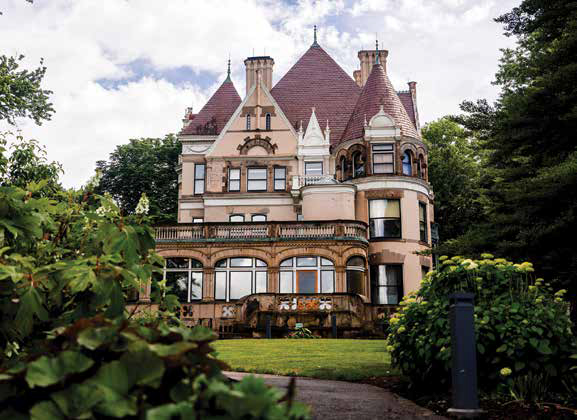
The “Gilded, Not Golden” tour invites visitors to engage in conversations about Pittsburgh’s history beyond the Frick family. Why was it important to tell a broader story?
Henry Clay Frick is a complicated figure, and not everyone is interested in him. The tour we offered for many years was very Frick-centric. It was good in its way, but we really wanted the house to be more useful. Frick is a central part of the Pittsburgh story, along with people like George Westinghouse and H.J. Heinz. They were all part of that Gilded Age era when Pittsburgh was an industrial powerhouse, and there are direct links between the city we know today and Frick’s role in it.
We titled the new tour “Gilded, Not Golden” as a nod to that era, which was only golden for some. It was golden for people like Frick. But we also wanted to include the voices of steelworkers, the people working under Frick in the mills, domestic staff, and others in Pittsburgh. That has really opened up new opportunities for conversation with our visitors.
Confronting Wealth and Labor History
The tour touches on wealth disparity, labor unrest, and loss. How do you present the vexing parts of history to visitors?
For us, it’s about conversation and context. The tour is designed to be dialogue-based. Visitors aren’t required to speak, but we encourage people to share thoughts, and our guides present questions for people to weigh in on. We also provide context. For example, we show an instrument in the house that cost $5,000, and then we share that a steelworker would have had to work eight years to afford it.
It’s not about making a judgment. We’re simply putting the information out there and letting people reflect on what it means to be able to buy something on a whim versus working eight years just to make ends meet.
People-Centered Executive Leadership
Education and visitor experience have been central to your career. How do you foresee your background in these areas influencing your leadership as executive director?
As an educator, my work has always been about facilitation and putting people first. That’s how I see the role of executive director — as the lead facilitator, in a sense. I view the position as one of service, supporting our visitors and staff. That people-centered focus is how I plan to approach the work. I want to make sure our visitors have meaningful experiences, our staff feels supported, and the organization continues to grow. I always ask what people need and how I can help make those connections.
Goals for the Frick’s Future
You mentioned wanting to build on the Frick’s legacy. Can you share specific goals or initiatives you’re most eager to focus on in the next few years?
One major project is the exterior restoration of Clayton. We’re removing 21 layers of paint dating back to the 1890s, repairing mortar, and repainting with a mineral-based breathable paint. It’s a $10 million effort and one we take seriously. Clayton is, in many ways, our biggest artifact. We’ll also launch preservation tours so visitors can see this work up close.
We’re putting a renewed focus on our green space. With 10 acres and arboretum status, visitors have told us they want more outdoor programs, and we’re excited to make that happen. Exhibit-wise, we have The Scandinavian Home: Landscape and Lore opening in the fall.
Beyond that, we have a fairly open slate. Our team is putting together interesting exhibits that will hopefully surprise people and combine art and history in ways that are true to the Frick, but also are new and exciting.
Collaboration on a National Scale
Last year’s show “Vermeer, Monet, Rembrandt” was the first major collaboration between The Frick Collection in New York and The Frick Pittsburgh. Will there be more collaborations in the future?
I hope so. Collaborations, whether local or national, are important for the future of museums. Our Scandinavian exhibit, for instance, will be traveling, which helps get The Frick Pittsburgh name out into the wider world. Our team is very open to working with others, and I think we’ll continue to explore those opportunities.
Lessons from Teaching
As an adjunct professor at Duquesne, what lessons from teaching public history and museum education do you bring into your work at the Frick?
The questions students ask — and the fresh perspective they bring — are everything. I’ve been in this field a long time, and having students say, “Why is it done that way?” or “Could we try this instead?” pushes me to reflect on our practices. It makes me better at my job because you have to stop and think about why we do it this way or how could we think about this differently.
I love teaching. I’ve taught graduate and undergraduate students. It feels like a privilege to give back to Duquesne and also to learn from the students as much as I think they learned from me.
Little-Known Facts
What are some little-known facts about the Frick you’d like to share?
Most people don’t know there’s orange shag carpet on the third floor of Clayton. Helen Clay Frick modernized parts of the house later in her life, and no one expects to see that orange carpeting.
Also, our staff offices are scattered in all the buildings. We don’t have one main office space, so we’re squirreled away in all of the buildings on-site. It’s nice in that we’re in the spaces, but we’re also all over the place.
Helen Clay Frick’s Enduring Legacy
The Frick Pittsburgh was born out of the vision of Helen Clay Frick — not that of her father, Henry. What is her legacy that the museum wants to uphold?
Helen had Pittsburgh in her heart, and she is the driving force behind the preservation of Clayton. She built the original art museum and the Car and Carriage Museum and was deeply committed to education and preservation. She even started the Frick Art Reference Library in New York in 1921. It was her vision that students should tour Clayton and learn from it, and we are still honoring that vision today, just in more expansive and inclusive ways.
Bridging Communities Across the City
As a Mt. Lebanon resident, you traverse epic frontiers to come to work each day. Do you need a passport? How do you compare life in that faraway land to the East End?
I’ve joked that if I didn’t love the Frick so much, I would have quit the commute long ago. Mt. Lebanon is a wonderful, walkable neighborhood and a great place to raise my daughter. But I also love the East End — its creativity, its restaurants, its cultural institutions. Because of the Frick, I’ve gotten to live in both worlds, and I feel really lucky for that.
Story by Daniel Casciato