
Transformed by rapid growth in the early 21st century, Lawrenceville seeks to continue its hot streak – while holding space for those who’ve been there for all.
Growth and Change in Pittsburgh’s Lawrenceville Throughout the 21st Century
A little after 4:30 p.m. on a Thursday in February, an Access van pulled alongside a curb on Butler Street in Central Lawrenceville. Elaine Arlott and Shirley Hanley climbed out and made their way into the Estelle S. Campbell Boys & Girls Club.
In the gym, a mix of children, teenagers and adults of all ages sat along plastic-covered folding tables for an evening of intergenerational bingo. Arlott and Hanley found seats across from one another. The room was filled with more than 50 people, the greasy smell of pizza and the sound of conversations bouncing off blue-painted walls. At the front of the room, a big-screen TV mirrored a laptop, which displayed a bingo board.
The rounds went quickly. Before long, a computerized voice said, “G-51,” as the corresponding circle lit up on the screen. A woman piloting the laptop repeated the number into the microphone.
“Bingo!” one of the teenagers shouted.
“Bingo is called! Hold your markers,” responded the woman.
The teenager ran to the front of the room, waving a sheet of paper in the air. The woman checked the numbers on the sheet against the board. “Good bingo!” she declared; the other teenagers cheered loudly as the winner received a $10 gift card and candy.
Arlott and Hanley have been friends for decades and have a camaraderie of their own — albeit a somewhat quieter one. This is their first time going to an event through the city-run Healthy Active Living Senior Center, which shares a building with the Boys & Girls Club. (Bingo happens twice weekly; more intergenerational events are expected soon.)
“It’s nice,” Arlott said.
“You’re not,” Hanley joked in reply.
Life in Lawrenceville for Long-Time Residents
They’ve lived in Lawrenceville for more than 15 years, taking up residence in one of the neighborhood’s three senior high-rise apartment buildings. People around the neighborhood are friendly, Hanley says — though Arlott points out that most of the things to do are geared toward younger people.
She’s not wrong. According to the US Census Bureau’s 2024 American Community Survey (ACS), almost 35% of the 13,000 people living in Lawrenceville are between 25 and 34 years old. Arlott and Hanley are among the 20% who are 60 or older.
For many, the story of Lawrenceville has been relatively simple: There was nothing except crime, then there were artists (and still some crime), then came the nice restaurants and cute shops. It became whiter, wealthier and more educated. It became, well, Lawrenceville. (What that emphasis sounds like is in the mouth of the beholder.)
“I think people hear Lawrenceville and think that it’s everybody in million-dollar homes and whatever,” says Kara Kimicata, community outreach manager for Lawrenceville Together. “And that’s not the case. It’s more complex than I think a lot of people take it to be.”
Let’s try to tell that story instead.
What Lawrenceville Was: History, Institutions, and Community Roots
If you slow down, you’ll start to see how much of Lawrenceville has survived for a century or more. Lawrenceville was, and is, buying loafers at Wagner Shoes (1854), saying goodbye to loved ones at D’Alessandro Funeral Home & Crematory (1897) and checking out books at the first Pittsburgh branch of the Carnegie Library system (1898). It’s Sunday Mass at St. Augustine (1901), a pickup game in Arsenal Park (1907) and league night at Arsenal Bowl (1938).
It is true, though, that things were rough — for more than a little while.
Industry Decline
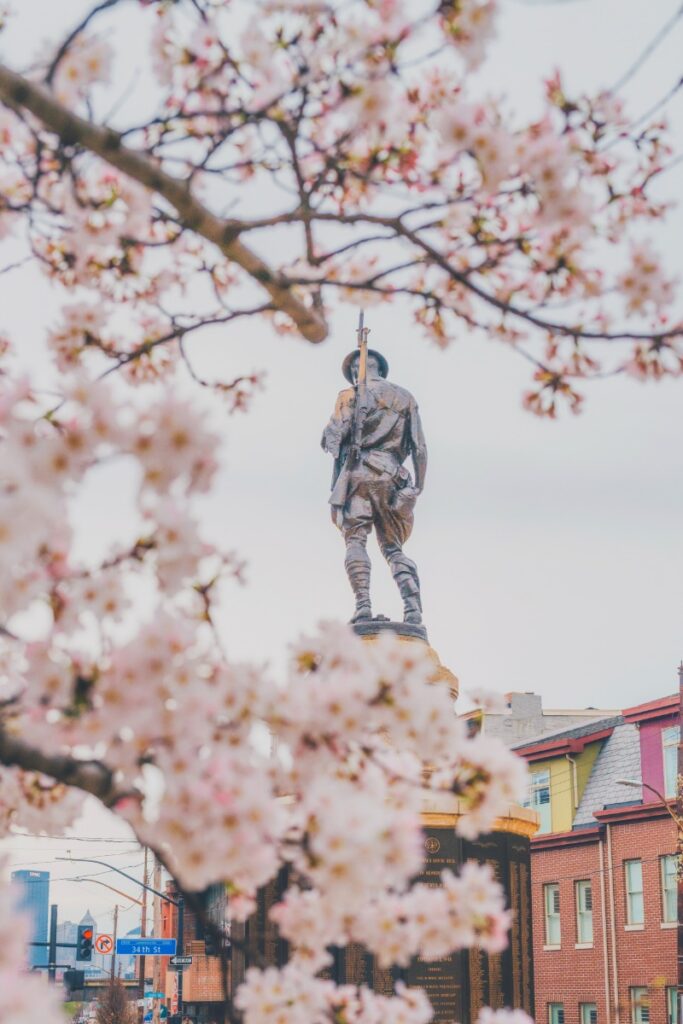
Joey Sullivan grew up in Lower Lawrenceville. The city’s economic decline, as steel companies moved production overseas, marked the neighborhood — and his coming of age in the 1970s and ’80s. He fondly remembers kicking off summers with the annual Memorial Day parade and watching fireworks in Arsenal Park to celebrate the Fourth of July, events that remain popular today.
“It’s the best neighborhood,” he says.
Sometimes, he thinks about the past and wonders what might have been. “I lost a lot of buddies around the neighborhood because they made the wrong choices,” he says. “Thank God I still am here to still think about them, you know?”
Sullivan is, of course, not the only person with bittersweet memories of — and a persistent love for — Lawrenceville.
In 2001, a handful of such people formed Lawrenceville United. Whereas Lawrenceville Corporation had been established the previous year to address the neighborhood’s economic development, United wanted to focus on advocating for residents, reducing crime and fostering community culture. (The two organizations merged to create Lawrenceville Together — LVT — in January 2026.) Cofounder Loretta Millender said in an episode of United’s Wisdom Keepers podcast that the name came out of a desire to bring together residents of different races.
Community Organizing and Economic Development
The organization held “block watches” to help lower crime, worked to address blight and hosted community gatherings. Their work decreased crime by 60% and recycled 30 blighted properties. The neighborhood became less of a place to avoid and more of a place to visit.
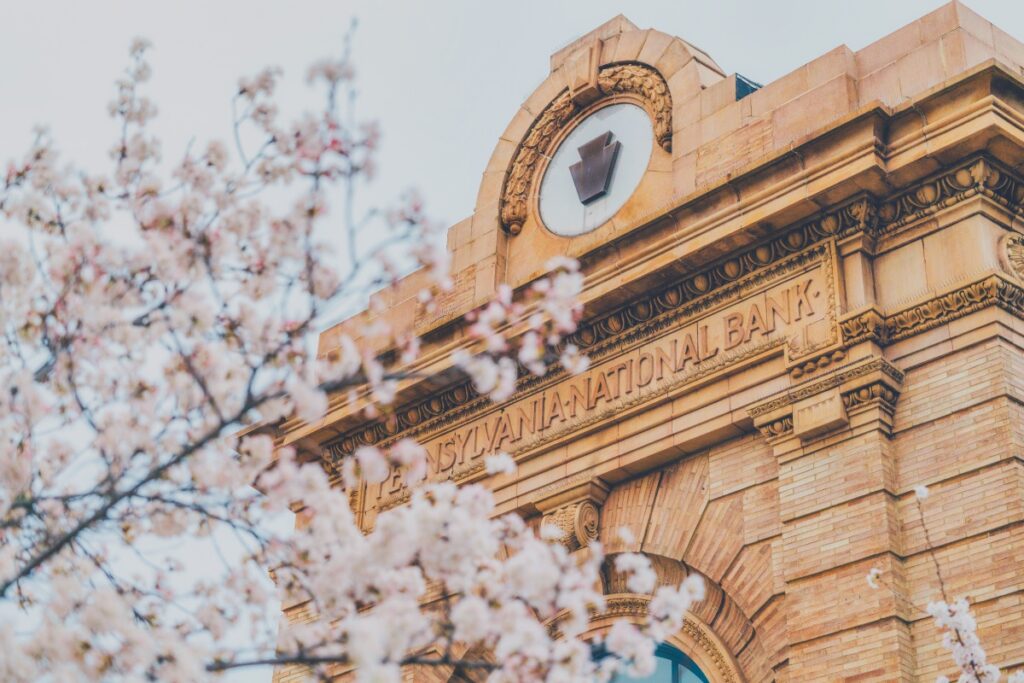
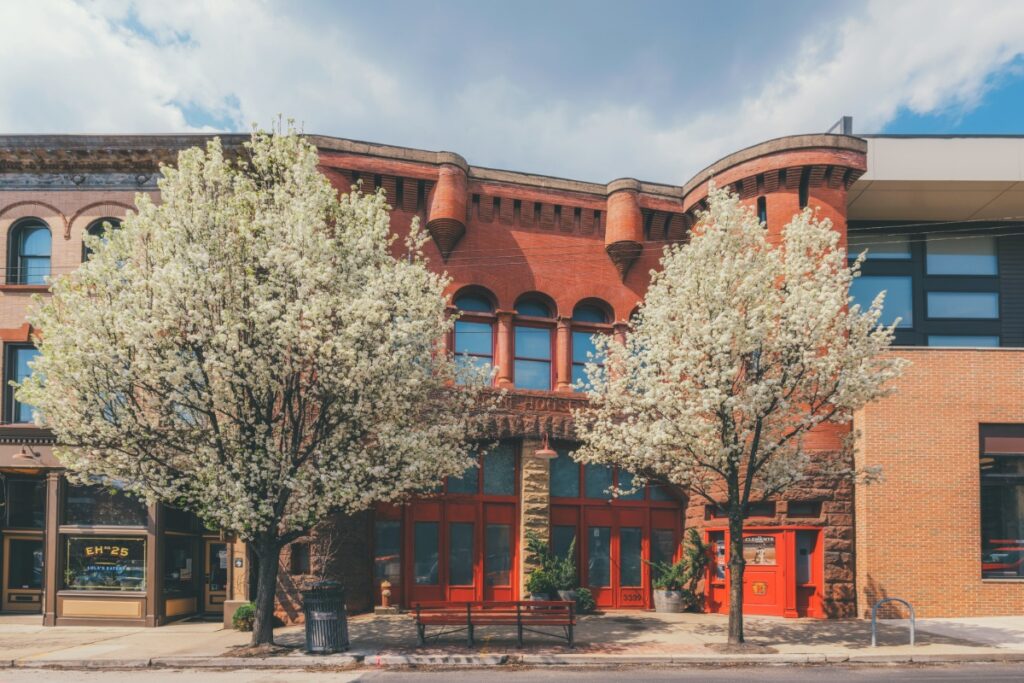
Under the guidance of Lawrenceville Corporation, business development picked up by 2009. That year, UPMC Children’s Hospital of Pittsburgh moved to the neighborhood, as did now-classic establishments including coffee shop Espresso a Mano, Mexican restaurant Round Corner Cantina and gift shop Wildcard. Those new neighbors joined mid-to-late-century staples such as Frankie’s Extra Long bar and grill, McDonough’s Antiques and Bestwick Auto Services.
You could say that Lawrenceville Corporation succeeded in its mission. According to LVT’s strategic plan, over 300 businesses line the district’s 30 blocks. Two-thirds are locally owned; one-third are women-owned.
Kimicata says LVT’s work isn’t done. “We’re still trying to make sure that when businesses turn over that mom-and-pop businesses stay.”
What Lawrenceville Doesn’t Want to Be: Displacement and Equity Concerns
For Lawrenceville United, the end point didn’t seem to be in sight. All that growth, of course, came at a cost.
According to the ACS, 64% of residents moved to the neighborhood between 2010 and 2022. Conversely, Lawrenceville Corporation reported that in roughly the same years the neighborhood lost 68% of its Black population — despite the efforts of Millender (who died in 2022) and other community advocates.
Emma Gamble, former community engagement and program manager for Lawrenceville United, says, “I think one of the biggest things is making sure that the folks who have helped make this neighborhood a thriving neighborhood can age in place here if that is their choice.” She says efforts to do so, however, have become more difficult as helpful citywide programs face financial cuts.
Housing, Food Access, and Local Policy Efforts in Lawrenceville
In 2019, Lawrenceville became the first neighborhood in Pittsburgh to take on an inclusionary zoning overlay. This mandates that 10% of new housing units in developments with 20 or more units be set aside for low-income households. According to a January 2025 report by the Pittsburgh Community Reinvestment Group, inclusionary zoning has resulted in over 110 more affordable units (some of which are still under construction).
Another development concern: Due to zoning regulations, Lawrenceville has only one grocery store (an Aldi in Upper Lawrenceville). Gamble says this makes other areas of the neighborhood food deserts.
In response, Lawrenceville United started a farmers’ market; it runs for 28 weeks a year. This year marks its 16th season. It participates in SNAP matching, which doubles the purchasing power for shoppers who use food stamps. LVT also offers free transportation to increase access. According to Gamble, the market sees a weekly average of 500 people.
By LVT’s estimate, 23% of households in the neighborhood in 2022 were cost-burdened. Toward that end, LVT also offers weekly Friday food distribution with 412 Food Rescue (and doesn’t require income verification).
What Lawrenceville Can Be: Community Spaces and Everyday Life
Sometimes a weekday morning in Lawrenceville looks like this: Capuchin Friars, wearing dark brown, rope-belted robes, sipping drinks from Espresso a Mano while talking with families who are waiting for the bus.
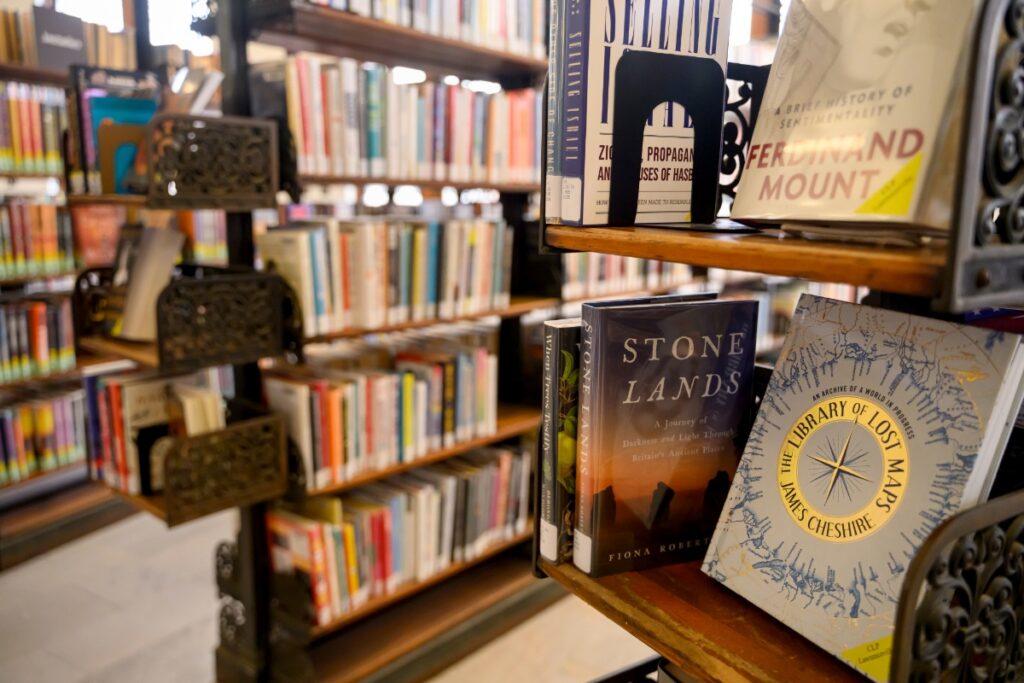
It looks like multiple weekly storytimes at the library, regularly garnering 30 attendees, according to its children’s librarian, Alexandra Haley. The library also serves as a computer-access point for older adults and a study space for college students. In the evenings, it hosts regular adult group activities, including bring-your-own fiber arts, a book club and English-speaking practice.
For school-age kids, Lawrenceville looks like Pittsburgh Arsenal PreK-5 and Pittsburgh Arsenal 6-8 serving as English language learning centers for the city’s public schools. Their students represent more than 25 countries.
On a weekend in summer, Lawrenceville looks like the recently renovated 20-acre Arsenal Park filled with queer kickball league games and community barbecues. On a weekend at nearly any time of year, there are families with children running through the playground.
Among those is Julia Lindpaintner, 38, who moved with her husband to Lower Lawrenceville in 2022. With three young children, the park and the library are the biggest selling points. “It’s a big thing for us, just being in a neighborhood where it really, truly feels walkable,” she says.
Addressing the Gaps
Gamble describes the neighborhood as having a strong volunteer base. There are groups for street-safety measures, tree planting and running Bernard Dog Run near the 40th Street Bridge. The neighborhood also hosts two community gardens.
While all of this is wonderful to see, “we’ve been lacking this intergenerational component,” says Gamble. “Sometimes people feel that Butler Street doesn’t belong to them in the same ways that it maybe used to.”
Which brings us back to intergenerational bingo at the Boys & Girls Club — an emblem of Lawrenceville trying to embrace both longterm residents and those too young to remember the old days.
Gamble says, “There are still such a wide variety of folks here who really just love their neighborhood and want to see it as this thriving place.”
Story by Kahmeela Adams, Aakanksha Agarwal, Deborah Weisberg, Amy Whipple and Corinne Whiting