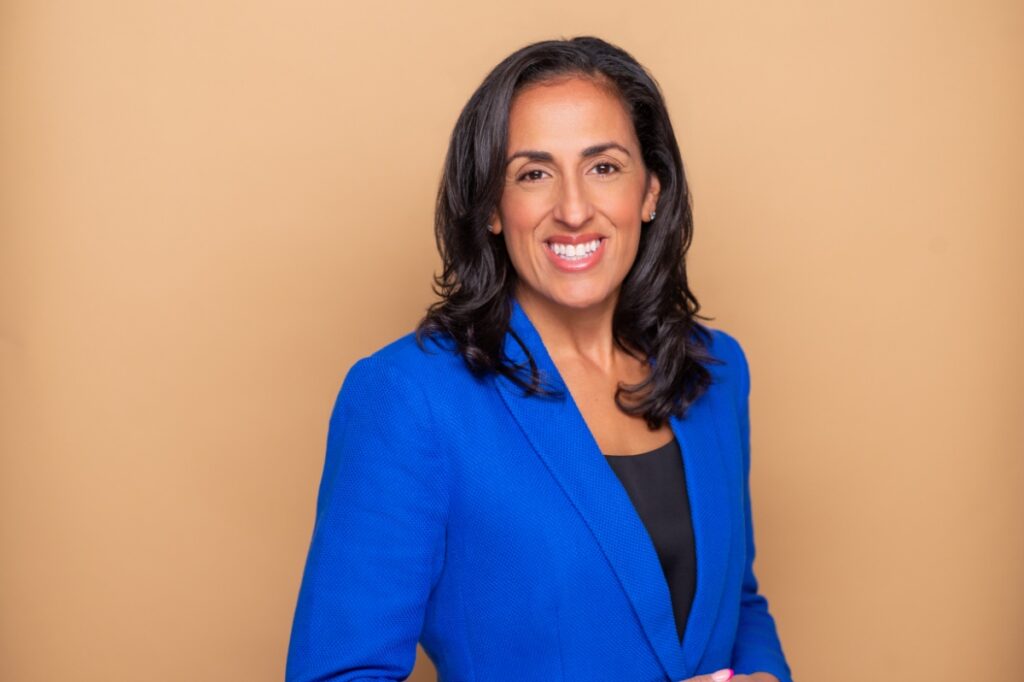
Kendra Whitlock Ingram led arts organizations across the country — jumping from Omaha to Tulsa to Denver to Milwaukee — before winding up a few blocks away from her undergraduate alma mater. Ingram, a Duquesne grad who later earned a Master’s at the University of Nebraska at Omaha, began her tenure as president and CEO of the Pittsburgh Cultural Trust in 2023. At the time, the arts landscape nationwide was still recovering from the pandemic; while challenges persist, the Cultural District has expanded and energized rapidly during Ingram’s tenure, including the development of Arts Landing. Ingram sat down with Shady Ave to discuss how the District is changing — and what audiences want in 2026.
Pittsburgh Cultural Trust’s Kendra Whitlock Ingram Talks the Future of the Cultural District
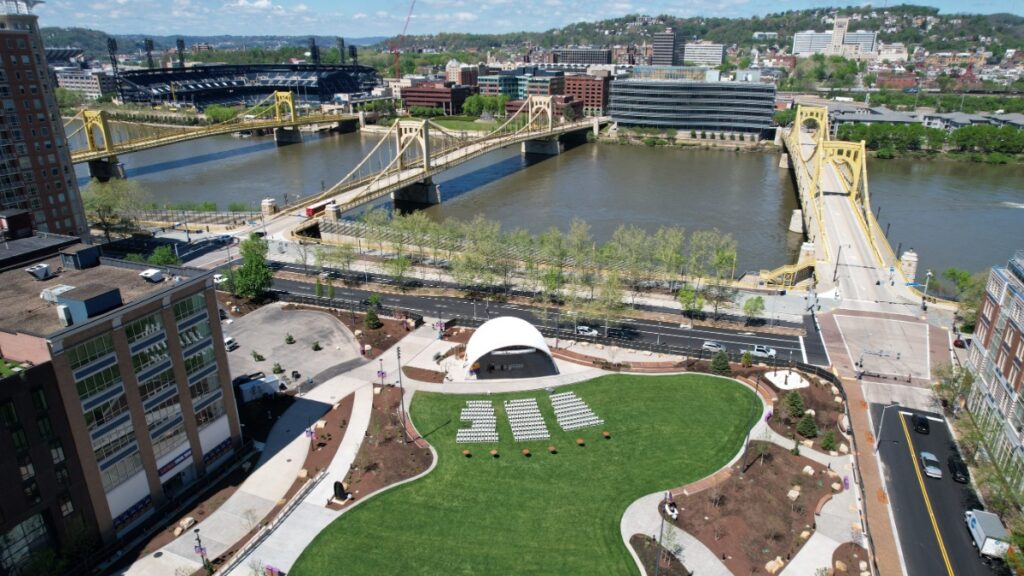
Transforming Downtown Through Arts Landing
Shady Ave: The Cultural Trust’s new Arts Landing development is such a massive change to the landscape of Downtown. How do you want people to engage with it?
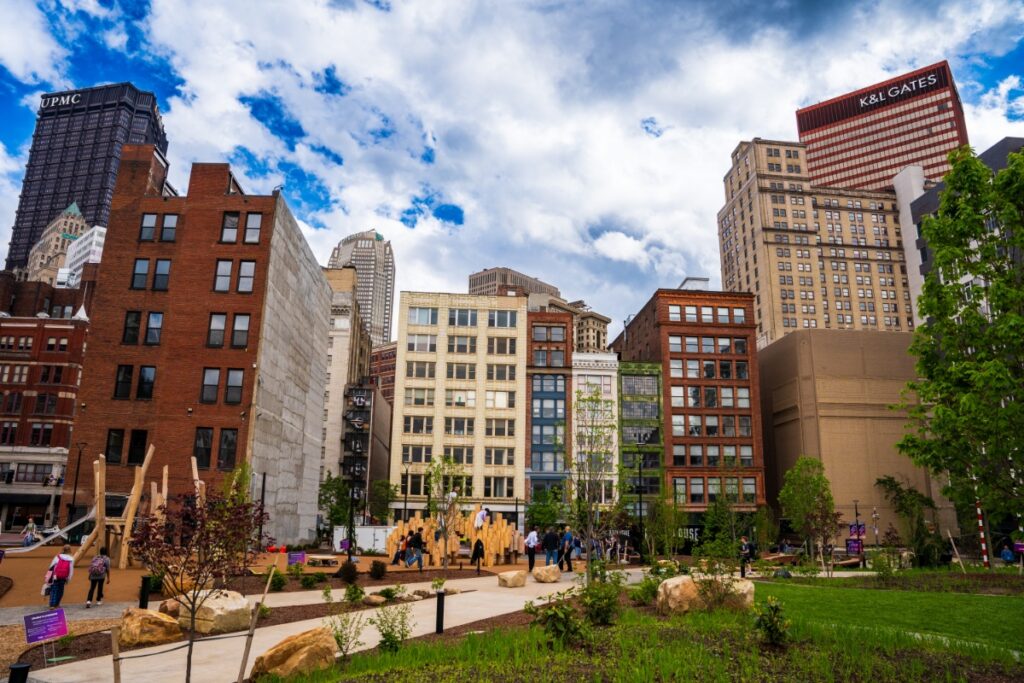
Kendra Whitlock Ingram: It’s already exceeding expectations of what we initially had in mind — certainly a green space in the middle of the district and a place for arts and culture engagement, but also [a place for] relaxation and recreation. And a permanent home for the Dollar Bank Three Rivers Arts Festival. … We’ve just been thrilled with how people are engaging with the space, that they’re really drawn to it. The playground, particularly, has been such a hit …
Two weeks ago, [on] a casual Friday, there were two classes from Pittsburgh CAPA occurring. One was a visual arts class sketching the architecture; the other was a literary class sitting in a circle on the lawn and discussing a novel. Folks were hanging out on benches and reading, or taking a phone call, or watching their kids play on the playground. This is just an average Friday in May with no programming, and we’ve just been so thrilled with how people have been engaging with the space and the public art.
Breaking Down Barriers for More Artists and Organizations
SA: The Cultural Trust seems to be working with more organizations outside of Downtown — I’m thinking of the way small companies are using the Three Stories building and seeing City Theatre present Hedwig and the Angry Inch at the Greer Cabaret Theater. Is that intentional? Is the Trust “opening” the Cultural District to more artists?
KWI: When I got here, what we heard from our organizations in the area was that they loved the venues in the District, but a lot of them were inaccessible for a number of reasons. Cost being one — the Benedum, [for example], is expensive to operate [and] there’s very few programmatic offerings that really work in a 2,000-seat venue … [So] there has been an intentional effort to break down barriers that might be preventing other arts organizations from using our spaces … I think we’re going to be looking more at District activation as part of our mission. That doesn’t always mean that we have to provide the programming — as a matter of fact, I think the success of the District has been the diversity of organizations and types of programming that we have.
Responding to Changing Audience Needs After the Pandemic
SA: There are clearly success stories for very big arts organizations and very small arts organizations, but this is also an era of struggle for some of the more in-between groups — and, obviously, I’m specifically thinking about the ongoing merger of the Pittsburgh Public Theater and the Pittsburgh CLO. Is there still a reason for audiences to feel optimistic about the future of those organizations?
KWI: In the case of the Public and CLO, I can’t really speak to what their strategies and goals are. I’m learning, to be honest, a lot of what their plans are in real time through the news. So, I’m probably not the best person to speak to that. But I can say: Since we’ve come back from the pandemic, all of us who are in the performing arts specifically [have] had to be hyper-focused on responding to the needs of the audiences. What do they want from us? What kind of experience do they want to have? And what do they want to see? And let me tell you — they will tell us. The organizations that can be the most responsive and nimble … are making it through, regardless of size. Large, small, medium.
I know that the general focus for us is right-sizing our programming to audience demand. Liberty Magic is a great example of that … I think there is demand for locally produced theater. Also, I think there’s demand for classical music, and I think there’s demand for dance. Figuring out what the right mix is — and how often and how much audiences are willing to support it — that requires a lot more attention for all of us than it did pre-pandemic.
Creating Extraordinary and Memorable Experiences
SA: So, to your point: What do audiences want in 2026? We’re a few years out of the pandemic era, and you’re a few years into your role at the Trust. What are audiences asking for?
KWI: I think the biggest thing we’re seeing — and it’s not just a Pittsburgh thing, it’s nationwide — audiences want an extraordinary experience.
They want it from the minute they buy that ticket to prepping for the show to learning about the show. Someone described it to me [that] people who plan for a trip and like to travel, the planning part of the travel is almost as exciting as doing the travel itself. And we’re hearing that now in entertainment, too. Buying the ticket, the anticipation of the show [and] of the experience, planning the dinner reservation before … having that frictionless experience.
“I got my drink and I got my merch and I took my Instagramable moment at the show. I’m sharing it afterwards and I’m listening to the soundtrack on my car ride home.”
This is what we’re hearing from audiences … They want extraordinary experiences, and this puts a lot more pressure on culture — entertainment is also feeling this too, because people are spending [so much] to get in commercial entertainment … [But] that’s why I also feel so optimistic about live entertainment and live performance. You just can’t replicate that.
Restoring Historic Spaces and Improving Venues
SA: So, then, what are the challenges facing the District that you feel have not been addressed? What still needs to happen?
KWI: We had such a tight timeline with the design and completion of Arts Landing that some of the things I had on the docket for this year … we had to push off [for a while]. The two big ones on our docket for the next several years are a restoration of Katz Plaza — which is due for a refresh to touch up with the cobblestones, look at the paving, [complete] a restoration of the fountain and the sculptures — and the big one, I think, is the Byham needs some TLC. It needs new seats, it needs [maintenance], it needs a refresh to the front-of-house, it needs a lot of back-of-house upgrades. We’ve been keeping up with a number of these things individually, but both of those need treatment.
Downtown’s Hidden Gems for Food and Drink
SA: Finally, to help people get those extraordinary experiences, what are your Downtown hidden gems? Where should people go for a pre-show meal or a post-show drink?
KWI: There are so many great restaurants in the district. I will say book your reservation — it’s sometimes hard to get a reservation for a show night if you don’t book in advance, so definitely do that.
There’s a new cocktail bar that just opened near Magnolia Parklet, called Wallflower — it’s a nifty little space, great for charcuterie and craft cocktails. A number of the restaurants that are right in the District are really popular — The Eagle … and Barcelona, of course. But Arts Landing — particularly in the summer, we’ll be experimenting with food and drinks, food trucks [and more] there. That’s a great place to extend your visit.
And I have to give a plug to Rosewater Grill, too — that’s a really casual and easy place, especially if you have kids. And great food!
Story by Sean Collier
Photos Courtesy Pittsburgh Cultural Trust