
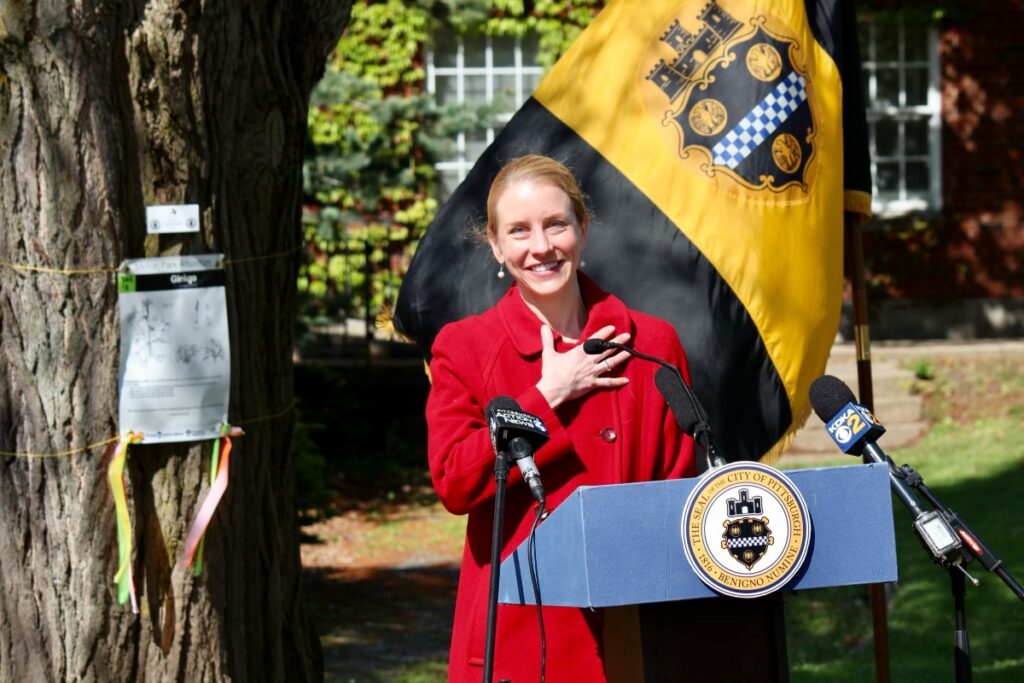
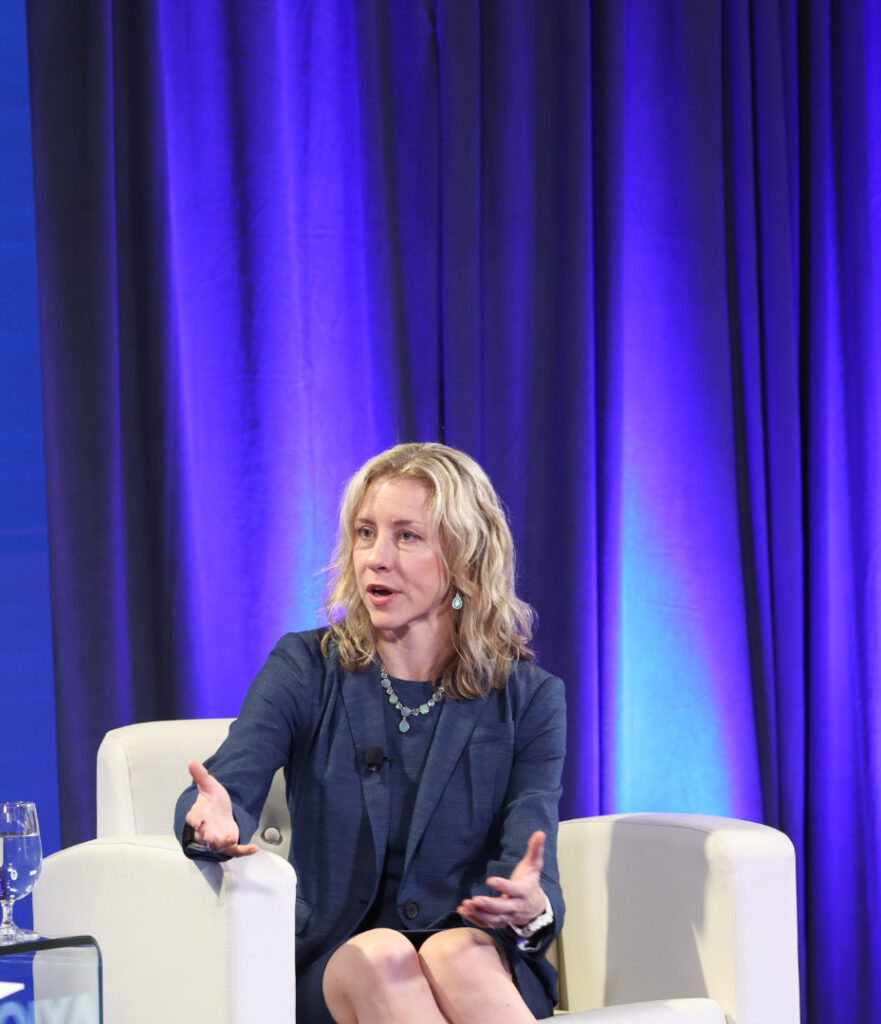
City Councilperson Erika Strassburger was more than familiar with the District 8 office before her 2018 election; she was chief of staff for her predecessor in the office, Dan Gilman. Strassburger, a fierce advocate for environmental causes and human rights issues, represents much of the East End, including large portions of Squirrel Hill, Shadyside and Oakland; her response to the 2018 Tree of Life shooting included the passage of gun-control and public safety legislation citywide. She’s also become an expert on the city’s nuanced budget issues — which she discussed, among many other topics, with Shady Ave.
City Councilperson Erika Strassburger Gives an Outlook on Pittsburgh’s Future
Balancing Downtown and the Rest of Pittsburgh
With so much focus on the revitalization of Downtown, how do you balance those efforts with your responsibilities to the rest of the city?
I think of myself as in a dual role. One is a representative — when there are issues that truly are impacting the day-to-day lives of people who I’m representing, then I’m in a representative role. When I’m taking on greater issues that might affect the city overall — that might [even] impact the lives of others outside of the city, who are visitors … I think of myself as more of a steward or a trustee for the future of Pittsburgh as a whole.
The way that [Downtown and surrounding neighborhoods] impact the rest of the city … we want it to be even more of a neighborhood where people live, where people can live comfortably — and less of just a civic or a business center. But it also happens to contribute 25 percent of the city’s property tax base. And because of that, whether we like it or not, it does need to be given a little bit of extra attention when it is flailing.
I think multiple entities, both public and private — city, county, state, Pittsburgh Downtown Partnership, Cultural Trust, Point Park University, Allegheny Conference, URA and many more that I’m probably forgetting — have come together and programmed some wonderful things Downtown, to the extent that it doesn’t feel as desolate as it did in the immediate aftermath of the pandemic.
Pittsburgh’s Financial Health and City Budget
And you’ve done some serious work with the city’s budget and financial structures to support that. I’m going to oversimplify a big issue: How is the financial health of the city right now?
It is in a tenuous position, but if we’re able to get through this fiscal year, we will be on a path toward a secure future.
There were multiple contributing factors to this … Downtown occupancy and appeals to the property taxes that were paid … property taxes are huge. We don’t have, as a city, the ability to create new taxes without state approval, and we don’t have the ability to tweak very many of the taxes that we do collect. So really, we can adjust things having to do with real estate and having to do with a few other categories that usually aren’t that consequential.
Another factor was the American Rescue Plan, and it was a saving grace … That said, cities aren’t accustomed to getting money directly from the federal government, so we weren’t totally adept at handling that … In hindsight, I think we all recognize that there probably was a missed opportunity.
So just lots and lots of different contributing factors. That said, in 2027, we will have retired some old bond debt that will free up tens of millions of dollars for us to use in other ways.
So: [That] is the really tenuous situation. It’s [looking] slightly better in 2027. And we are hopefully going to not have to make really difficult decisions in the future in terms of cuts.
What City Council Can Do for Pittsburghers
To continue our civic education: I think a lot of Pittsburghers don’t necessarily know what the mayor is in charge of, what city council is in charge of and what the county executive is in charge of. What can city council do for people — and what can’t it do?
Constituents can always contact us!
Sometimes I understand that people think that city council reports to the mayor, when we’re co-equal branches of government … when working to get something accomplished — whether it is repairing a pothole, streetlight, you name it — we can work collaboratively with department heads and staff. We [just] don’t have administrative control over them.
[Legislation is] within our control. We can pass legislation. We hold the purse strings. So, ultimately, even though the mayor and his office [create the budget], we are the ones passing it or not passing it or amending it or changing it — which is what we did a whole lot of last year.
Immigration Enforcement and City Policy
You were also involved in drafting legislation codifying that the city would not formally cooperate with ICE. What have you heard from your constituents? What does the East End want?
The vast majority of opposition that I received upon being a cosponsor to that legislation, and passing it, came from outside of the district I represent — and in fact, outside of the city. And that’s fine. I’m happy to take the criticism, but … this is one of those issues that, I have to say, even if I were hearing [much more] opposition to this issue, I would have continued to stay the course — because it is so important to me as a moral and ethical and human dignity issue. Who are we as humans? How do we treat our neighbors? How do we look at all of our neighbors with dignity and with humanity? If I had to risk losing my position over this issue, I would.
Development in Pittsburgh’s East End
Here in the East End, we’ve seen so much development; there are blocks of East Liberty that I still feel like I don’t recognize. Obviously, that carries a lot of good things, but I know we have to develop carefully. Within what City Council can control, how do you make sure that development is benefiting the whole community?
It all depends on the type of development and the developer you’re working with. Despite our developer-in-chief in the White House, not all developers are the same. So it depends on who they are, what they’re working on. You know, the Mosaic apartments — in Councilperson Charland’s district on Forbes Avenue — [are affordable apartments] marketed to the senior LGBTQ population. It’s so popular that there’s a waiting list 200 people long. And that’s a very different project than the redevelopment of the Shakespeare [Street] Giant Eagle site, [right] at the confluence of five different neighborhoods.
[The Mosaic apartments are] using low-income tax credits and lots of different … agency money to build various levels of affordable housing. [In the Giant Eagle site, we turned to] the power of working with community and bringing the community together from different neighborhoods — and working collaboratively with the property owner [to include food that was] ethnically and culturally appropriate, not marked up and not too expensive … And [in the new apartment units, they included] 15% affordable [units], not because they were mandated, but because that was what the community asked for.
It all comes back to having a plan. And that’s why I’m supportive of the comprehensive plan. I know the process got off to a little bit of a rocky start, but I think having a plan is so critical because it is the basis on which you can layer other necessary reforms or changes.
Erika Strassburger’s Favorite Places in Pittsburgh’s East End
Finally: Tell us what you love in the East End! Where do you spend time? What are some of your favorite places?
The Squirrel Hill Business District is a favorite. A total treat during the pandemic, when they were still open, was just walking up to Commonplace [Coffee], getting some beans, getting the free coffee. I was delighted to see them open where Georgie’s Corner Cafe once was on Walnut Street.
Another cool coffee shop that I love because it’s just so different — like it adds a cool factor to the district — is Heat Check on Walnut Street. It’s a thrift-store-slash-coffee-place. And if you sit at the window, you get to people-watch on Walnut Street from above.
A real hidden gem … is the Latin American Cultural Center in Oakland … [it] looks like it could be part of Pitt’s campus, but it’s the caliber of the [major museums], but for Latin American culture. There’s an event space on the ground floor — and they focus on one country after another within Latin America. They just wrapped up their Costa Rica exhibit; there’ll be a new exhibit coming in September. I always try to go to those openings.
About the Author
Sean Collier is the editor-in-chief of Shady Ave and the arts and culture editor of TABLE Magazine. Before joining the TABLE Media team, he spent nearly 15 years as a writer, editor and columnist at Pittsburgh Magazine. As the in-house film critic for the top-rated WDVE Morning Show since 2009, he’s been Pittsburgh’s most widely heard voice on movies for nearly two decades. A Pittsburgh native, Sean has since 2020 appeared weekly on KDKA-TV’s popular Pittsburgh Today Live talk show. He’s the co-founder of Vigilance Theater Group and an active stand-up comedian and event host. He can be found on Instagram and Twitter at @seancollierpgh.