
Located in the heart of Oakland, this gem of a museum celebrates Latin America through programming, exhibits, and community.
Meet the Team Behind Oakland’s Latin American Cultural Center
The term Latin American can be used too casually — bandied about in ways that don’t reflect the richness and cultural diversity of a vast part of the planet.
The goal of the Latin American Cultural Center (LACC) is to change that.
Part of the Latin American Studies Association — a Pittsburgh-based nonprofit comprised of more than 13,000 students and scholars — the LACC focuses on the arts, history and culture of Latin American nations and people, spotlighting creativity, community and creation the world over through its exhibits and programming.
Nestled in the middle of Oakland on Bigelow Boulevard, LACC’s building served as the Historical Society of Western Pennsylvania’s headquarters for 82 years. (That organization’s signage is still in etching on LACC’s facade.) The society eventually migrated to the Strip District in 1996 and became the well-known Senator John Heinz History Center. In turn, the Oakland property became available in 2022 and was transformed into the dynamic museum and event center space it is today.
Bringing a Cultural Museum to Pittsburgh
Manuel Román-Lacayo, LACC’s deputy director, acts as steward and historian for the LACC — just two, he says, of the many roles he plays at the center. He also manages operations for the Latin American Studies Association and helps to organize its yearly congress, an academic gathering of international individuals and institutions engaged in the study of Latin America.
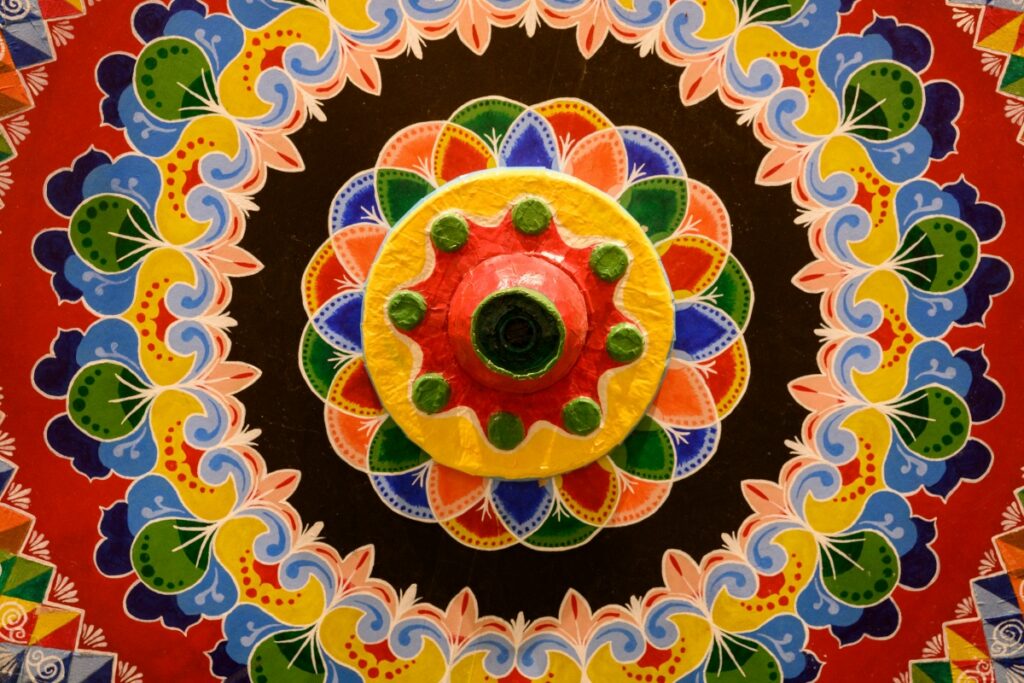
This brightly-colored, gorgeously-painted wheel, by Pittsburgh-based artist Ricardo Solis, is a national symbol of pride in Costa Rica. Before mechanized forms of transportation, coffee growers would haul their huge burlap bags of coffee across mountains on ox carts. Over time, the cart owners began to paint them, often distinguishing their villages of origin through unique designs.
A self-proclaimed “museum nerd,” Román-Lacayo’s career path is long and winding. He originally hails from Nicaragua, where he studied pre-Columbian political economics. He wanted to start a museum and event center in his home country; in 2010, when the political situation became dangerous, he moved to Guatemala to work at USAID. Román-Lacayo then moved his family to Washington, D.C., to work as a cultural heritage expert; in 2019, he came to Pittsburgh to study archaeology in graduate school by way of a Heinz Fellowship.
LACC hopes to attract “anyone and everyone,” explains RománLacayo. The museum’s biggest number of visitors are school groups that come to see the museum exhibits. “We want to bring to mind the richness and diversity of Latin America. It is our wish to become a destination for anyone interested in learning more about the culture.”
Creating a Presence in the City
LACC recognizes a need to make itself more visible; it has implemented a reciprocal admission policy with the University of Pittsburgh’s Nationality Rooms and is also exploring similar arrangements with the National Aviary and Pitt’s University Art Gallery. “We want to make our center a destination as the [most prominent] Latin American museum in the region,” Román-Lacayo says. “Also, we want to make it sustainable, an attraction that people appreciate. We want it to take its place among all the other wonderful cultural institutions in town.”
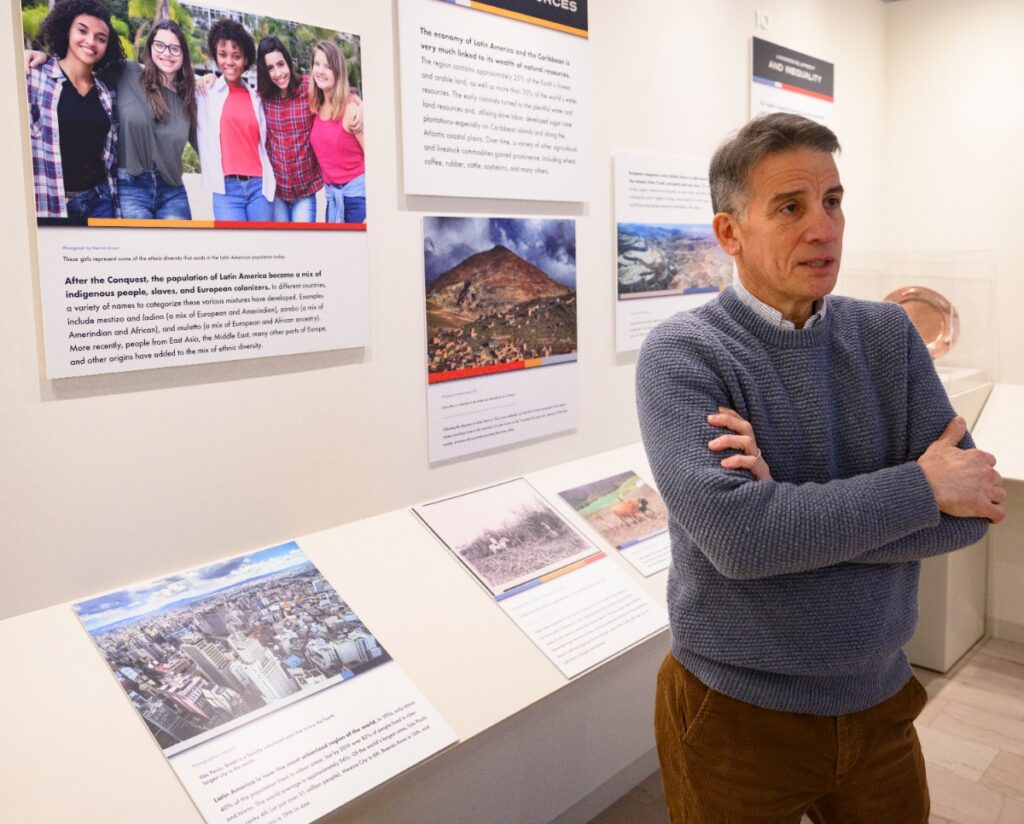
A permanent exhibit on Latin America and the Caribbean anchors the LACC; a second gallery houses rotating exhibits, including spotlights on Maya Spirituality, Mexican Masks, and Haiti. Costa Rica is currently the focus of the temporary exhibit, which will remain on view until June 28. An exhibit on Panama will follow.
The Costa Rica exhibit highlights the country’s isolation and expounds on how it has developed differently from most Latin American countries. It includes artifacts from the Carnegie Museum of Natural History collections; its interactive displays examine the country’s biological diversity as well as commitment to sustainability. “People think, ‘Oh beaches and vacations,’ but in addition to ecotourism, Costa Rica is known for its success as an institutional democracy and [for] their laudable sustainability efforts,” RománLacayo says.
A Focus on Locality
LACC also intends to include community members as part of its programming. The Retablo project asks various community groups to create scenes reflecting their immigrant stories in the past, present and future — explaining where they came from, where they are and where they see themselves in the future.
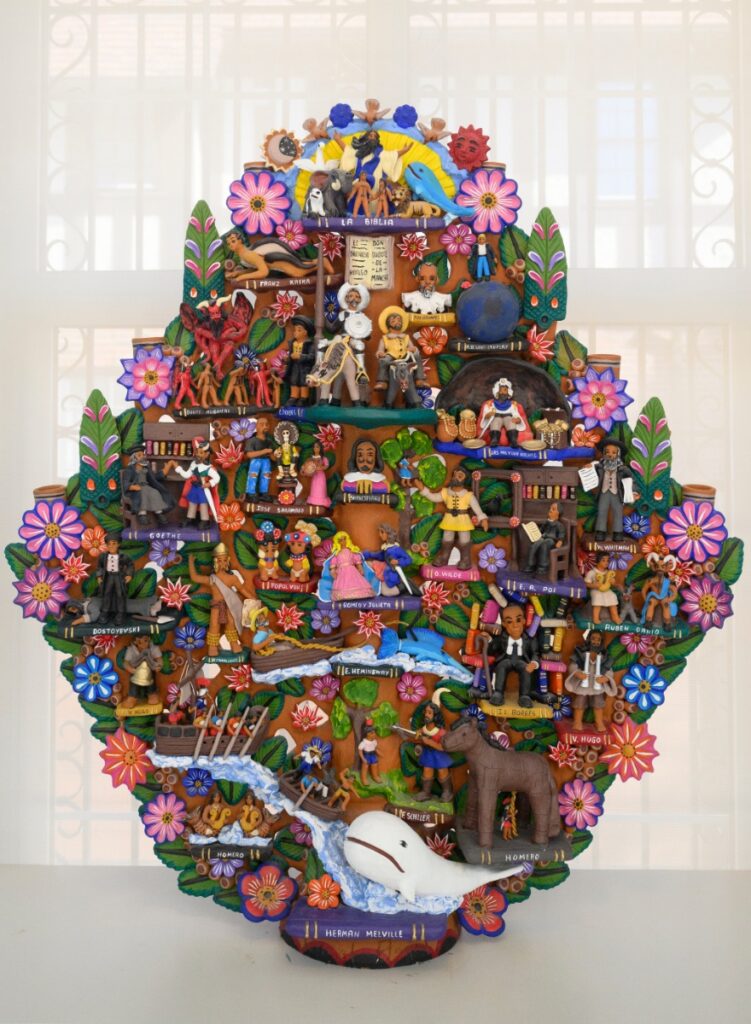
Árbol De La Vida (Tree of Life) is a three-dimensional sculpture depicting the Popol Vuh, or Maya Creation Story. Made of clay by artist Tiburcio Soteno Fernandez, this piece reinterprets the traditional Mexican folk-art style. The sculpture was donated to the museum in December 2025 and is now part of the permanent collection.
Retablos are historically considered “behind altars,” devotional small paintings typically made of tin or copper. They come after moments of adversity or miracles to give thanks for divine protection. “We aim to follow the most recent development of a retablo as an art form that reflects contemporary issues within the traditional format, especially as practiced in Peru,” Román-Lacayo says. “Our retablos will be exhibited in our museum starting in summer 2026.”
Expanding Programming
Pittsburghers are also welcome to attend the center’s film series. Curated by Claudia Ferman, the series offers Latin American dramas, documentaries, shorts and docufictions. Moving forward, the center hopes to present new programming such as dance classes, relevant literary and political lectures, and arts and crafts workshops.
LACC relies on partnerships for all its exhibitions and programming. The Point Breeze-based organization Haiti Friends contributed to the center’s exhibit on Haiti, as did a private family that contributed Haitian art. For the Panama exhibit, LACC will learn and borrow from Phipps Conservatory’s current Tropical Forest Panama show. “We owe so much of our work to our developed relationships,” Román-Lacayo says.
When asked what is most important about this cultural mecca in Pittsburgh, Román-Lacayo replies, “It’s seeing ourselves in the other. Our museum allows you to reflect upon how we live in comparison to how other people live. You can contemplate and consider your life experience by looking at other ways of living and being.”
Story by Tina Tuminella
Photos by Jeff Swensen