
A native and a newcomer share their views on life within the East End of Pittsburgh.
Living in Pittsburgh’s East End: A Place for Locals and Newcomers Alike
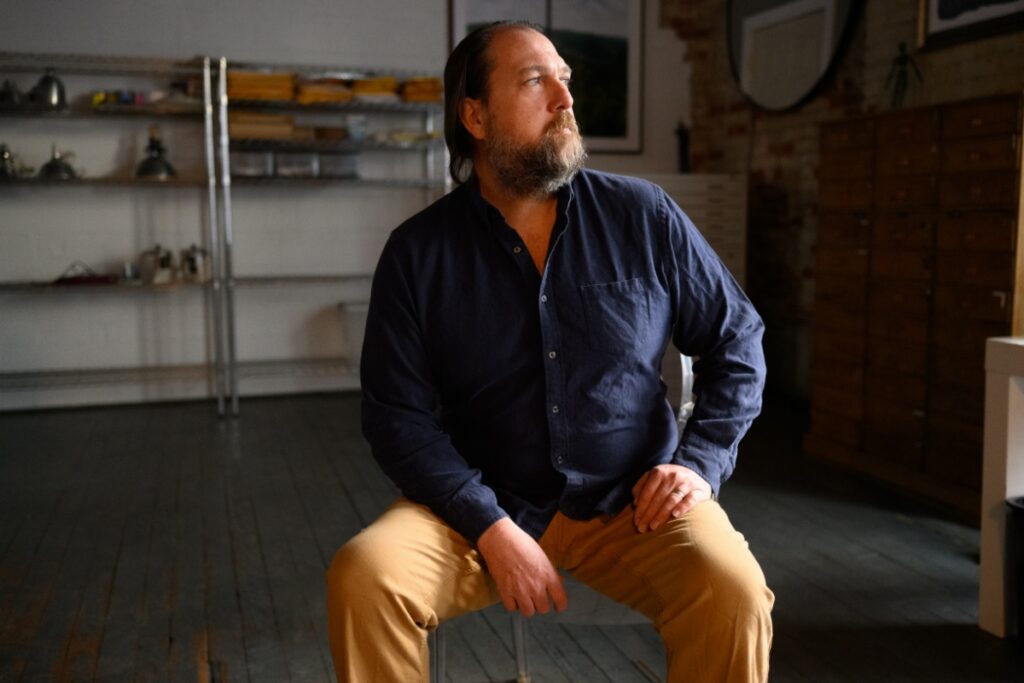
Henry Simonds has lived most of his life within a half-mile radius of , a fact that underpins both his work and his worldview. Simonds — an artist, filmmaker, producer and cultural organizer — occupies rarified territory in the city’s creative ecosystem, and he’s done so as a (mostly) lifelong resident.
Life in Pittsburgh’s East End Prior to the 21st Century
Born in 1975, Simonds’ relationship to the East End is continuous. Childhood unfolded across Shadyside, Squirrel Hill and Oakland, moving but never going far. That long familiarity gives Simonds an almost archival memory of the neighborhood. He remembers streets full of children, 14 boys on one block alone. He remembers riding bikes without supervision, “walking Walnut Street as if it were an extension of the living room.”
Errands blurred into rituals: stops at Schiller’s Pharmacy (now Schiller’s Apothecary) and Rollier’s Hardware, meals at Pamela’s, Napoli’s, and Mineo’s. Decades later, he still lives nearby, anchored to the same geography that first shaped his sense of place.
Education took Simonds outward, at least temporarily. After graduating from St. Edmund’s Academy, Simonds spent his formative years at boarding school in Connecticut before studying film and visual art at Middlebury College in Vermont. He moved to New York in 2008 to build a career in independent film. It was there that he founded Headwater Media, working as a producer, editor and writer on documentary and narrative projects.
Coming Back Home Years Later
When Simonds returned to Pittsburgh in 2017, it was the East End that drew him back. He brought with him not nostalgia but rather a clear-eyed sense of what the city needed. He became co-director of Pedantic Arts Residency, a program built around immersion. Residents live in Pittsburgh for extended periods, embedding themselves in neighborhood life rather than parachuting in for deliverables. “It’s about duration,” Simonds says. “Treating the East End as a place to inhabit, not a place to pass through.”
The residency’s philosophy is inseparable from its physical footprint. Along Penn Avenue, Simonds helped develop a cluster of connected buildings that form a quiet but significant cultural hub within the Arts District. Drawing on the corridor’s traditional mixed-use architecture, with commercial space below and housing above, the buildings house artists, studios and cultural organizations. The aim was pragmatic rather than flashy. “There was a real need for affordable housing for visiting artists and nonprofits,” Simonds says. “That was the driver.”
What distinguishes Simonds’ role is the degree of personal commitment involved. Simonds absorbs real financial losses to keep space accessible for artists and organizations, including a major tenant operating rent-free while the property is taxed as profit-maximizing. He sees this not as an exception but as a structural problem, one that increasingly squeezes small arts groups and narrows who gets to shape neighborhood life.
What keeps him rooted is the East End itself. “I value the continuity and the constant evolution. It feels like a village,” he says. “Wherever you go, there’s a good chance you’ll run into someone you know.”
Pittsburgh’s East End as a Starting Point
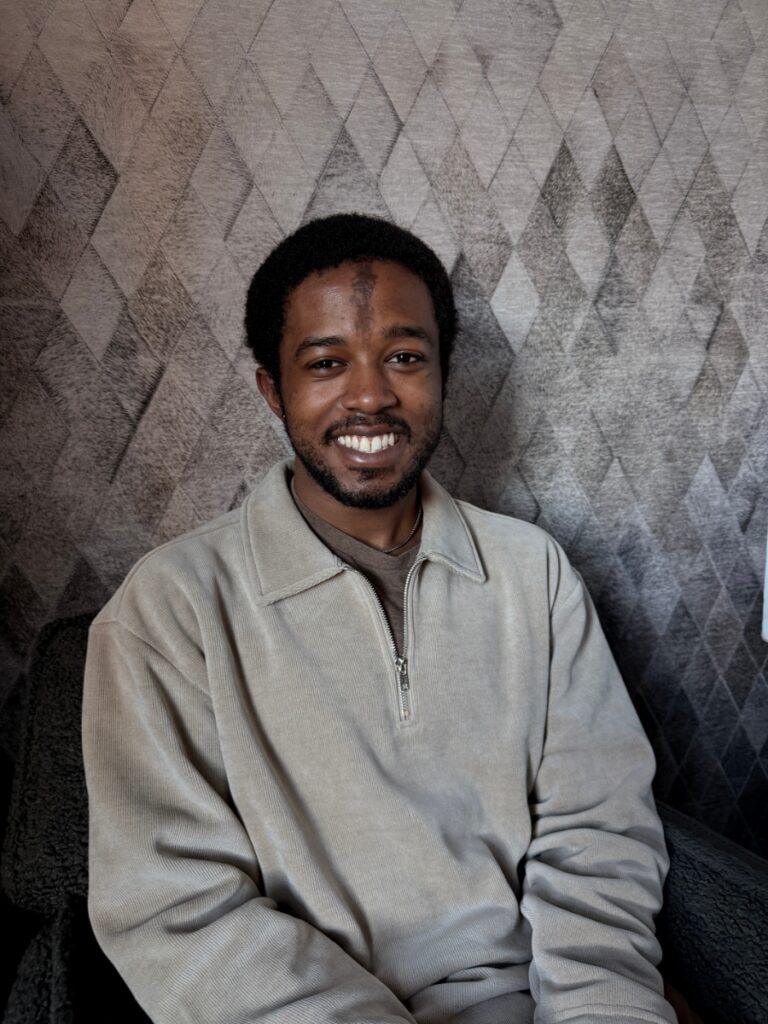
Charles Mansfield III arrived in Pittsburgh in 2019 with no fixed plan to stay. Originally from the Maryland area, he came to Carnegie Mellon University interested in government and policy; gradually, he found his way into startups. “I knew I wanted to do startups,” he says. “I just didn’t know where that was going to be in the country.” The East End, he found, “offered something increasingly rare in the country, room to build without the gravitational pull of Silicon Valley.”
Pittsburgh Tomorrow would later describe Mansfield as the city’s “startup whisperer,” a reflection of his low-profile but central role at InnovatePGH, where he works as startup ecosystem manager connecting founders, investors and institutions and tracking the health of the region’s innovation economy. He describes his job simply as being “the engineer for the startup ecosystem,” focused less on image-making and more on making company-building viable in Pittsburgh. In 2025, that work earned him a spot on the Pittsburgh Business Times 30 Under 30 list.
The Slow But Sure Discovery
Mansfield’s relationship with the East End bloomed one neighborhood at a time. As a student, his world rarely extended beyond Oakland. After graduating, he moved Downtown, then east, following friends and great infrastructure. He lived in Squirrel Hill, Bloomfield and East Liberty before making it to Friendship. “I take the 54 bus from Friendship to Oakland every day,” he says. “It’s a really nice transit spot. That changes how you live.”
He talks about “neighborhoods through use rather than vibe. Grocery access, transit, main streets and — most importantly — small businesses matter.” The East End works, he says, because it holds all of that at once. Mom-and-pop shops, he believes, are the backbone of East End neighborhoods.
Pittsburgh’s East End Today
Walking through East Liberty now feels different to him than it did in 2019, with “more storefronts, foot traffic and activity.” He makes regular trips to Meccha Matcha in Squirrel Hill. He watches Steelers games at The Urban Tap in Shadyside. He still goes to Sub Zero Ice Cream, a family-run shop he worries may disappear when its owners retire.
Community, for Mansfield, has been something to build deliberately. When many friends left Pittsburgh after graduation, he started hosting board-game nights and created a group chat with his roommate, lovingly called ‘Burghers,’ that has grown into a 70-plus-person social network sharing plans and events across the East End and beyond.
Without decades of nostalgia shaping his view, Mansfield is pragmatic about change. Density doesn’t concern him; stagnation does. “We can’t keep everything low-rise and have a growing population,” he says. What worries him is monotony. He points to the East End’s mix of Gothic churches, legacy institutions, parks and new restaurants as evidence of a layered city that still works. “Everything doesn’t need to be uniform,” he says. “It’s better.”
Story by Aakanksha Agarwal
Photos by Justin Merriman and Keith Recker
Subscribe to TABLE Magazine’s print edition.