
Oakmont Carnegie Library has reinvented itself through the decades without ever losing sight of its purpose.
125 Years Later, Oakmont Carnegie Library Provides More Community Services Than Ever
On any given day, someone might walk into Oakmont Carnegie Library looking for a novel … and leave with a ukulele. A guest might learn how to work the sewing machine or the Cricut cutters. Perhaps they take home the ghost-hunting kit — one of dozens of unexpected items available to borrow with a library card.
There are 3D printers downstairs, yoga classes on the calendar, children discovering the playroom, genealogists poring over century-old photographs and neighbors gathering for everything from book clubs to local history talks.
The limestone walls, tall windows and graceful proportions belong unmistakably to another era. Opened in 1901, Oakmont Carnegie Library has the dignity of a classic Carnegie library. What happens inside, however, has never stopped changing.
“The library is a meeting place, a place to browse and a place to learn,” says archivist Stephanie Zimble. “We do lend books, yes, but beyond that we are a safe space for everyone who comes through our doors. It is that welcoming feeling that really makes us special.”
It’s a philosophy remarkably faithful to the one that created the library 125 years ago. The story begins in 1899, when Oakmont resident L.M. Morris wrote to his cousin asking for help establishing a public library.
That cousin happened to be Andrew Carnegie.
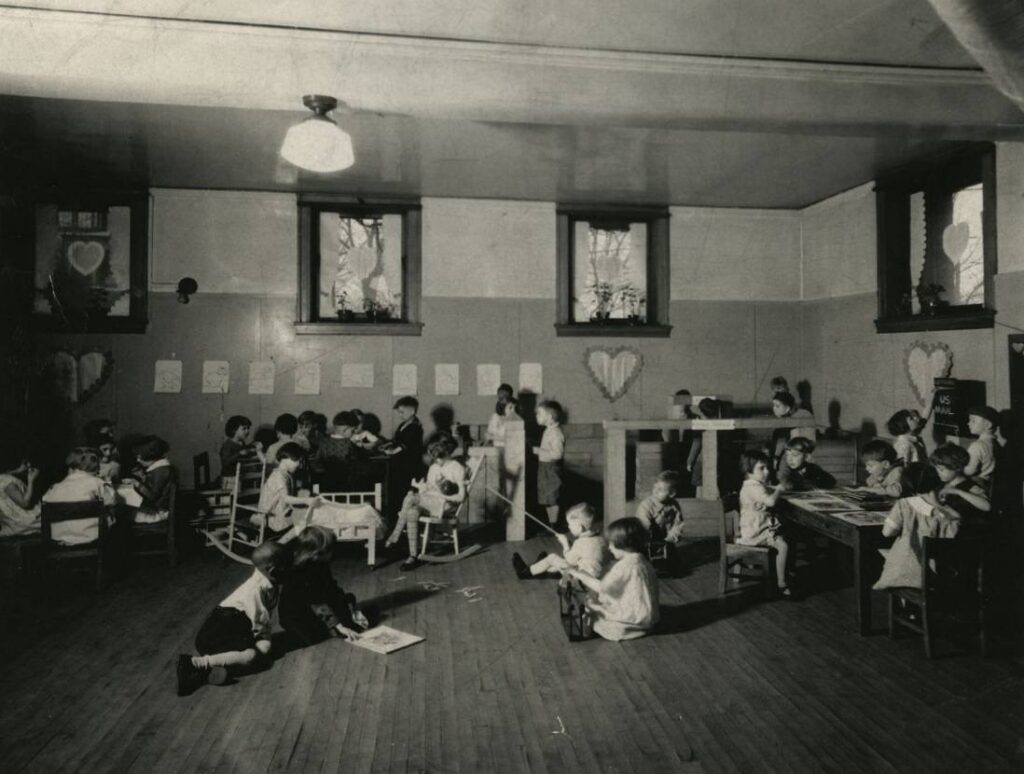
The History of Oakmont Carnegie Library
After Oakmont pledged to support the library long after it was built, Carnegie agreed to contribute $25,000, welcoming Morris into what he memorably called the “sacred guild of library builders.” Morris’ daughter, Cora B. Morris, would become the library’s first head librarian when the building opened in 1901; on its first day, it had 2,603 books on its shelves.
Those books were only part of the story. The building quickly became one of Oakmont’s busiest civic spaces. Its basement served, at different times, as the First National Bank, a borough council chamber and even a fourth-grade classroom. Community groups met here. Schoolchildren learned here. Long before anyone coined the phrase “third place,” the library had already become one.
Looking back over its history, Zimble doesn’t point to one defining moment so much as hundreds of small ones.
“We have been shaped, much like a rock under water, by a steady accumulation of individual and community effort,” she says. “All the staff members, board members, borough employees, teachers, volunteers and members of the public who have been a part of the library over the years have all helped to create a lasting institution that Carnegie would be proud of.”
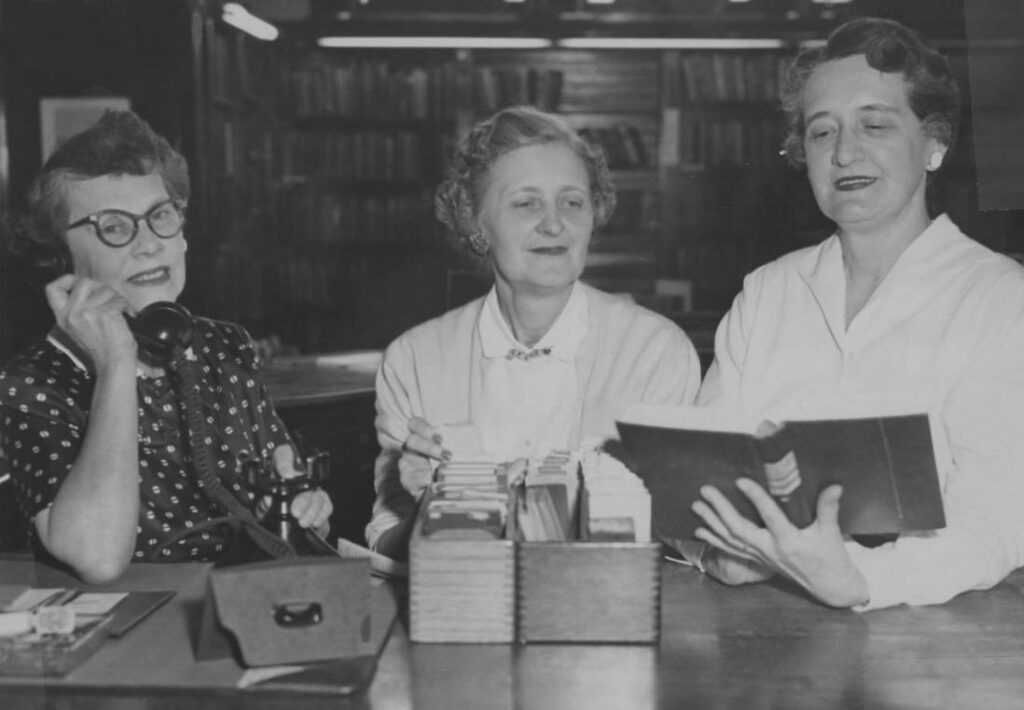
Leaders of the Library
Among the library’s most fascinating archives is the documentation of the uproar surrounding librarian Laura Bailey in the 1920s. Critics described her as “temperamental, cold, unsympathetic and full of notions.” Patrons rallied behind her, circulating petitions urging trustees to keep her. Although the committee never fired Bailey, she stepped down three months later. The letters survive today alongside thousands of photographs, maps and newspaper clippings that continue to help residents piece together Oakmont’s history.
Her successor, Sara “Sally” Moot Boyle, was hired in 1926 and served as head librarian for the next 42 years. She installed the library’s first telephone, kept it open until 9 p.m. so working adults could visit after their shifts and opened the lower-level meeting rooms to community groups. She even planted flowers around the building because she believed the library should be as beautiful as it was useful.
Her philosophy still resonates today: “A library should be more interesting than a place to go for reference,” Boyle once said. “It should be the center of the community.”
“In many ways,” Zimble says, “we’re still the library that Sara Boyle created.”
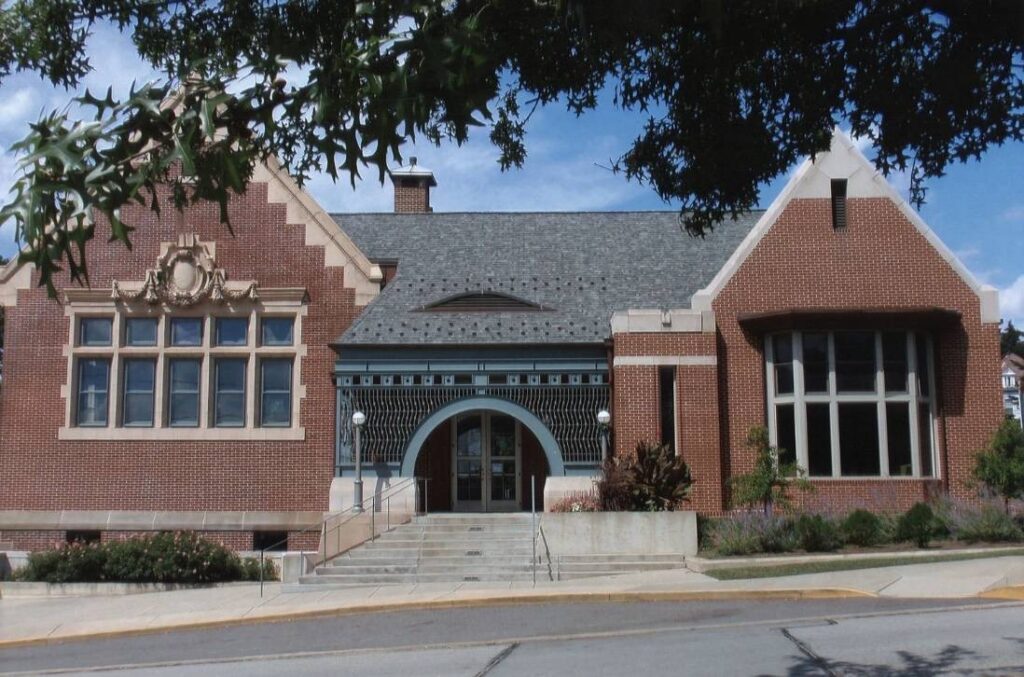
Expanding the Building and Capacity to Learn
The library’s future looks every bit as lively as its past. Its 2006 expansion doubled the building’s size, making room for public computers, expanded children’s spaces and gathering areas. A Makerspace opened in 2022 and continues to grow with 3D printers, vinyl cutters, musical instruments, sewing machines and craft equipment, while adult programming ranges from meditation and yoga to movies, book clubs and talks on local history. Children tumble into story time, teens explore new technologies — and the Oakmont Historical Society still gathers here, linking one generation to the next.
The collection has grown, too, from those original 2,603 books to more than 37,000 books, DVDs, audiobooks and other materials today. Digital services like Libby and Hoopla bring the library home, while many of the Makerspace’s tools can be borrowed — just like a bestseller.
The library celebrated its 125th anniversary earlier this summer with a community lawn party — a tradition that dates back to the grand opening in 1901 — along with an exhibition from the archives and a time capsule filled with memories from residents and local schoolchildren. It won’t be opened for another 50 years.
It’s a fitting tribute for a place that has always had one eye on history and the other on what’s next.
“I believe books, stories and storytellers will still exist,” Zimble says. “People will still need information, and people will still need a place to gather—and our future librarians will be here to meet them.”
Story by Aakanksha Agarwal
Photos Courtesy of Oakmont Carnegie Library