
Pittsburgh’s South Hills blends old-fashioned neighborhood charm with the comforts of modern suburban life. From walkable streets and local eateries to the T and long-standing community traditions, this part of the region offers a relaxed pace while keeping the city close at hand.
The Charms of Pittsburgh’s South Hills
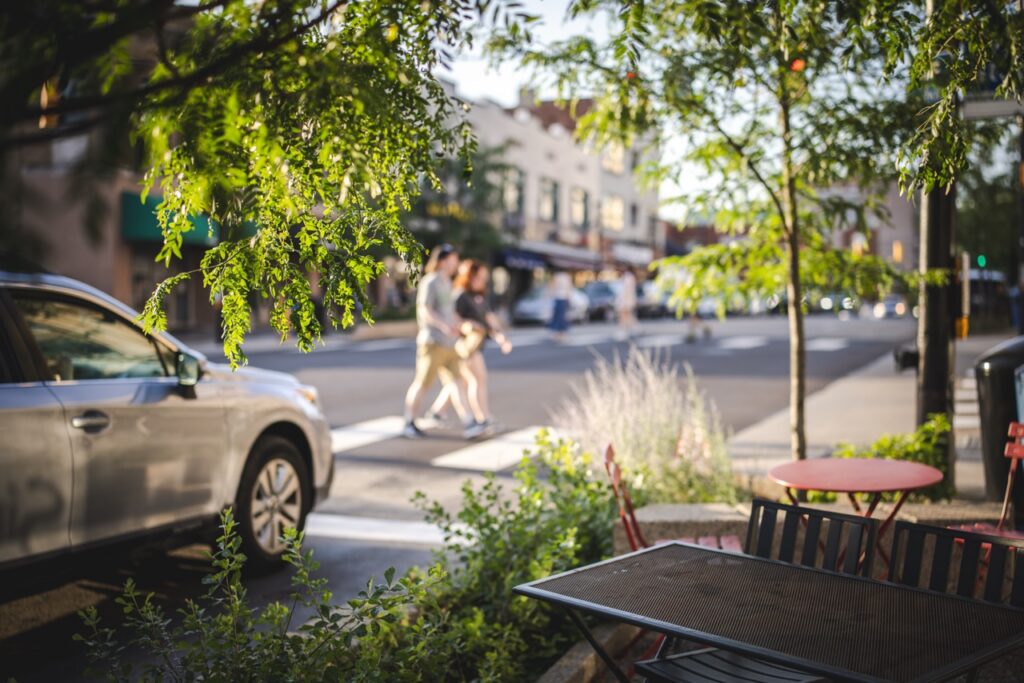
Less than a quarter mile long, the strip of street known as the Beverly Road shops in Mt. Lebanon exudes a classic Main Street vibe. Imagine Richard Scarry’s classic children’s book What Do People Do All Day? springing to life: Watch as locals run to the bank, grab a coffee, pick up a loaf of bread, treat kids to ice cream or sit down to a nice dinner.
On any given day, the area bustles with foot traffic. Sit on an outdoor bench and witness the steady stream of people going in and out of local businesses. It’s not uncommon to hear people ask a friendly passerby to watch their dog as they “run in real quick’’ to complete an errand.
Despite the hustle, however, a sense of calm pervades. Birds chirp in the leafy green surroundings. Stone, slate-roofed houses with manicured yards secure the perimeter of this busy block. They make it the perfect neighborhood in which to walk. There is a decidedly slower pace here, established many decades ago with the advent of the streetcar suburb. This development set the tone for Pittsburgh’s South Hills.
The First Streetcar Suburb
Many a Pittsburgh story involves a bridge or tunnel, and the growth of the South Hills depended on both.
Shortly after streetcars to Pittsburgh began operating in 1901, the first subdivision — the Mt. Lebanon Plan — was born. Walkability is a prime reason why people choose Mt. Lebanon as a place to live. There are no school buses; kids typically walk everywhere in this tranquil suburb.
A remarkable number of eateries and coffee shops exist within the six square miles of hilly Western Pennsylvanian terrain. That terrain defines Mt. Lebanon’s borders. On Beverly Road alone, the always-busy Mediterra offers an outdoor European cafe ambiance. It sits next to the Brooklyn-based F&F Pizzeria, featuring New York-style pizza with a sourdough crust. Nearby is Panaderia Jazmin, one of very few Mexican bakeries in the 412.
“Mt. Lebo” — its regional moniker — is recognized for its highly rated school district and proximity to Downtown. Residents appreciate how safe they feel; they also cite charming homes and the varied, unique architecture as reasons for residency. The municipality boasts two walkable commercial strips, a myriad of excellent restaurants and 14 parks — one with a lit-up, indoor tennis bubble, for winter court time.
Life in Mt. Lebanon
For longtime resident Anne McCourt, Mt. Lebanon was an easy choice. She and her husband, who run a sports-production company, wanted good schools for their (now-grown) children. “Plus, we enjoy all the sports amenities. There’s a great rec center with an equally great pool, an ice rink, tennis and pickleball courts … I’m happy here. We walk the dogs, and we love walking to Beverly Road to get ice cream at Scoops or enjoy a great dinner at Iovino’s, our neighborhood brasserie.”
In Uptown — not the neighborhood near Duquesne University, but Mt. Lebanon’s other commercial strip — the offerings multiply. Established restaurants such as Little Tokyo, Bistro 19 and Il Pizzaiolo don’t disappoint. Orbis Caffe pulls double duty, serving as a coffee shop with Italian pastries during the day and a bar with small plates at night. Tried and true favorites such as Pamela’s Diner and Mineo’s have outposts Uptown, near new eateries such as Piyola (which features Uzbek cuisine) and Totopo.
It’s a delicate balance of new and old, and Uptown manages not to tip the scales.
The Rest of the South Hills
In contrast to Mt. Lebanon’s walkable sections, most South Hills communities remain largely residential. The inner core comprises three large suburbs: Mt. Lebanon, Bethel Park and Upper St. Clair. An outer loop is made up of larger, perimeter townships such as Peters, South Park, Scott, Baldwin, Collier and Jefferson Hills.
In its vastness, the South Hills also includes neighborhoods with higher density that lie closer to the city limits: Dormont, Brentwood, Whitehall and Castle Shannon all fall into this category, along with Brookline, which falls within city limits.
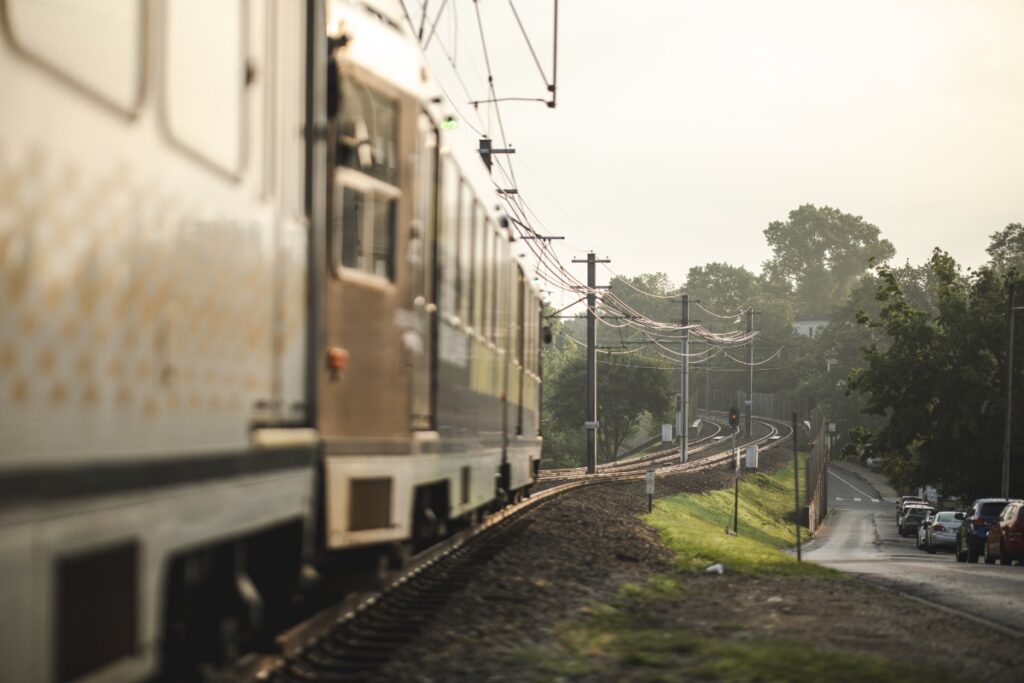
Route 19 cuts through several of these areas. Completed in 1926, Route 19 served as the major north-south corridor in Western PA before Interstate 79 was constructed in the 1960s. But before any of these roads came into existence, there was the trolley, which evolved into the light rail system of today.
The Terrific T Rail System
The rail system in Pittsburgh has always been called “The T.” Krista Lorenzo grew up in the South Hills, raised her own family in the South Hills, works in the South Hills and speaks very seriously on matters of the T; the train cuts a throughline through her family history.
Her grandmother grew up in Mt. Washington and took the incline and a bus to get to school, but she also rode the trolleys. Her mom was raised in Brookline and took the trolley everywhere. Lorenzo herself grew up and raised her two daughters in Peters Township, where it’s a 10-minute drive to the T station.
“Four generations of women in my family have ridden the same line,” she says. “We would get excited hearing one of our parents tell us, ‘I’m dropping you off at the Village,’” referring to the South Hills Village stop, “because we knew we were doing something fun. Same for my kids. The T is a safe and reliable way to go to a ballgame, a concert, a show or special event. Downtown is so much more accessible when you live in the South Hills.”
How the T Shaped the South Hills
As a South Hills-based real estate advisor with Coldwell Banker, Lorenzo works with an average of 50 families per year. She differentiates the South Hills from the North Hills by its undercurrent: “The South Hills definitely feels more established. The housing here retains a more traditional suburban feel because of the streetcar history. The tracks and stops determined where the business district originated, which in turn gives more of a ‘town’ feel to all the different South Hills neighborhoods — and, to this day, buyers are attracted to that particular design.”
The T is a huge selling point for people moving to Pittsburgh. Lorenzo highlights younger couples who are priced out of the major suburban areas of Virginia, Maryland, and DC. “Relocaters don’t have any preconceived notions of Pittsburgh neighborhoods and are more likely to fall into the South Hills camp because of the T line. They love the quick access to major sports teams and cultural amenities on par with major East Coast cities — for a fraction of the cost. They also know that they can get the same size house for much less, and they tend to fall in love with the small-town feel.”
The Story of an L.A. Transplant Moving to Bethel Park
Melissa Grossenbaher, the director of events for Pittsburgh International Airport, moved to Pittsburgh after 16 years of a Los Angeles commuting lifestyle. She bought her house sight unseen after a Zoom tour.
Grossenbaher loves that the pace of life is not at all frenetic. “Pittsburgh hurrying is not at all like West Coast hurrying,” she says. “I love it down here. I’m close to the city and to the airport. The dense suburbs remind me of L.A., but the difference is that everything I need is so close. I don’t have to go far from my house on weekends to get errands and shopping done. I have my routine.”
Grossenbaher and her husband are grateful for the nearby quartet of foodie finds. They love that Market District Giant Eagle, Trader Joe’s, Whole Foods and Fresh Market are located within a one-mile radius. They recently discovered two places unique to the South Hills that rank high in their rotation: Melissa raves about Family Deli’s amazing sandwiches and loves the fresh ingredients that make up the meals at La Oaxaquena.
What Makes the South Hills Special?
Grossenbaher quickly picked up on the good-natured rivalry that exists between residents of the South Hills and the North Hills. Now, she plays along: “We have bison. Real bison. Does the North have bison? No, they do not!” Indeed, a family of bison lives in captivity in South Park, managed by the Allegheny County Park Game Preserve. (See more in our article on the amenities of South Park.) These majestic animals receive thousands of visitors yearly.
Longtime Pittsburghers may also be surprised to learn about the theater options in the South Hills. Andy Coleman works as an arts marketer at Carnegie Mellon University and has always kept one foot in the local theatre scene. He appreciates that living in the South Hills keeps him in close proximity to a handful of nearby local stages. “The Seton Center, right in Brookline, is home to The Heritage Players, and South Park Theatre is a close drive, [with] a quaint stage nestled in the park with a beautiful garden,” he says. “If you head down Route 19, not too far, you’ll find Little Lake Theatre — an intimate, unique space offering theatre in the round. Without question, The Lake is my favorite place to perform or take in a show.”
Coleman moved to Brookline in 2019 and fell in love with their community. He and his wife utilize the many public parks and believe that Brookline has “everything you could want. It’s close to the city and the airport. We have good neighbors, and we consistently enjoy the restaurants on Brookline Boulevard.”
Consistency and Continuity
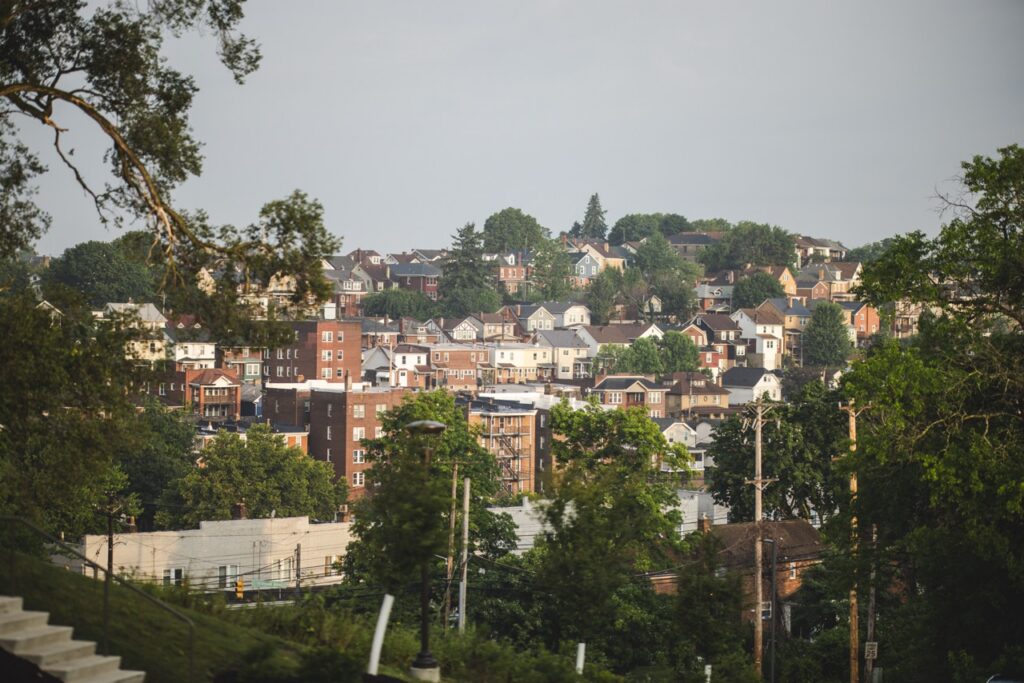
While the South Hills can report notable commercial, retail and infrastructure updates — and these shifts have brought fresh dining and shopping options to the suburbs — the region retains much of the same feel as it did 20 (or even 50) years ago.
Take Castle Shannon. Named after the lush fields of Ireland, Castle Shannon features small brick homes amidst waves of green hills. If, tomorrow, a photographer captured a black-and-white image of the tiny commercial district built around Willow Station, they wouldn’t see much of a difference between 2026 and 1946.
The vintage postcard vibe is real — and worth a visit. Try Anthos Bakery for Greek savory and sweet treats, hard to find anywhere else in Pittsburgh. (The olive bread alone is worth driving over a bridge and through a tunnel for.) Balena Bagels is another gem. Willow Station Restaurant and Bar boasts an interior reminiscent of an old-time saloon.
Once a South Hillian, Always a South Hillian
Beth Dolgos, a Whitehall native who’s only ever resided south of the Liberty Tubes, has lived in Mt. Lebanon since taking a job at PNC Bank after college. She appreciates the varied architecture, especially the small stone houses scattered throughout the South Hills. Dolgos is an avid T rider, and has accrued so many funny, memorable commuting stories that her friends consistently nudge her to write a memoir: “The T Diaries.”
Dolgos has never considered living in another part of town because she’s completely satisfied with what she has. This is the same narrative told by many South Hillians; her childhood was spent riding bikes and frequenting the local pool and the bygone Twin’s Movie Theater. Growing up, she shopped at G.C. Murphy’s and Horne’s. While the names of places have changed, the feel of the place has not.
As she puts it, “I just like it here. There’s a soul to the South Hills.”
Story by Tina Tuminella
Photos by Matt Dayak