
Camaraderie has kept these longtime Shadyside Walnut Street businesses afloat despite COVID challenges, inflation frustrations, and tariff troubles.
The Endurance of Shadyside’s Walnut Street Businesses
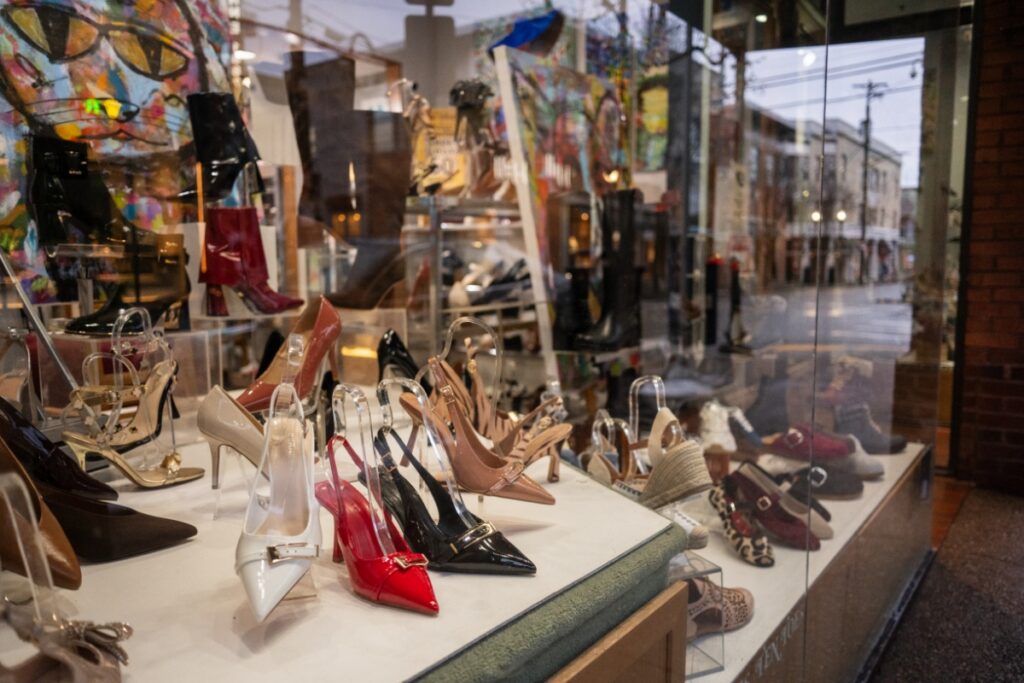
Brian Frankel, owner of footwear store Ten Toes, doesn’t gripe about construction or parking on Walnut Street. It’s the perception of the street — that it feels stale, that it has lost its charm, even that it’s dying — that bothers him the most.
“You can’t judge change until it’s done, yeah?” he says. “We’re not changing Walnut Street, we’re not changing the atmosphere here. It’s just that some businesses are changing.”
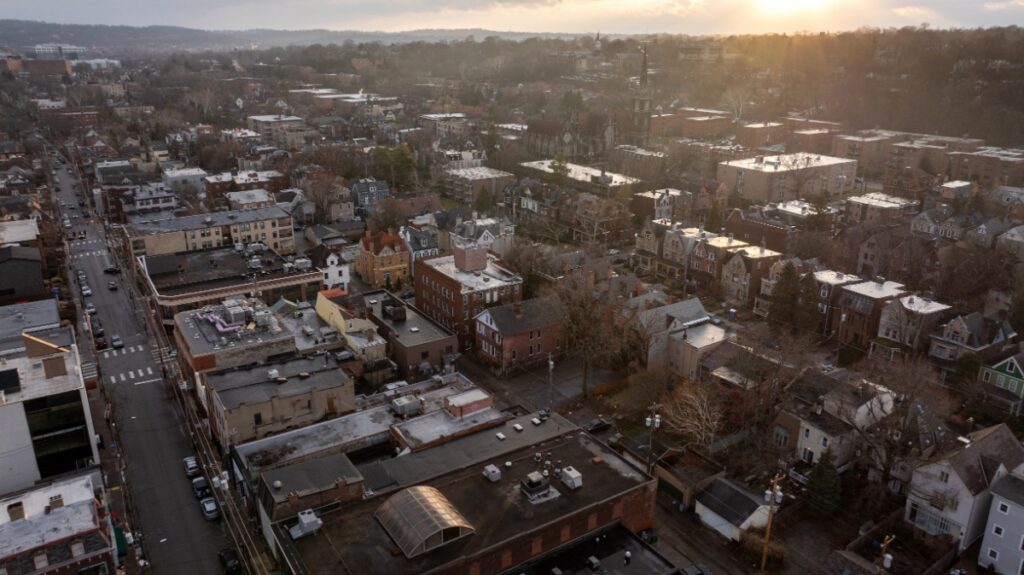
A global pandemic, inflation, and tariffs certainly contribute to that perception. Yet Walnut is home to twice as many local businesses as national retailers — and many, such as Ten Toes (5502 Walnut St.), that have been around for 40 years or more. Their survival is a product of scrappiness, sacrifice, and support — in the form of vital government funding and a cadre of dedicated customers eager to shop small.
The Effects of COVID
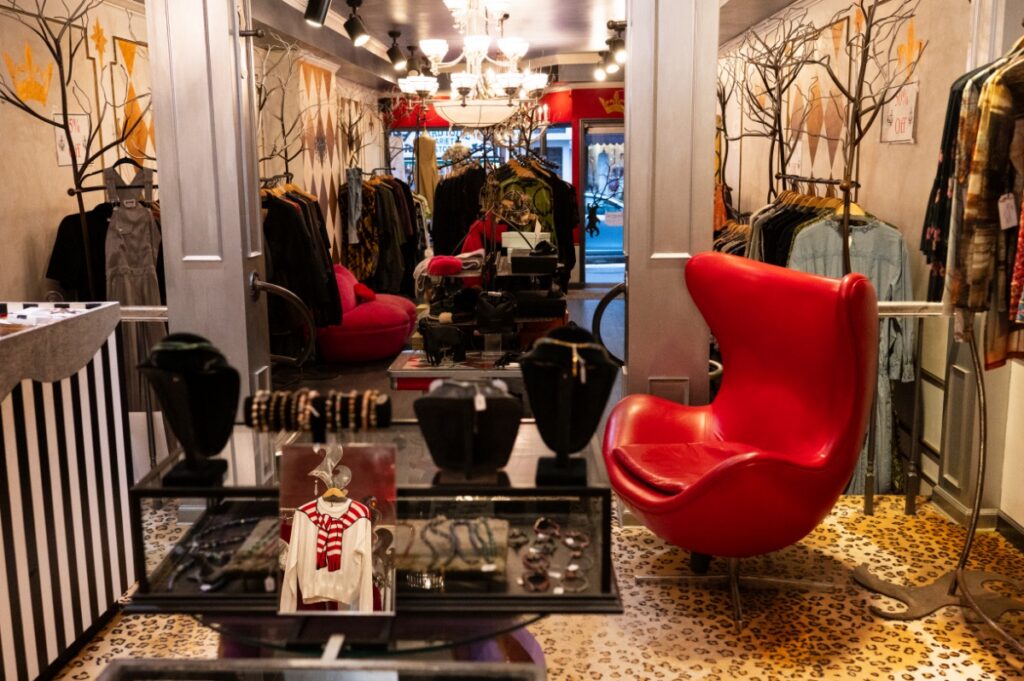
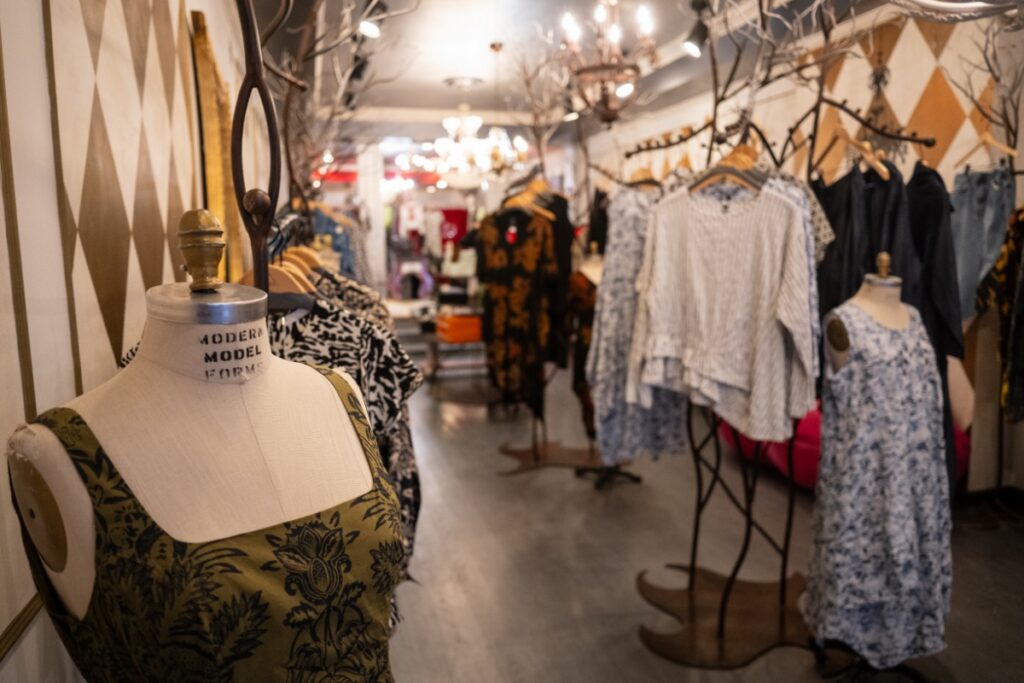
Frankel, who also serves as the buyer for Ten Toes, describes the COVID pandemic as a “nightmare” for the 52-year-old business his uncle and grandfather founded. He’s generally unable to run an online store — his stock isn’t big enough to support variations in sizes and styles needed online. Marta Minich, co-owner of fashion boutique Maxalto (5426½ Walnut St.), faced a similar problem. Her business, which has been on the street for 42 years, doesn’t do online sales. Many of the lines she carries in her store, however, can be purchased online through other retailers.
John Henne, president and owner of Henne Jewelers (5501 Walnut St.) and co-president of the Shadyside Chamber of Commerce, says sales at the 139-year-old business — which has been in Shadyside since 1978 — dropped 82% when the pandemic struck. And Bryan Carey, owner of Cappy’s Cafe (5431 Walnut St.) — which has been in operation since 1981 — faced supply and staffing issues.
All agree that the pandemic’s uncertainty was the biggest challenge. Henne recalls advice he received from a mentor during that time: “With so much uncertainty, there isn’t a need to make a super-quick decision.”
“Oftentimes in business, you want to come right out and make good, quick decisions,” he says. “But in this case, we felt we just needed to wait it out and see.”
Working Through a Pandemic
However, that doesn’t mean business owners sat idly by during the depths of the pandemic. Frankel came into the store and posted photos of shoe displays on social media, with a number for each style. Customers placed their orders over the phone; Frankel sold 200 pairs of shoes in two days. Henne worked every day to fulfill online orders, make deliveries, and coordinate safe pickups. Carey sold cocktails to-go, which provided a small financial buffer.
“It was nothing major, but it didn’t hurt,” he says. “It was something.”
Minich and her sister, Maxalto co-owner Michele Lyons, used the time usually spent at the shop to sew, creating new and interesting styles to eventually present to customers.
“Michele still makes things for the store when she gets a chance … and people love that,” Minich says.
A Little Support Goes a Long Way
All businesses interviewed for this story received Paycheck Protection Program (PPP) funding, supporting rent and payroll; Henne says the program allowed him to bring all his employees back to work.
“The PPP program saved us and so many others,” he says. “It restored confidence in the economy, which freed up spending, which allowed business to go back to somewhat normal.” Still, business wasn’t easy; Frankel reports that he didn’t take pay or have a staff for at least a year.
The Challenge of Tariffs
Tariffs and supply chain issues have been a new challenge to overcome. “Everyone’s dealing with it … if you’re gonna put tariffs on Mexican goods, that can impact us big time, because a lot of our produce might come from there,” Carey says, adding that affordability for customers is a priority for Cappy’s. “The cost … gets slapped down from your vendors or your delivery trucks, whether it’s beer or food.”
Frankel says he has not passed the price of tariffs onto his customers — he never wants to hear a customer say, “I like this one, but how much is this?” — but getting the shoes is another story. According to him, manufacturers are trying to get as much product as possible onto shipping containers to beat costs, making reordering bestselling styles a challenge.
For Henne, the price of gold — which has risen 80% — has had a “dramatic impact” on business. Still, he says 2025 was “our best year ever, by far, by a lot.”
Rising Costs Cause Uncertainty
Rising rents remain the final obstacle — one that’s often out of a business owner’s control. Frankel says businesses want to be on Walnut Street. That doesn’t always line up with what landlords want for their properties.
“Some of these landlords are why people leave the street — more than business [factors],” he says, noting he’s personally pleased with his landlord, Walnut Capital.
According to Henne, rent is expensive because there’s a draw to Walnut Street. For properties that have been passed down from generation to generation, Henne assumes that the debt to purchase the property has been paid — meaning there’s no tremendous incentive to rent. That means landlords can “be patient for the right tenant,” he says.
“People want to [be on Walnut Street], and market conditions would indicate that,” he says. “To those on the outside, [it] looks like, ‘Why aren’t you filling that space? You should build sooner,’ and that’s up to the landlord.”
Providing for Shadyside Through It All
Although their experiences navigating COVID, inflation, and tariffs are different, Henne, Carey, Frankel, and Minich all credit their customers with the survival of their businesses.
When Carey was interviewed for this story, Cappy’s still had its holiday decorations hung with care — at least 30 stockings with the names of employees, regulars, and their loved ones, spanning from toddlers to octogenarians. At one point during the interview, Carey paused to finish preparing chicken tortellini soup; he then sent the details to a text group he has with regulars, encouraging them to stop by to snag a bowl.
“You fall in love with your customers, and they fall in love with you, and you have such a strong relationship — and that’s what kept me afloat during the pandemic,” Carey says (when he finishes checking on his soup).
It’s the People Who Make It Worth It
During a visit to Maxalto, Minich and Lyons were chatting and drinking sparkling wine with Georgia Demas, a longtime customer turned longtime friend. Minich says the combination of styles not found in other stores, in-person customer service and “interesting conversations” keep people returning. “They like the atmosphere. They like the fun that we have,” Minich says.
Carey also mentions the camaraderie among local businesses on the street. He recently ran down to Mario’s Shadyside to grab some Coca-Cola mix. Jennifer Gerasole — former executive chef at Girasole on Copeland Street, who now works in restaurant technology sales — helped the bar implement a new register system. Even the workers intermingle throughout Walnut; it’s not uncommon to see someone clock out from their shift and walk across the street for a drink.
“Us small businesses, we all know each other,” Frankel says.
John Henne has generations of business experience to draw on. In fact, he has the general ledger from the 1920s and 1930s and saw what happened to the business during that time. He learned from those records that being smart fiscally is only part of the equation for success and longevity.
“If you continue to always do the right thing — to put your customers first, to take care of your employees [and] treat them with great dignity and respect — you can weather whatever challenges come your way,” Henne says.
Story by Amanda Reed
Photography by Justin Merriman