
Dawn Reid Brean of The Frick Pittsburgh brings art — modern, contemporary, classic and otherwise — to the walls of a storied, evolving institution.
Curating The Frick Pittsburgh Beyond the Gilded Age with Dawn Reid Brean
The College of William and Mary sits down the street from Colonial Williamsburg, the sprawling museum and tourist destination for history buffs. Accordingly, Dawn Reid Brean’s collegiate experience featured far more fifes and tricorn hats than that of the average undergraduate.
“You have to love history to go to school there,” she explains. “I found this class about silver, and glass, and ceramics and furniture — the way that things are made and how people use them. I was like, ‘This is the part of art that I love.’”
That fascination would lead Brean to a very appropriate position at the Frick Pittsburgh, where she serves as chief curator and director of collections.
“It is a great collision of art and history,” she says. “The wide-ranging interest of our collection is what makes it so fun. We can be hanging paintings one day, dressing a mannequin in one of Adelaide Frick’s gowns the next and pushing a cart the day after.”
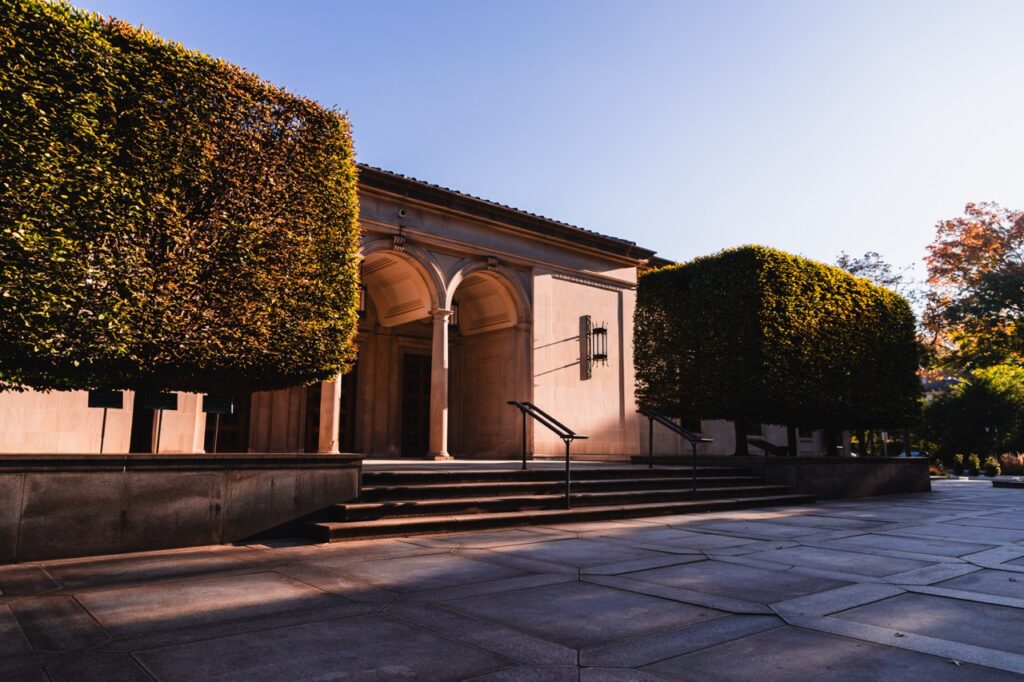
Calling Pittsburgh Home
A path Brean describes as “circuitous” led her to the Point Breeze landmark. After graduating from William & Mary, where she gained an affinity for museums, she went to the Cooperstown Graduate Program for Museum Studies at SUNY Oneonta — one of the oldest and most highly regarded such programs in the country.
Brean, a native of Winchester, Virginia, had never visited Pittsburgh when she interviewed for a curatorial assistant program at the Carnegie Museums. “I loved Pittsburgh, and I wanted to stick around. … I thought I would be here for 18 months; it was a grant-funded position. We’re going on 17 years and I’m still here in Pittsburgh.”
The past 11 of those years have been at the Frick. During that time, the institution has reevaluated its approach to both art and history — the former in expanding beyond the traditional artistic interests of its founder, the latter in reframing the conversation around the Gilded Age and the museum’s namesake family.
Bringing Something New to The Frick Pittsburgh
“I love when we can surprise our visitors. I think we have had several projects where visitors haven’t expected the Frick to be the one to host that exhibition.” It’s part of a broader shift in attitude, she says — a slow but steady change in the way museums present themselves. “It has come [away] from, ‘We tell you what art is valuable and what you should be thinking about that art.’ I feel like our stance now is, ‘We invite you in to examine a subject with us. Bring your curiosity.’”
That means artists and styles that might once have fallen well outside the Frick’s purview now receive full exhibitions. Last year’s Kara Walker: Harper’s Pictorial History of the Civil War (Annotated) showcased a re-contextualization of contemporary illustrations of the Civil War; Walker superimposed silhouettes of Black figures over antiquated and frequently prejudiced images once presented as historical fact. In the recently opened Lewis Hine Pictures America, the man frequently cited as the “father of documentary photography” turns his lens on early-20th-century workers, immigrants and families — including those toiling in Pittsburgh’s mills.
Modernity Prevails
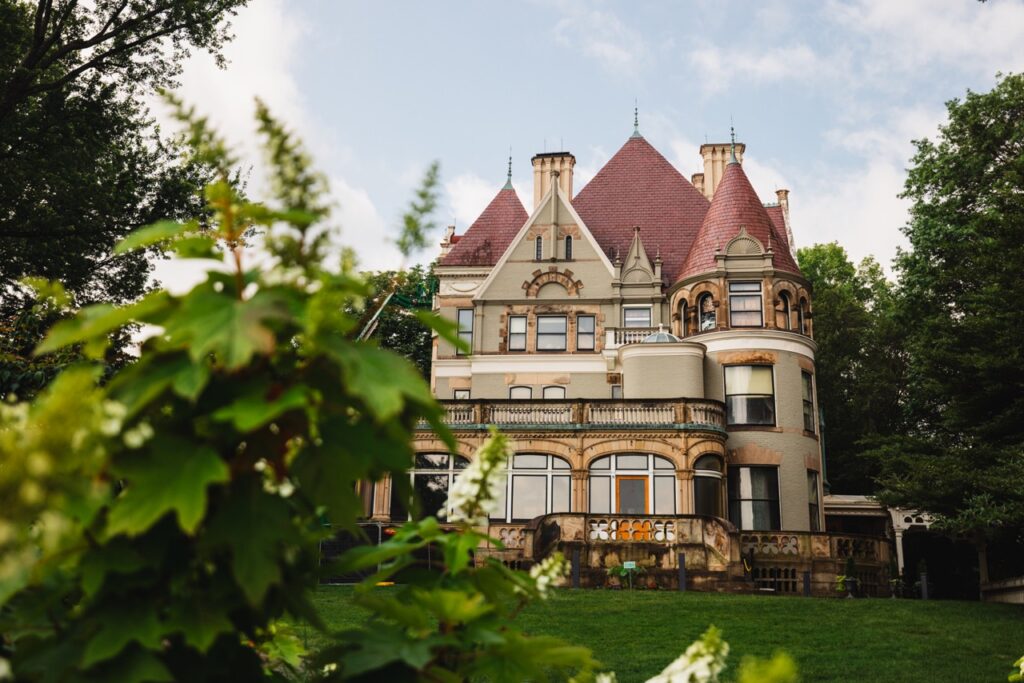
Such subjects are striking departures for an institution established by Helen Clay Frick, a staunch opponent of modern art — not to mention a museum sharing a campus with the home of Henry Clay Frick, whose legacy as an industrialist is complicated at best. (In the minds and ancestral memories of many Pittsburghers, “complicated” is too polite a term.)
“Henry Clay Frick probably never imagined that his daughter, Helen, would open up their family home as a historic house museum,” Brean says. “Helen probably never intended for us to do some of the projects that we have done in recent memory. But at the same time, she set this museum up with few barriers about future actions. She really entrusted the staff that would come after her to steward this institution — to do what was right by it and its community.”
In that regard, “I want to hope there’s a part of her that would also be very proud of what we are doing. We want to sustain this museum into the future — and in order to do that, we have to engage with our audiences,” and that means contemporary art and artists. “I think that contemporary artists have such power in shining light on ideas and long-held historical beliefs, and can ask visitors to question those things in a way that’s very authentic.”
Still Featuring a Taste of the Frick’s Past
Traditional favorites still represent, both in the Frick’s permanent collection and in exhibitions; later this year, the French Moderns exhibit will feature works by Cézanne, Chagall, Matisse, Rodin and many others. And Clayton remains a stately and romantic example of architecture and decor — even as the nature of its signature tour has shifted.
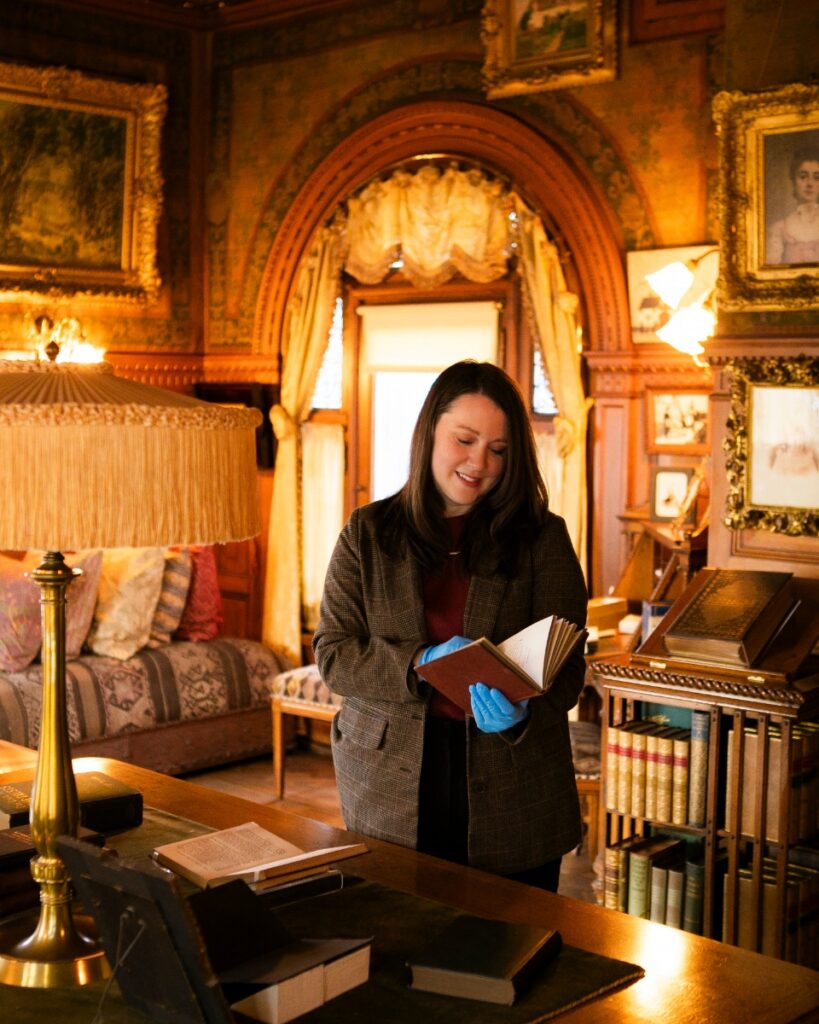
“One of our biggest accomplishments [was] transitioning from a model that hadn’t been revisited since 1990 to the Gilded, Not Golden tour” of Clayton, Brean says. “I’m really proud of the work that we did for that — to upend our traditional interpretation model and really look at the context of how the Frick family’s wealth was amassed in Pittsburgh.”
“I think many more people can identify with the steelworkers and the domestic staff who were working in that house than can identify with the Fricks.”
Brean is pleased to report that attendance on the Clayton tour has increased since it was reconsidered — and visitor engagement has been enthusiastic. The Frick is, after all, tucked into a modern city neighborhood; this is no remote cultural palace, but part of a community.
“I think our setting within a residential neighborhood sometimes has made us a hidden gem within the city,” Brean says. Smiling, she adds a bit of ambition: “We want to be less hidden.”
Story by Sean Collier
Photos by Laura Petrilla and Seth Culp-Ressler
Subscribe to TABLE Magazine’s print edition.