
Thirty years ago this fall, Casbah opened to instant acclaim — and it has never let up. The chef who helmed the Mediterranean kitchen from the start, Bill Fuller, reflects on how a lifetime of experience shaped this enduring restaurant.
Casbah in Shadyside: A Must-Try Pittsburgh Restaurant
He grew up poor in Jefferson County, earned a master’s degree in chemistry at Berkeley, and then learned to cook for Beltway swells at The Occidental, a restaurant across the street from the White House. Given that breadth of early life experience, Bill Fuller would not have guessed when he was a brash young chef that all those roads would lead him through the threshold of 229 South Highland Avenue in Shadyside.
That’s the address for Casbah — the luminary Pittsburgh restaurant he opened for Big Burrito as head chef 30 years ago this fall. The restaurant was groundbreaking at the time. It has left an indelible mark as a bona fide classic.
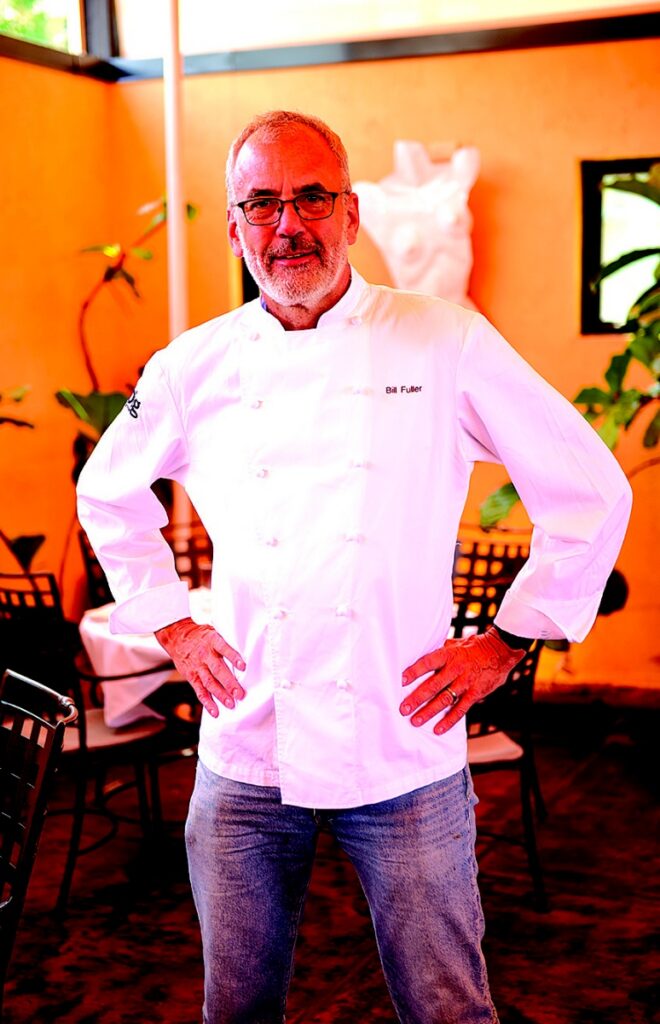
And Casbah still thrives in an industry more fickle than the partly cloudy skies over Allegheny County.
Building Casbah and Big Burrito
Fuller is now president of Big Burrito, the prominent restaurant group encompassing (alphabetically) Alta Via, Eleven, Kaya, Soba, and Umi, plus all those Mad Mexes, as well as a catering division. Yet he remembers like it was yesterday showing up in 1994 in Pittsburgh, its restaurant culture stodgy and staid.
“I was used to the restaurant scene in D.C. and the Bay Area, especially up in Northern California — the great produce, the local farmers, the wine — great food,” he says. “I knew Pittsburgh was going to be a step down, but I didn’t realize what a big step down it was.”
“There were no good restaurant jobs. Nobody cared about my experience in D.C. and Northern California. … It was really depressing.”
And then, as with many success stories, a chance encounter: “I ran into a guy I worked with in D.C. He had joined this restaurant group that had just opened Mad Mex. He said, ‘You want to come on board?’ And I joined up.”
Big Burrito founders Tom Baron and Juno Yoon were working on a property in Shadyside, a Mediterranean concept. “That really excited me, because I had just been in Northern California and those Italian-Northern California-Mediterranean flavors and seasonal cooking really appealed to me.
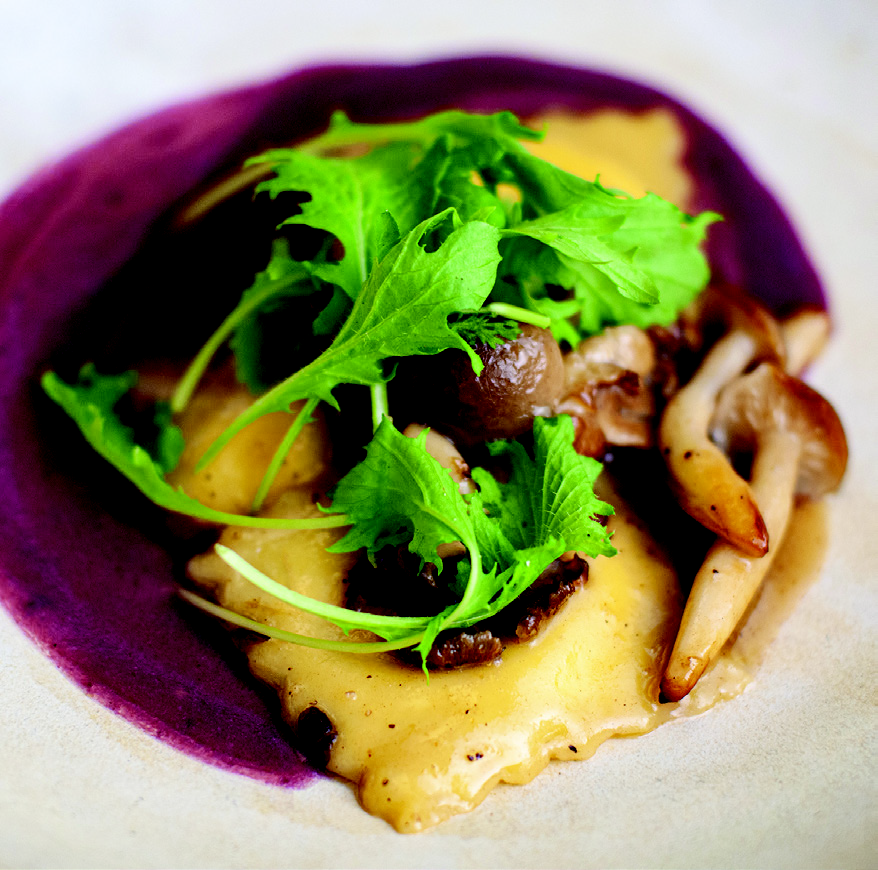
“I said, ‘Look, you open this restaurant. I’m your guy.’ And so I was the opening head chef. And it was really, really exciting. I had never been the head chef of a restaurant before and I really wanted to do it right.”
Innovative Food and Menu Style
He and his staff designed a menu innovative for 1990s Pittsburgh. While it’s been overhauled and reimagined countless times since, elements and philosophies like farm-to-table, meticulous sourcing, local purveyors, seasonal menus — all new concepts at the time — set a standard that has carried through.
“We did duck the way I did it at Bay Wolf in the Bay Area,” he says. “I got in touch with Elysian Fields Lamb in Greene County. I was their second-ever restaurant customer, after the Duquesne Club.
“I’d get several whole lambs, and we would have the racks, the chops. I would take all the trim and make a Merguez sausage. The legs and shoulders, I would cube up and make a seasonal tagine.”
Signature Dishes and Ingredients
Indeed, lamb from Elysian Fields Farm is regarded as among the finest in the land and is a bedrock of the Casbah menu. The current preparation is lamb shank served with Anson Mills heirloom grain grits, asparagus, Swiss chard, baby carrots, and a red pepper velouté.
Duck sourced from Long Island is now served as a duo of roasted breast and braised leg, with potato gnocchi, rapini, cherries, thyme, and a duck jus.
“I was always looking for better quality fish [and] the vendors in Pittsburgh weren’t going to cut it. So I was having it shipped in from Florida. We were taking a refrigerated van down to the Baltimore seafood markets.”
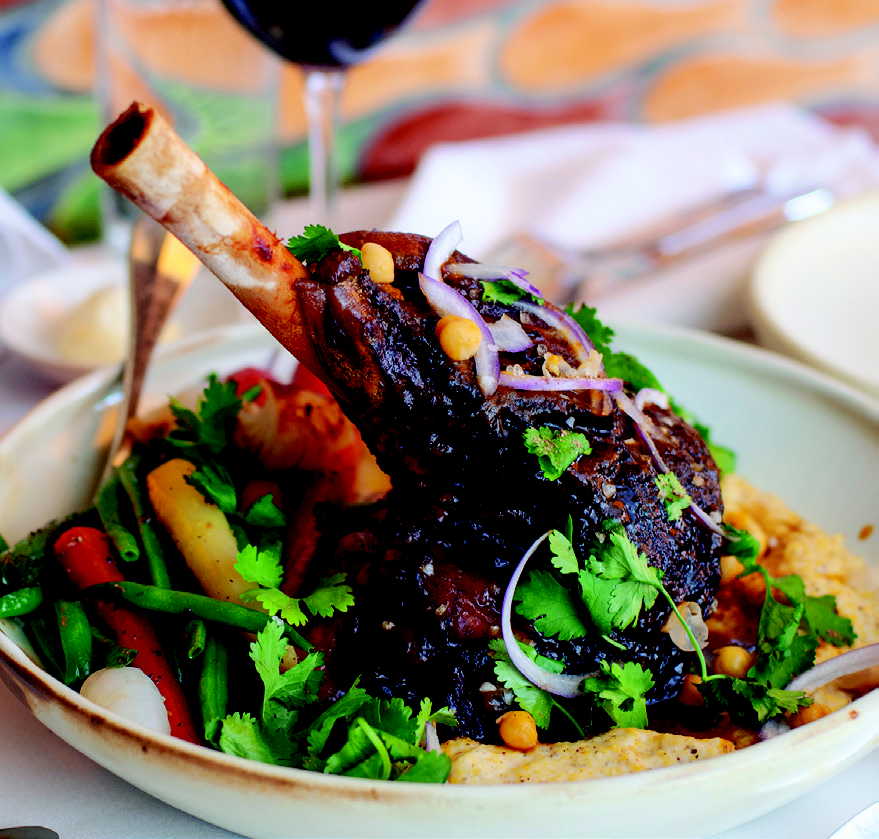
Seafood is a substantial component of the menu with offerings including grilled Spanish octopus with sweet potato frites, house-made chorizo, and black truffle crème fraiche; saffron pappardelle tossed with lobster, sun-dried tomatoes, Parmesan, and basil; and Scottish salmon served with summer succotash, herb crème fraiche, sorrel, and a Calabrian chili pan jus.
Kitchen Culture and Early Challenges
Henry Dewey cleaned a lot of those fish in Casbah’s early days. Now the co-owner and head fishmonger of Penn Avenue Fish Company, he was Casbah’s opening sous chef. The kitchen was freewheeling and furious-paced, he recalls, with a young and diverse front- and back-of-house staff that was short on experience but teeming with enthusiasm to learn.
“I was the cowboy and Bill was the sheriff,” Dewey says. “It was a wild time.”
Fuller concurs: “He definitely soldiered right there with me. And we partied together too, because, in our minds, we were 10 feet tall and bulletproof.”
That, however, wasn’t exactly the case.
“We opened on October 27, 1995, and I was a raging [jerk],” says Fuller (using a term too indelicate for Shady Ave readers). “I had come up in D.C. under chefs who screamed and yelled, bullied and belittled and hazed, and that was the environment I thought it was supposed to be. So, I worked endlessly open to close every single day until sometime in February ’96, when I was hospitalized for exhaustion. I was in for two or three days, checked out on a Friday — and went back to work.
That toxic work ethos “took me years to unlearn,” he says.
Growth, Change, and Legacy
Now 58, Fuller’s in a good place. He’s become a yoga zealot. He’s deeply involved in various social justice initiatives related to food, nutrition, hunger, and restaurant employment opportunities, both in Pittsburgh and nationally.
Casbah has evolved, too, and remains relevant by adhering to the same tenets — fresh, local, premium, seasonal food — as when it opened. And it continues to develop its own farm team. Scores of young chefs as well as front-of-house staff have gone on to become leaders in the company or open their own acclaimed establishments.
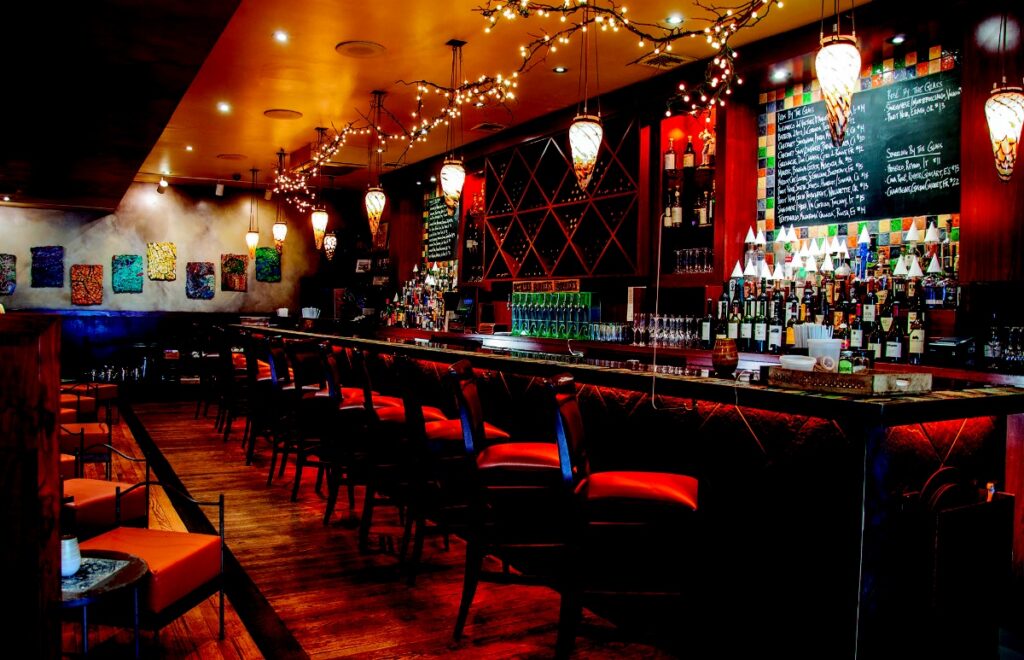
“Casbah is going to be there for a long time. It’s still vibrant, and we keep trying to find and develop good people, and we all look at trends in cocktails, wine, and food to try to stay as modern as we can, while keeping the things that people love.”
And Fuller clearly loves Casbah, which he feels is not only the culmination of his life’s work, but of his entire life.
“I had 27 years before Casbah. The years spent in the Bay Area became part of Casbah; the years spent cooking in D.C. were part of Casbah; the years spent growing up poor in the country in Western Pennsylvania, they became part of Casbah,” he says.
“Growing up learning to be frugal with groceries and food, that went into Casbah. Hunting and fishing and gardening and preserving and thinking about the seasons — that went into Casbah. All these experiences around food and work went into Casbah. It’s been there my whole life.”
229 South Highland Avenue, Shadyside
Story by Dan Gigler