
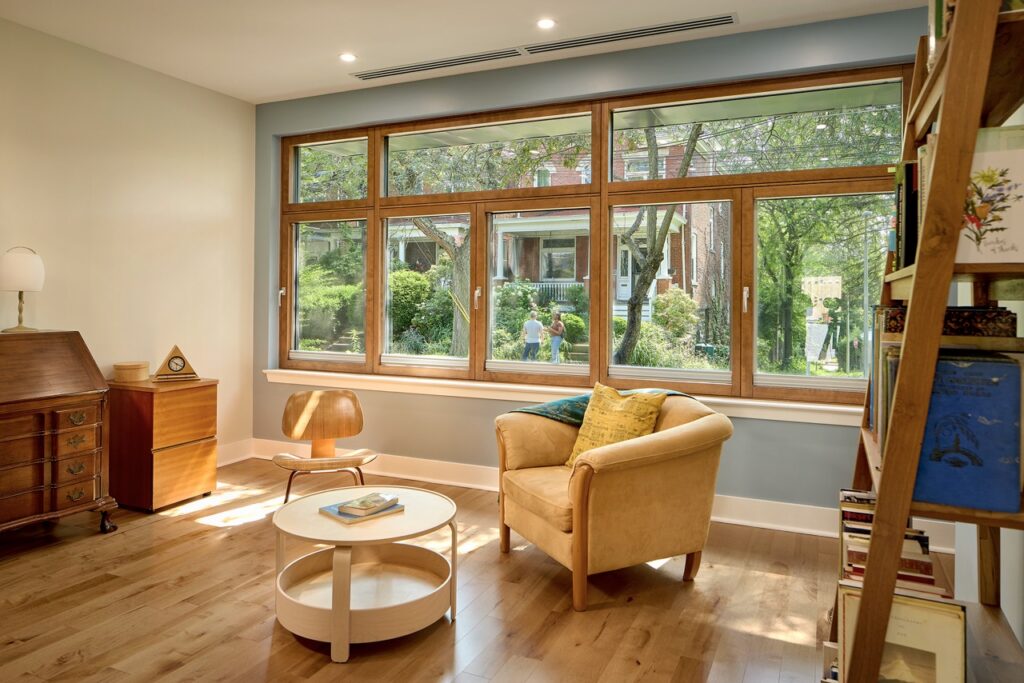
A former storefront in Wilkinsburg transforms into something rare: It’s the first single-family home in Pennsylvania, and only the fifth in the country, to earn the rigorous Passive House EnerPHit certification.
Pennsylvania’s First EnerPHit Home Conserves Energy in Wilkinsburg
The real value of the project, by the Sewickley-based architectural firm Studio St. Germain, isn’t the designation. It’s what it demonstrates about what’s possible inside Pittsburgh homes.
EnerPHit, developed specifically for existing buildings, is a standard for improving energy efficiency, air quality and overall building performance. “In Western PA, a lot of the building stock for residential is existing and often quite old,” says Nathan St. Germain, principal architect and founder of Studio St. Germain. “There is an opportunity to retrofit or adaptively reuse what we already have, especially when there’s a level of quality and craftsmanship there that is hard to find today.”
The most important first step is measurement. “You can’t improve what you don’t measure,” he says. Performance testing, like a blower door test for air leakage, duct blaster tests for HVAC efficiency and thermal imaging, provides a clear picture of where energy and comfort are being lost. Residential indoor air-quality monitors that track humidity, CO2 and particulates offer real-time insight. “It’s like a wearable for your house,” St. Germain said, “like an Apple Watch.”
Better Air, Better Life
Those data points can then be used to make changes that people will feel every day. Consistent thermal comfort is often the most immediate improvement, along with reduced noise and cleaner indoor air. For people who spend the majority of time indoors, and especially for those with asthma, better air ventilation that utilizes fresh air means an improved quality of life.
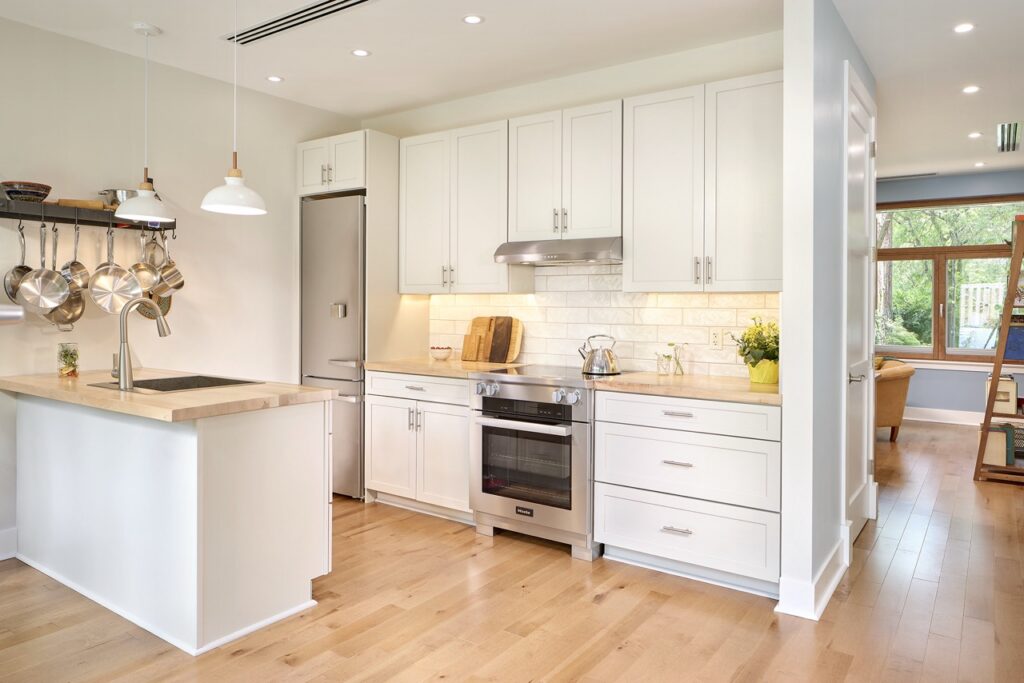
When deciding where to start, St. Germain says his firm follows “the natural order of sustainability.” He prioritizes passive strategies, meaning first looking to insulate the home or replacing doors and windows with higher quality products before upgrading the mechanical systems. These passive strategies lead to tight, well-sealed homes, which reduces the load on mechanical systems like HVAC and the hot water heater.
Focus on Renewable Systems
The last approach is a focus on renewable systems, leading St. Germain to the value of these changes. He points out that the cost for projects like this is often misunderstood. “Price is what you pay, value is what you get,” he says. Targeted upgrades informed by testing can help homeowners prepare for rising utility costs. Renewable systems like solar panels can cost more upfront, while saving money long term. St. Germain points out that, “future proofing is important especially for people who maybe are aging in place and retired, where you’re hedging against those increased costs when you’re on a fixed income.”
On a broader scale, St. Germain sees retrofits as a public good. “The most sustainable building is one that’s already built,” he said. “The notion of buildings being able to take care of us is really important because I don’t think people see buildings that way, whether it’s a home, taking care of the individual through things like lower energy costs and utility costs, but also helping the community and the environment around which it’s located because of things like carbon emissions.”
Story by Anne Perri Cole
Photos by Studio St. Germain and Ed Massery