
Bright colors balance the ornate woodwork in Betsy Wentz’s revamp of a historic Sewickley home.
Interior Designer Betsy Wentz Brings a Pop of Color to a Historic Sewickley Home
Betsy Wentz’s interior designs are not for the beige at heart.
A pop of color can be found in even her most neutral palettes. The self-described transitional style designer may prefer modern styles, but she’s comfortable with traditional approaches — and everything in between.
In the Pittsburgh region, it’s often the everything-in-between project that comes knocking. Plenty of homeowners want to thoughtfully modernize older homes without erasing turn-of-the-century craftsmanship and history. Such was the case when a young family sought out design expertise after purchasing a home designed at the beginning of the 20th century by acclaimed architects Rutan and Russell, known locally for the Hotel Schenley (now the William Pitt Student Union) and St. Augustine Church in Lawrenceville.
Representing the Roots
The house, built for entrepreneur James S. Todd, features an eclectic mix between Prairie and Tudor Revival styles. Todd commissioned a team of Italian woodworking artisans to craft elaborate varnished boiserie.
The 2020s are a long way from the home’s 1901 completion. Fortunately, present-day owners John and Vanessa Herman share an appreciation for turn-of-the-century craftsmanship. Before finding this home, they lived in a development in Robinson Township. “It was a great neighborhood, but the idea of local didn’t go beyond Starbucks and Applebee’s,” says John, co-founder and CEO of the nonalcoholic beer brand BERO.
Looking foremost for a neighborhood with walkability and a Main Street USA feel, Vanessa initially envisioned modern — but every house they toured within their neighborhood parameters turned out to be the opposite.
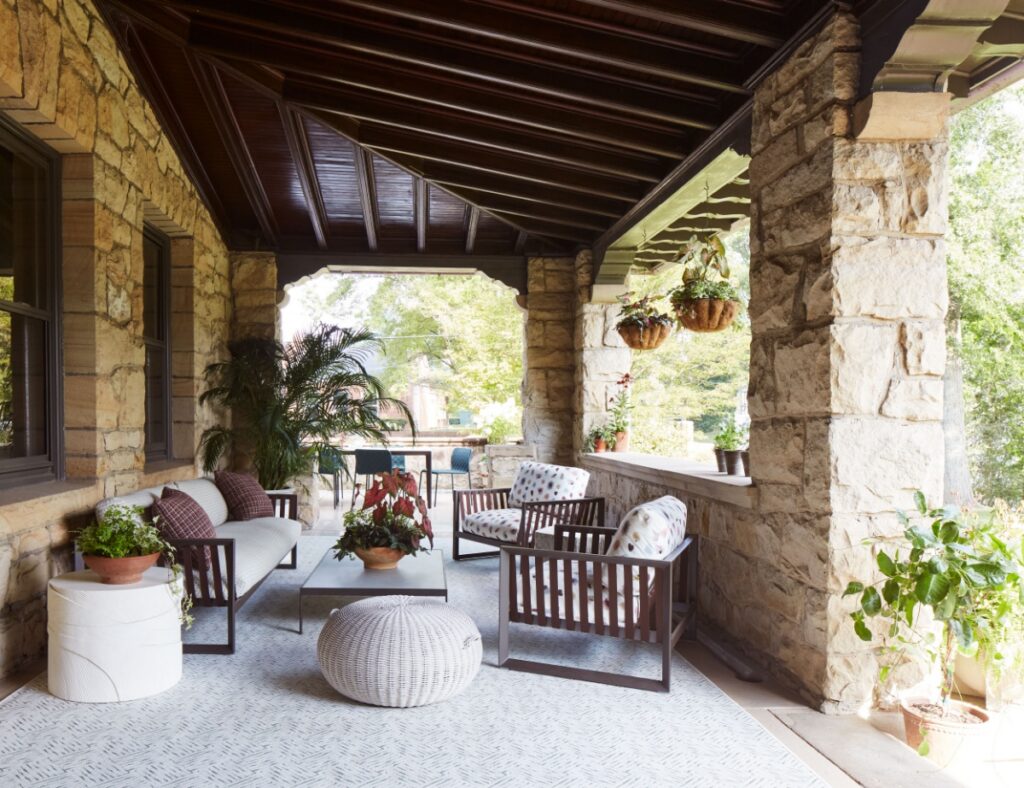
A Home with History
The Sewickley home convinced them. At closing, the couple recieved a folder of history, letters and clippings about the property. “When a house comes with that [history], you feel like less of an owner — with permission to reconstruct — and more like a custodian,” John says. “I also personally couldn’t comprehend moving into a house like this if your goal was to remove its soul.”
The couple interviewed a handful of designers. Some discussed removing walls; “That was never going to fly,” says John. They settled on Betsy Wentz. She came in not only with creativity, John says, but also with a team to measure, add thoughts and take notes from the very first meeting. “The one-two punch of operational capability and creative vision, all within the constraints of respecting its history, made this an easy decision.”
“Big old houses are my niche,” Wentz says. “I feel it’s important to respect and keep elements from old homes.”
Updating Without Taking Away From Historic Details
The couple wanted to lighten and brighten the house without painting the woodwork, she explains, adding that they have a highly sentimental art collection from their life and travels that they want to be in the finished product.
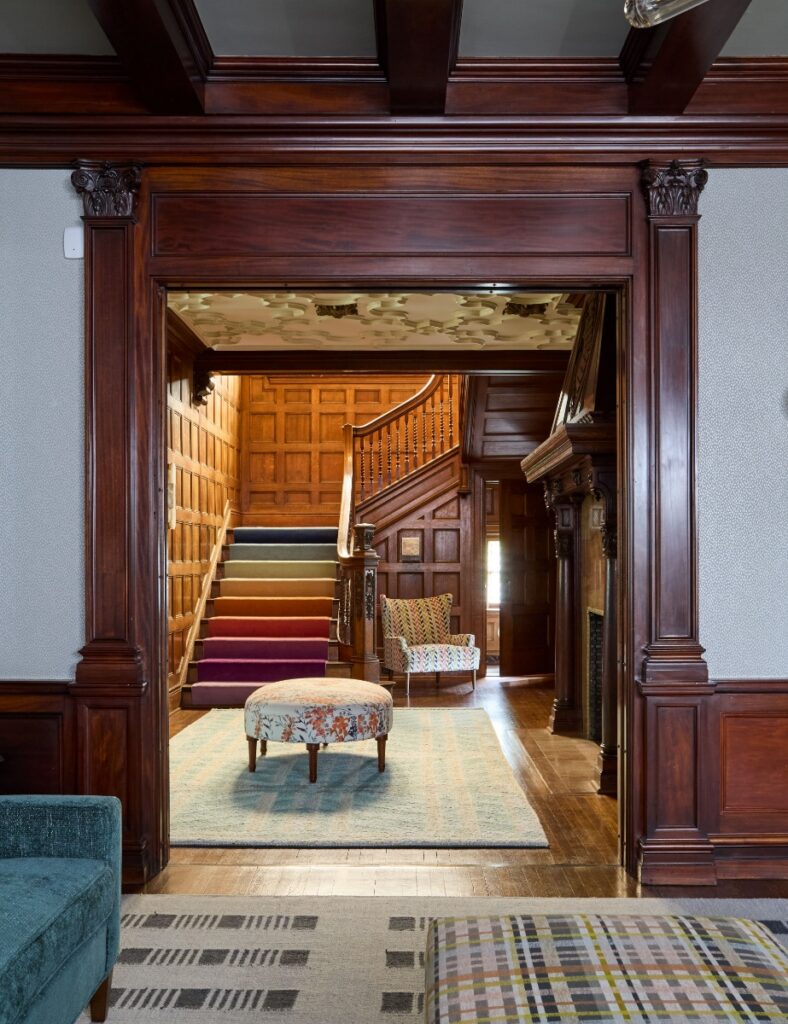
The Hermans also requested a more modern and welcoming wine cellar, a “fitness inspiring gym,” a spa-like master bath and a few things to avoid: no animal print (her request), no baby blue or stripes (his) and no round lights.
Wentz credits her degree in psychology for helping clients navigate the inevitable differing viewpoints that come with a major project. “Connect the dots, follow the bouncing ball and find a way to make it all work,” she says.
A Little Fun Goes a Long Way
For the Hermans, the jumping off point was a wallpaper from Osborne & Little depicting fruit-laden vines that ended up in the parlor. It was the first thing they were drawn to on a visit to Wentz’s studio; from there, she says, it was “monkey bars,” swinging from one detail to the next.
The ornately patterned paper was too busy to cover the full walls. Instead, it can be found on the parlor’s ceiling, drawing the eye up and balancing the heavy features of the room. The design also complements two of the couple’s beloved art pieces: one, by Carole LaRoche, dubbed Red Wolf and Flowers and purchased on an anniversary trip; the other, by Vanessa’s cousins Cristina and Arturo Cordova, siblings whose work was recently featured in a video by Bad Bunny.
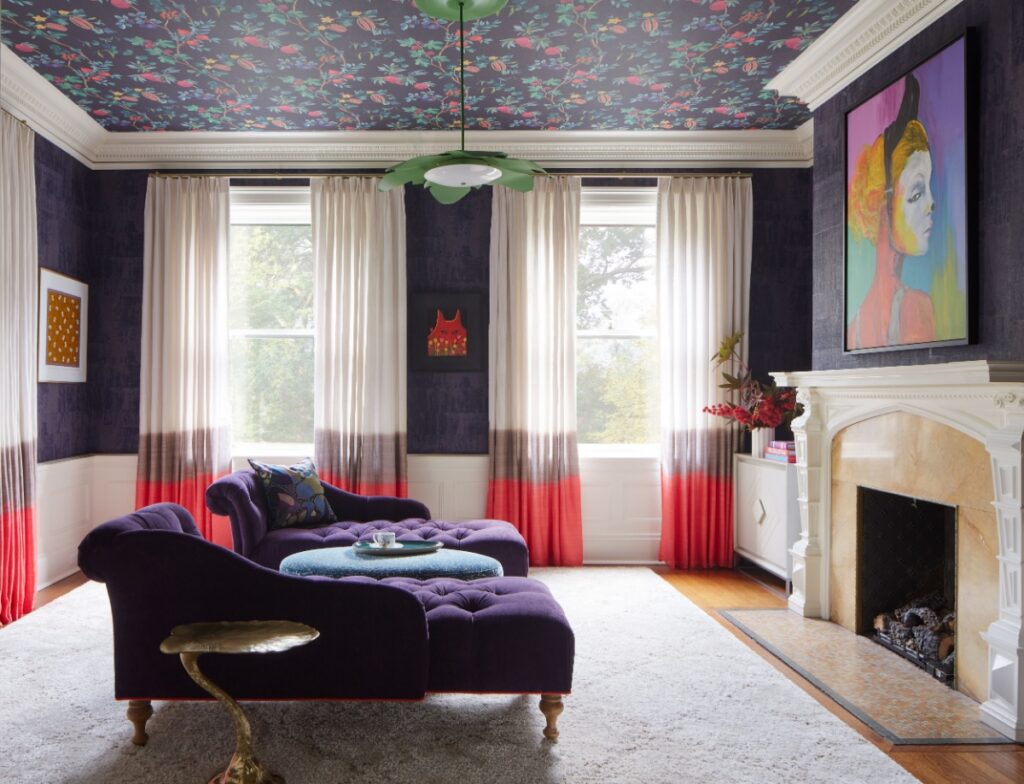
The couple gravitate toward art with wit and personality, eschewing monetary value for personal import; John mentions a two-euro nude they acquired in a Prague market. The pieces recall great memories the two share together. John also stresses that the rooms weren’t designed with the art collection in mind; each piece seemed to naturally find the perfect spot after textiles were chosen.
Home is a Place You Can Live Freely In, Especially with Children
The chosen decor matches the textiles — with concern for durability, stain resistance and easy cleaning. John says he regularly questioned Wentz to ensure choices were child-friendly, a must given their daughter’s young age.
“One child tends to attract other people’s children, too,” John jokes. “We did not want to create a museum. We wanted our house to feel like a place that we could live in. I remember my aunt’s house growing up had a room children were not permitted in — I certainly did not want that feeling.”
Wentz thoughtfully designed their daughter’s bedroom and bathroom to be feminine yet ageless — and appropriate for the years ahead. The family room and the living room provide cozy spaces where the family regularly curls up for movies or plays a spirited game of Uno.
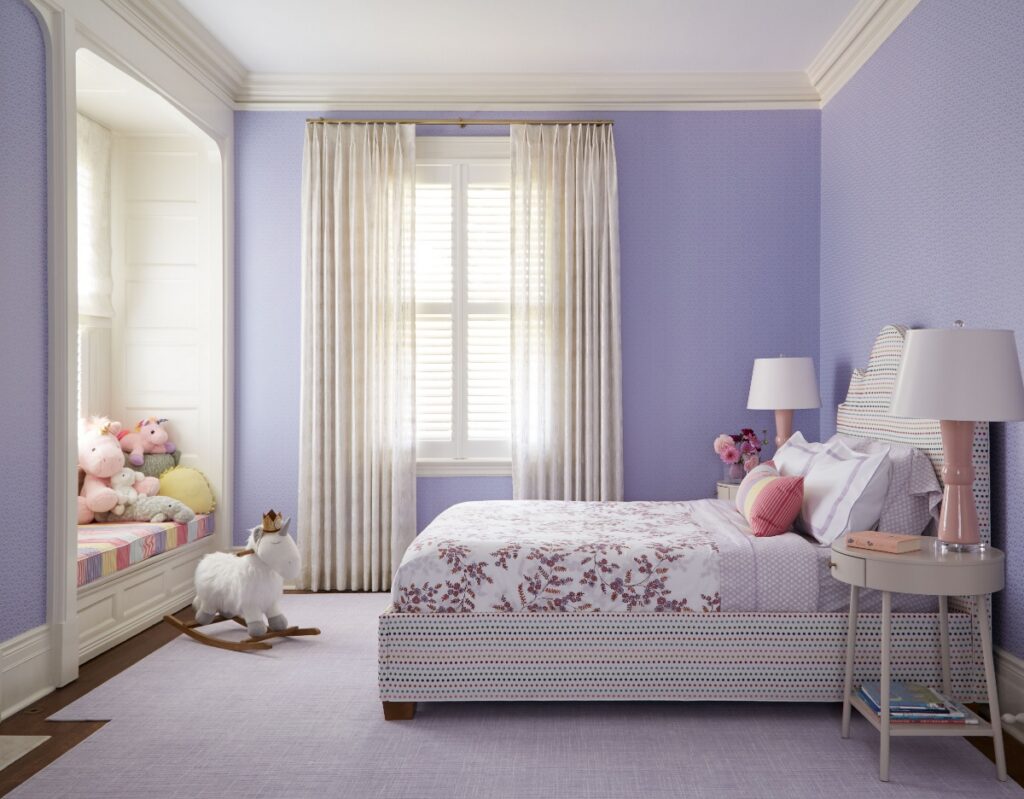
Where Everything Comes Together
John describes the kitchen as the buzzing epicenter of the Herman home due to its bright white cabinetry and an abundance of natural light. It continues to hold its appeal well after meal-prep and dining, he says, remaining inviting through homework and family projects.
Vanessa and John both work from home — and while the solid plaster walls of a 125-year-old home present Wi-Fi challenges, each finds it well suited for their professional needs. In the warmer months, John’s favorite space is outside on the front patio, where he enjoys the breeze and fresh air.
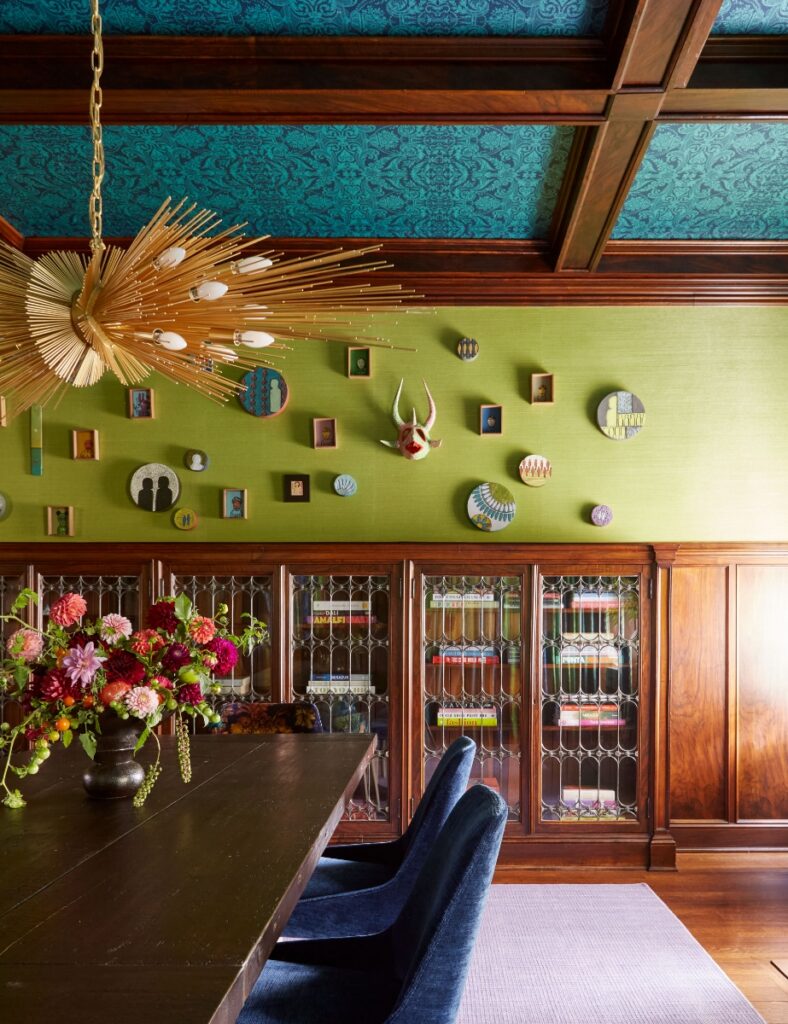
After work, he enjoys either the bar in the butler’s pantry — because it feels like a destination abroad — or his wife’s preferred spot, the wine cellar, “if she’s kicking back after a long work week.” They also use both locations when entertaining guests. Having multiple “unique areas to decompress allows you to feel like you’re on vacation, even though you haven’t left home,” John says.
Far Worth the Wait
Wentz provides that her timeline for projects like the Hermans’ is generally nine months — “Like having a baby,” she laughs. After finishing the original, agreed-upon line items, however, there are always other projects that have arisen to move forward with.
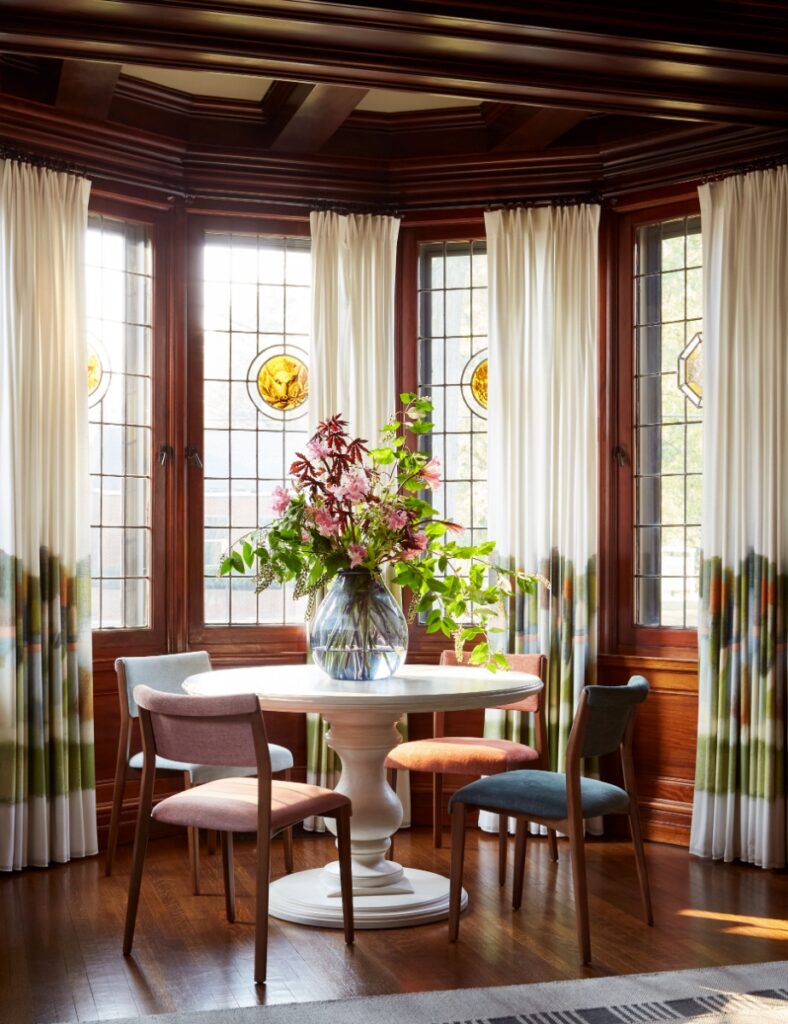
No matter the timeline, in a hectic world that demands that families juggle more — and try to find balance between work and life — comfort at home is an investment that pays off.
Story by Charlene Campbell
Photos by Max Kimbee