
All houses have stories to tell. Pittsburgh’s oldest log home — the Neill Log House — includes tales of Meriwether Lewis, Mary Schenley, trespassing debutantes, moments of ruin and rebuild. It stands today, impeccably restored, thanks to passionate advocates for the Schenley Park touchstone.
Restoring the Historic Neill Log House After 30 Years
After more than 30 years of being obscured behind a chain-link fence, the Neill Log House in Schenley Park has been restored for all to appreciate. Between immense fundraising efforts, community buy-in, and the work of skilled craftsmen, it took a village — or in this case, a city neighborhood — to restore this 18th-century house, which reopened to the public late last year.
Sitting on a 17,000-square-foot plot of parkland, the structure is a portal in which to examine life in the late 1700s and early 1800s. Since the reopening, the log house has been drawing a steady stream of locals and tourists, history buffs, and students from Pittsburgh schools.
The Start of the Restoration Idea
The impetus for the restoration project emerged in 2020. The National Park Service reported to the Squirrel Hill Historical Society (SHHS) that Meriwether Lewis — of the Lewis and Clark Expedition — likely watered his horses at the now-culverted stream by the base of the log house in 1803. That was before embarking from what is now Point State Park to meet up with William Clark in St. Louis. SHHS was invited to nominate the Neill Log House for inclusion on the Lewis and Clark National Trail Experience website.
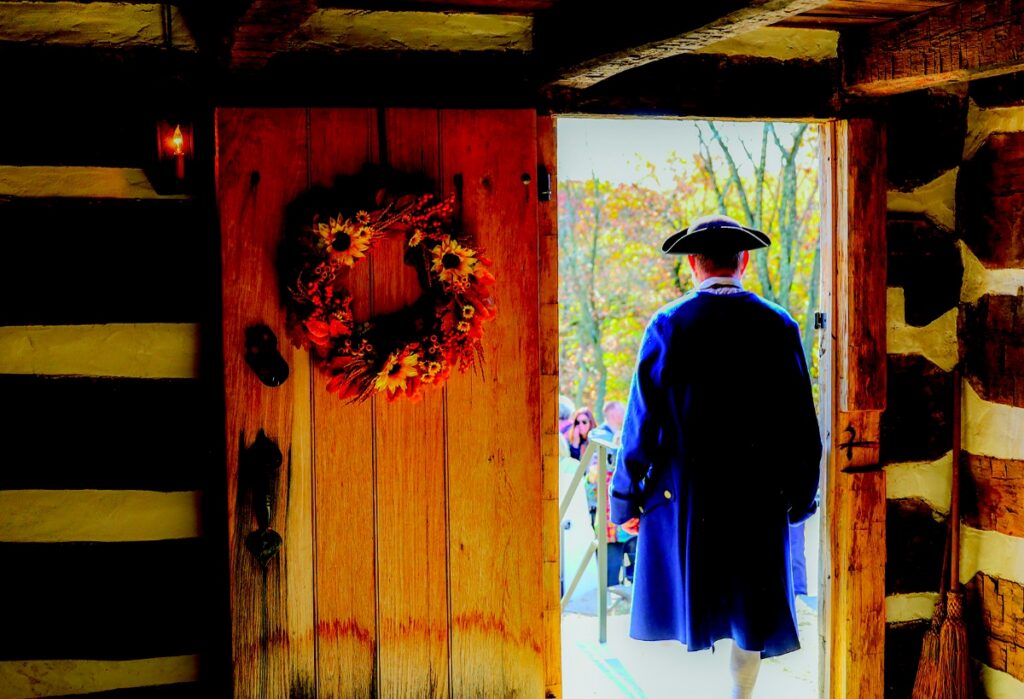
Their interest was piqued. But the log home had fallen into disrepair.
Community Effort to Save the House
Mardi Isler, head of the Squirrel Hill Urban Coalition at the time, was concerned. She couldn’t bear to think about followers of the Lewis and Clark Expedition visiting the log house in its dilapidated condition.
One year later, Isler and others incorporated the Friends of Neill Log House as an organization devoted to the home’s restoration.
In order to realize a project of such magnitude, cooperation was required from a variety of entities. While the Squirrel Hill Historical Society and the Squirrel Hill Urban Coalition orchestrated the project’s practicalities, the Heinz History Center, Pittsburgh Parks Conservancy, Preservation Pittsburgh, and the Pittsburgh History & Landmarks Foundation helped raise the necessary funds — $300,000 in all. Isler cited the role of Carole King of Shadyside, an experienced fundraiser “who gave us invaluable help from the start to create the case for support.”
With the journey of the restoration complete and interest growing in the site, the future of the oldest log structure in Pittsburgh looks solid. The institutional neglect that allowed the building to decay is a thing of the past, in Isler’s view.
“That is not going to happen again,” she says, with confidence.
Back In the Day
Robert Neill secured the first deed for the house in 1787. As documented by the Squirrel Hill Historical Society, he lived there with his family until 1795 with his wife, Elizabeth, and their five daughters. (The family name, by the way, is also rendered as Neal, Neil, and Neel. “Neill” became the accepted spelling because of its appearance on key documents.)
Neill sold the house to John Reed, who then sold it to Brintnel Robbins, who subsequently sold it to James O’Hara, a prominent businessman of the era. He turned it into a rental property, once inhabited by a member of the Burchfield family, co-owners of Horne’s department store.
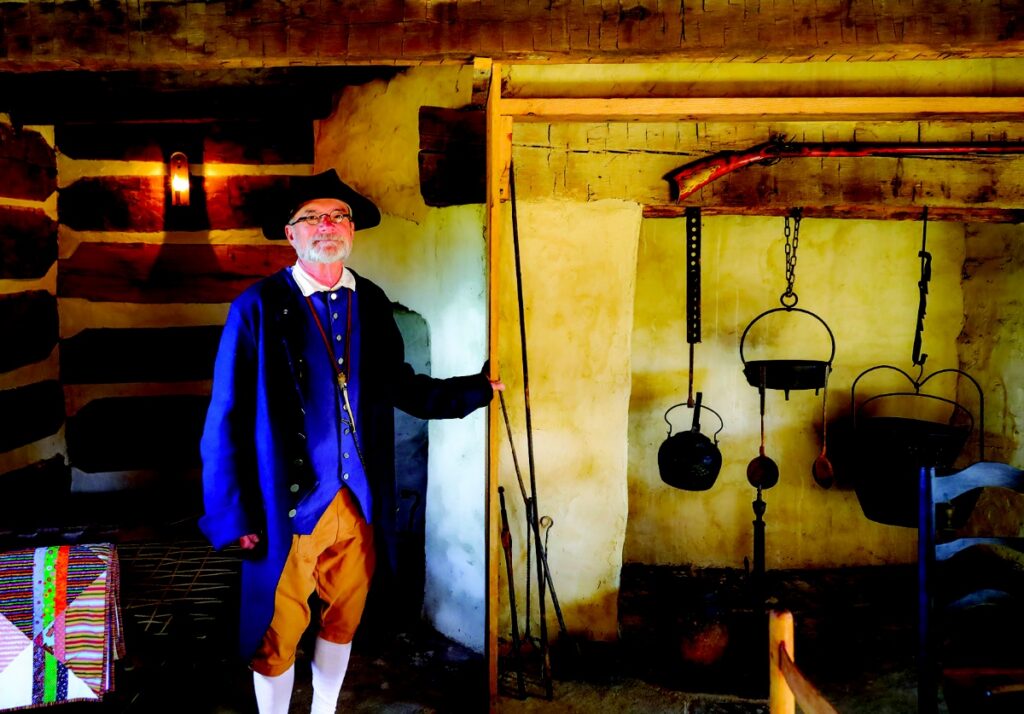
The home offered nearby water sources, dual fireplaces, an upstairs loft, and a prime location — desirable attributes in any era. But it was a bequest from O’Hara’s granddaughter — Mary Schenley — that likely gave the house the gift of longevity.
Some 100 years after the log home was built, Mary Croghan Schenley gifted 300 acres of land, which subsequently became Schenley Park, to the City of Pittsburgh. Included in this transaction was the tract of land on which the Neill Log House sat.
Years of Change and Decline
For almost 80 years, the house facilitated activities in the park like golf and tennis, thanks to a building annex that doubled as both restrooms and maintenance. When the house collapsed in 1967, the Pittsburgh History & Landmarks Foundation, working in connection with Stotz, Hess & MacLachlan, restored the building to its original form, after disassembling the fallen home and numbering each piece. A team of archeologists also conducted a dig, uncovering 19,000 artifacts, including children’s marbles, pottery, and a gold coin.
In 1970, it was reopened to the public under city ownership.
But the city was unable to keep up with the home’s maintenance needs, and it fell back into decay by the mid-1980s. Rodents and foxes moved in, 8-foot weeds prevented entry, and vandals used it as a canvas. A local debutante even used it to host an impromptu afterparty. The city’s solution to vandals, trespassers, and partying debutantes came in the form of an ugly chain-link fence that managed to fend off the public for more than 30 years.
The Restored Neill Log House Today
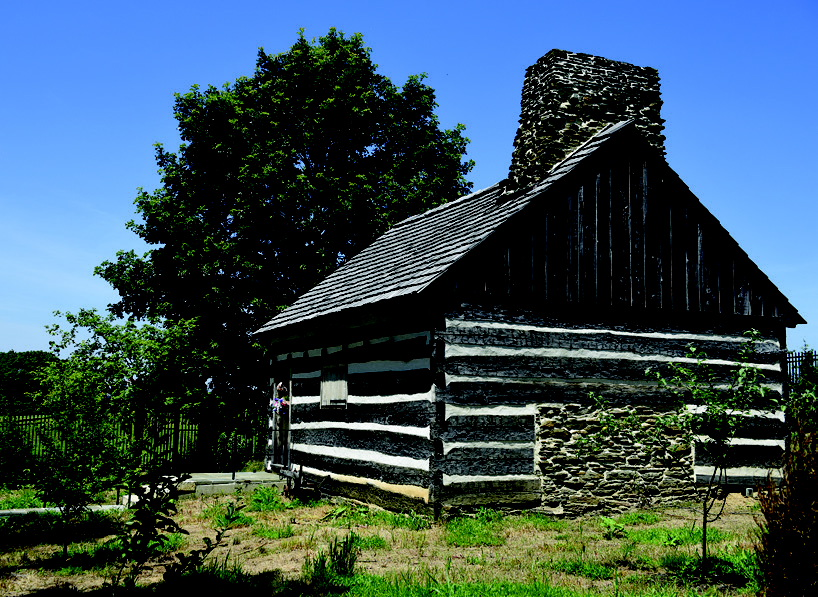
Now, after the multiyear effort, the Neill Log House is ready for showtime. The site overflows with bright bursts of flora. An elegant black aluminum picket fence surrounds the site, tall enough to protect the plantings from deer and the property from other intruders. A brand-new set of stone steps makes the ascension up to the log house feel like something from a fairytale.
“The work was performed by skilled city workers,” says Friends of Neill Log House president Tony Indovina, praising the quality of their stone and iron work. “It greatly enhances the overall site.”
The house’s façade flaunts new logs and chinking, namely at the base of the structure, which have been hewn and reconstructed in such remarkable fashion it’s difficult for a lay visitor to tell what is original and what is not — unless a docent or park ranger points it out. The work was overseen by Roland Cadle of Village Restorations, a Pennsylvania company devoted to the restoration of log, stone, and timber structures. The windows have been restored, the original chimney remains intact, and a subtle, narrow staircase leads to the upstairs loft (not open to the public).
Design True to the Era
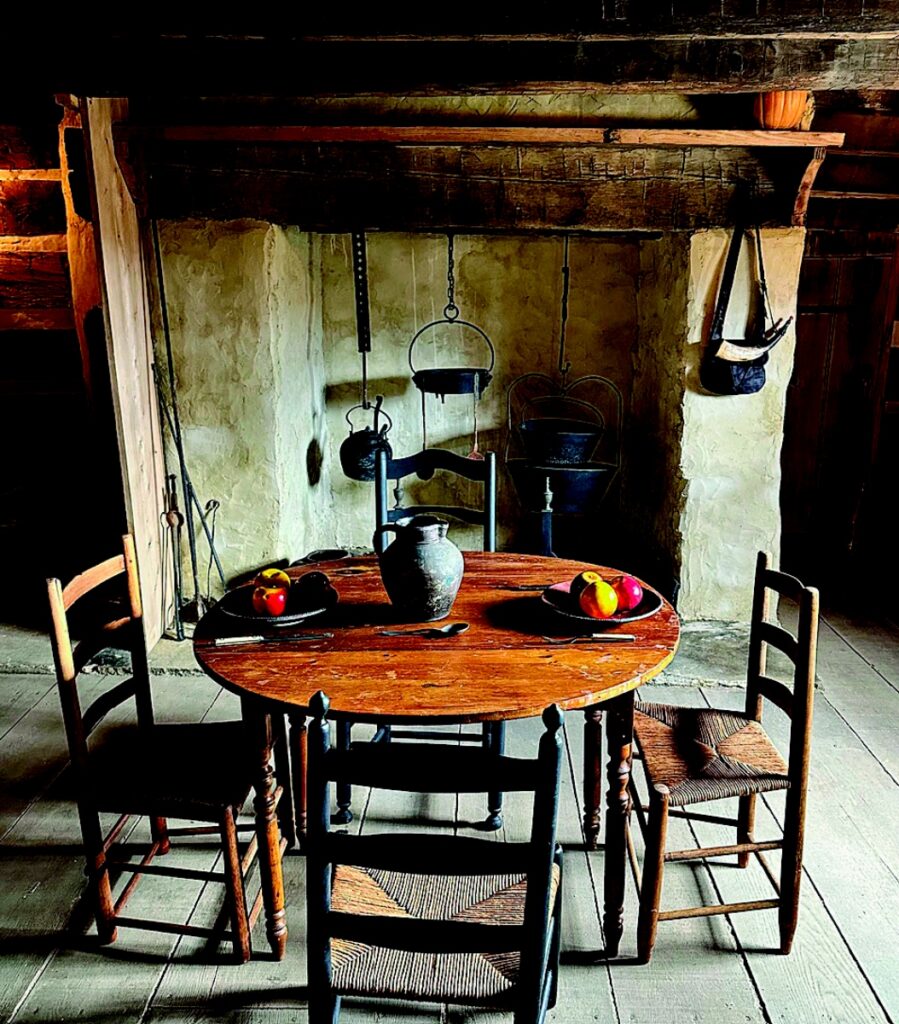
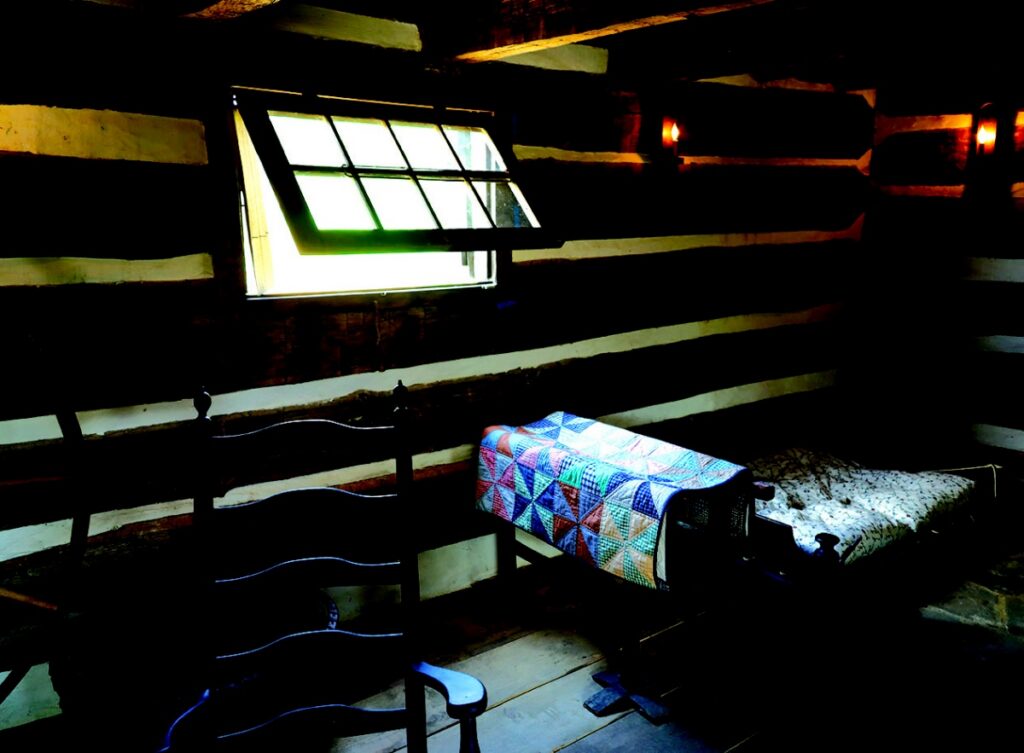
The interior has been furnished with restored pieces from the late 1700s: chairs, tables, two spinning wheels, a spinner’s weasel, ladles, and a string bed. The home has also been outfitted with a new (and discreet) electrical panel to illuminate the wall sconces and a tidy ventilation system. On a hot day, the interior remains cool against the sweltering heat of the sun.
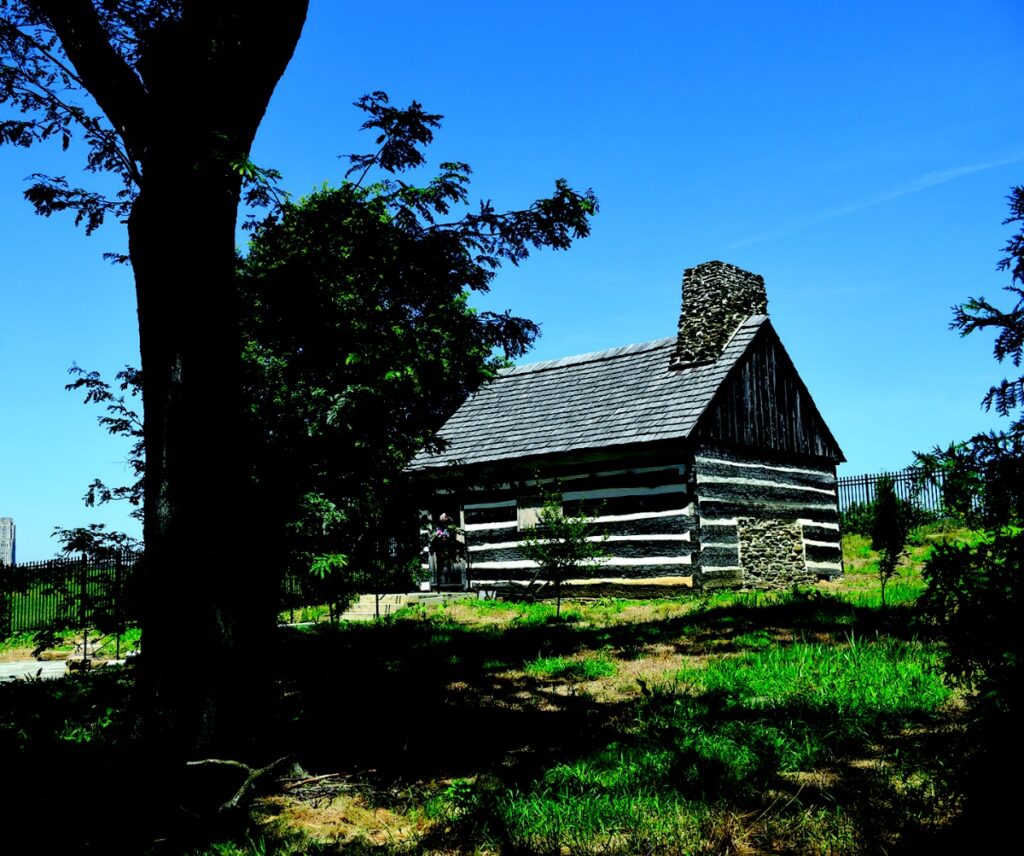
Views out the windows on the first floor provide a silver screen for envisioning an old world of horses, carriages, and dirt roads. Outside, the land has been seeded to cultivate blossoms of the age: elderberries, plums, and apple trees.
Like the layers of an onion, the layers of the Neill Log House can feel infinite. Having survived everything from the Colonial days to the Steeltown boom and the dawn of modernity in the 20th century, the Neill Log House is emblematic of a structure that’s had a life well-lived. Not only an impressive love letter to Squirrel Hill, its visitors, and its natives, the restoration of the Neill Log House captures the area’s connection to Early American history while strengthening our understanding of a world long since gone.
Will Acer is a writer living in Pittsburgh.
Story by Will Acer